


When a chiller trips during a production run or a boiler loses capacity on a cold morning, the HVAC issue quickly becomes an operations issue. Effective industrial HVAC services help facility managers control that risk by connecting maintenance, diagnostics, repair planning, controls, and capital decisions to uptime, safety, product quality, and energy performance.
Request an industrial HVAC assessment from QRC to review critical equipment, current pain points, and maintenance priorities.
Industrial HVAC service is the coordinated care of large, interconnected systems such as chillers, boilers, cooling towers, air handlers, pumps, and building controls. Unlike routine comfort-cooling work, the service strategy must account for process loads, redundancy, sequence of operation, regulatory requirements, and the financial effect of an outage.
QRC HVAC & Refrigeration is a family-owned company founded in 1999 and based in Winston-Salem. Its EPA-certified technicians support commercial HVAC and refrigeration needs across North Carolina. This guide explains how facility managers can evaluate system condition, build a practical maintenance program, and decide when to repair, retrofit, or replace equipment.
What do industrial HVAC services cover?
Industrial HVAC services cover the mechanical, electrical, refrigerant, combustion, hydronic, airflow, and controls functions that keep a facility within required operating conditions. The exact scope should follow the site’s assets and risks, not a generic checklist copied from light-commercial maintenance.
A comprehensive service plan begins with an asset inventory. For each major component, document equipment type, location, age, capacity, refrigerant or fuel type, controls interface, redundancy, service history, and operational consequence of failure. That record gives maintenance teams a shared basis for prioritizing work.
Chillers, cooling towers, and hydronic loops
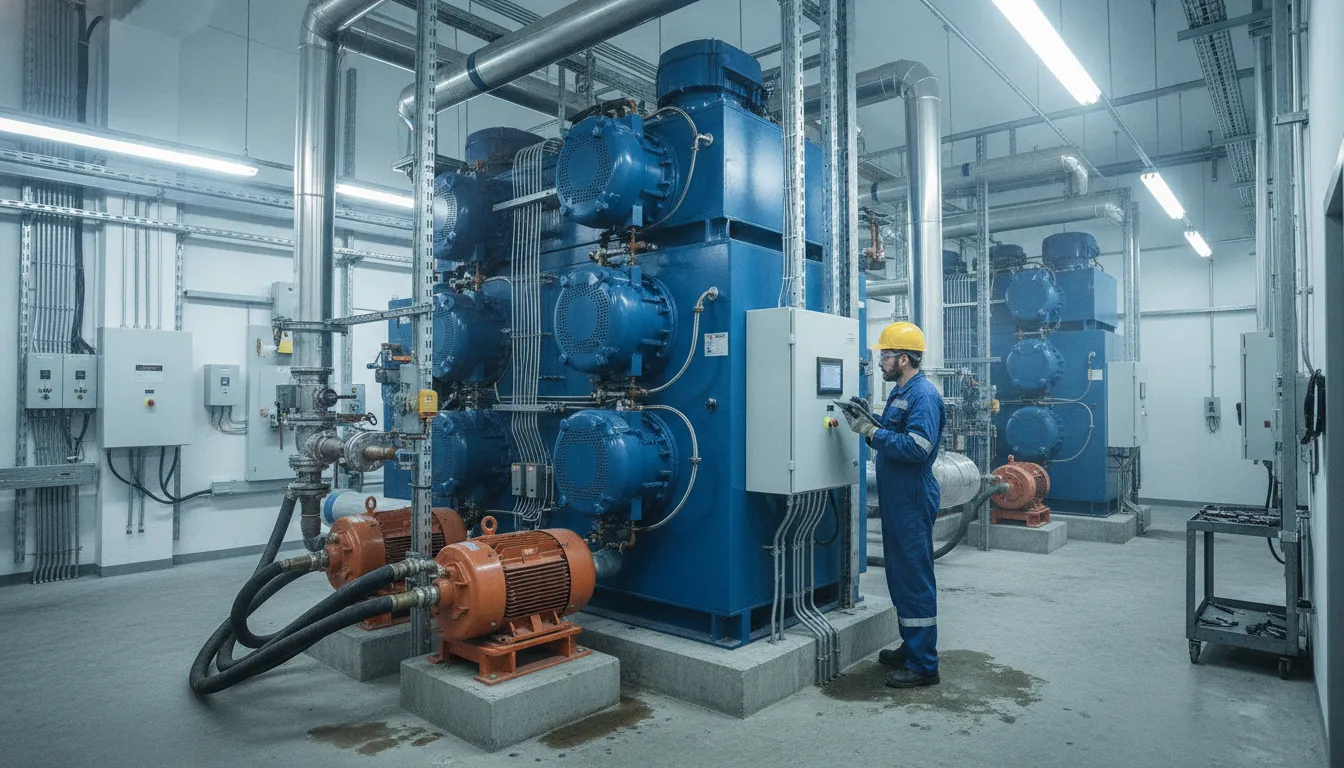
Chiller service should evaluate more than whether the unit produces cold water. Technicians may review refrigerant condition, approach temperatures, heat-transfer surfaces, compressor operation, electrical performance, safeties, pumps, valves, strainers, and the interaction between the chiller and cooling tower. Trending these observations can reveal degraded heat transfer or unstable operation before capacity is lost.
Boilers and combustion systems
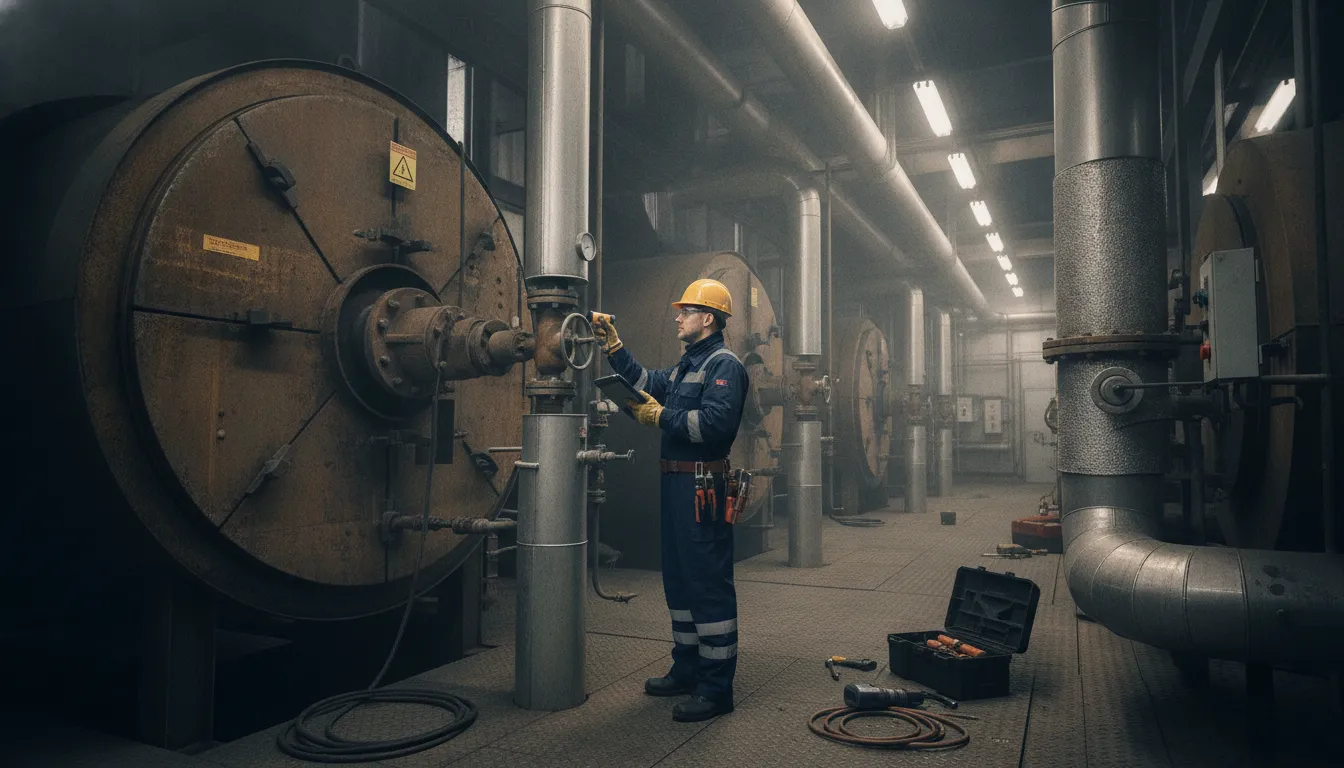
Boiler work requires careful attention to combustion, venting, safeties, water conditions, burners, pumps, and controls. Changes in flame characteristics, stack conditions, cycling, pressure, or temperature can signal a developing problem. Facility teams should treat fuel odors, abnormal pressure, and safety-device faults as urgent conditions, following site safety procedures and using qualified technicians.
Air handlers, ventilation, and pressure control
Air-handling equipment links comfort, process conditions, indoor air quality, and building pressure. Inspection can include filters, coils, drain pans, dampers, belts, bearings, motors, variable-frequency drives, sensors, and outside-air components. The U.S. EPA’s guidance on building air quality and HVAC operation highlights the importance of ventilation-system maintenance and functional outside-air components.
QRC’s commercial services support the broader equipment and service needs found in commercial and industrial facilities.
Core industrial HVAC systems and their service priorities
Each system has a distinct operating purpose and failure profile. Facility managers get better results when service plans connect component condition to the outcome that matters, such as cooling capacity, safe heat production, ventilation, pressure control, or reliable fluid circulation.
| System | Primary operational role | Useful service focus | Common risk signal |
|---|---|---|---|
| Chiller plant | Remove process or building heat | Heat transfer, compressor operation, pumps, controls, safeties | Reduced capacity, unstable temperatures, repeated trips |
| Boiler plant | Provide hot water or steam | Combustion, venting, water conditions, safeties, pumps | Short cycling, abnormal pressure, fuel odor |
| Air-handling system | Move, condition, and ventilate air | Coils, filters, dampers, fans, drives, sensors | Pressure imbalance, airflow loss, temperature drift |
| Building controls | Coordinate equipment and operating sequences | Sensor accuracy, alarms, schedules, setpoints, sequence verification | Nuisance alarms, simultaneous heating and cooling, overrides |
The table is a starting point, not a substitute for site-specific analysis. For example, a redundant chiller may permit planned service with limited operational impact, while a single process chiller can require contingency cooling or carefully scheduled work. The same component defect can therefore carry very different business risk at two facilities.
Controls are part of the mechanical system
Controls problems can imitate equipment problems. An inaccurate sensor, persistent override, or poorly coordinated sequence can make healthy equipment cycle excessively or operate outside its efficient range. Review alarms, schedules, setpoints, and command-versus-status data alongside physical inspection. QRC’s guide to advanced diagnostics and HVAC downtime explains how deeper troubleshooting can support reliability decisions.
When does an industrial HVAC system need service?
An industrial system needs attention when condition, performance, or controls data moves away from its established baseline. Early indicators include recurring alarms, temperature drift, longer runtimes, unusual vibration, loss of airflow, fluid leaks, pressure changes, or repeated operator overrides.
Use trends, not isolated readings
A single reading rarely tells the full story. Facility managers should compare current measurements with prior readings under similar loads and weather conditions. Useful trends may include supply and return temperatures, pressure differential, run hours, starts, motor current, valve position, alarm frequency, and energy consumption. A gradual change can justify planned diagnostic work before an outage occurs.
Prioritize by consequence and detectability
Not every defect deserves the same response. A practical triage method considers the likelihood of failure, operational consequence, availability of redundancy, safety exposure, repair lead time, and whether the problem is easy to detect. A minor leak on a redundant loop may be scheduled, while intermittent trips on a sole process chiller may require immediate investigation.
- Act now: safety-device faults, fuel odor, significant leaks, abnormal pressure, electrical hazards, or loss of a critical process condition.
- Plan promptly: recurring alarms, degraded capacity, unstable control, rising vibration, or performance trends that continue to worsen.
- Monitor: low-consequence observations that remain stable and have a documented review date.
Clear escalation criteria prevent small observations from disappearing in work-order backlogs. They also help operations, maintenance, and finance teams discuss risk using the same language.
How preventive maintenance protects facility uptime
Preventive maintenance protects uptime when it is asset-specific, measurable, and coordinated with operations. The objective is not simply to complete tasks. It is to find deterioration early, preserve safe operation, verify capacity, and schedule corrective work before the facility loses control of timing.
Get a quote for an asset-specific industrial maintenance plan built around your equipment and operating schedule.
A practical inspection workflow
- Define operating requirements. Record the temperatures, pressures, airflow, humidity, redundancy, and process conditions the system must maintain.
- Review history and alarms. Look for repeat failures, deferred work, control overrides, and components with long lead times.
- Inspect equipment under operating conditions. Check mechanical condition, electrical components, safeties, leaks, vibration, and visible deterioration.
- Measure performance. Capture readings relevant to the asset and compare them with design information, manufacturer guidance, and prior trends.
- Test the sequence of operation. Confirm that sensors, valves, dampers, pumps, drives, and equipment stages respond as intended.
- Rank findings by risk. Separate immediate safety or uptime concerns from planned corrective work and optimization opportunities.
- Close the loop. Assign owners and dates, verify completed work, and update the asset history.
QRC’s commercial HVAC maintenance checklist provides an additional framework for organizing inspection work. Industrial facilities should extend any general checklist with site-specific tasks for critical chillers, boilers, controls, process ventilation, and other specialized assets.
Schedule maintenance around operational risk
Service frequency should reflect runtime, environment, process criticality, redundancy, manufacturer requirements, and observed condition. Equipment exposed to dust, corrosive conditions, continuous duty, or rapidly changing loads may need a different approach than comparable equipment in a cleaner, redundant application. Coordinate intrusive work with production schedules, lockout/tagout requirements, permits, and contingency plans.
Repair, retrofit, or replace?
The right decision balances immediate reliability with lifecycle cost and operational risk. Repair restores a specific function, retrofit improves selected capabilities while retaining core equipment, and replacement resets a larger portion of the asset lifecycle. Condition evidence should lead the decision.
Repair when the failure is defined and contained
A repair makes sense when the defect is understood, the remaining equipment is in serviceable condition, parts are available, and the expected reliability after repair meets operational needs. Document the failure mode and verify the result after work is complete. Repeating the same repair without finding the underlying cause can increase cost while leaving risk unchanged.
Retrofit when targeted upgrades can change performance
A retrofit may be appropriate when the equipment’s core structure remains sound but older controls, drives, sensors, burners, or components limit reliability or efficiency. Before proceeding, confirm that the proposed upgrade works with the existing equipment and controls architecture. Define the expected result and how it will be measured after commissioning.
Replace when risk and lifecycle cost no longer support the asset
Replacement becomes more compelling when failures recur, parts or refrigerant are difficult to source, capacity no longer matches the load, or the equipment cannot meet required operating conditions. Include installation constraints, piping and electrical impacts, controls integration, commissioning, temporary capacity, and outage windows in the plan. QRC’s commercial boiler repair guide discusses considerations that can inform boiler-specific decisions.
How should you choose an industrial HVAC service partner?
Choose a provider that can connect technical findings to operational priorities. The strongest service relationship produces clear documentation, explains risk without exaggeration, coordinates work with facility procedures, and gives decision-makers enough evidence to plan corrective work and capital investment.
Ask questions that reveal service depth
- Which installed systems and equipment types does the team routinely service?
- What certifications do assigned technicians hold, including refrigerant-handling credentials?
- How are safety procedures, permits, and facility-specific requirements incorporated?
- What measurements and documentation will each visit produce?
- How are urgent, planned, and optimization findings separated?
- Can the team review controls and sequences alongside mechanical equipment?
- How will emergency response and communications work after hours?
QRC supports statewide North Carolina commercial HVAC and refrigeration needs with EPA-certified technicians. The company also offers Tele-Tech consultations, which can help teams begin evaluating an issue remotely when appropriate.
Expect an actionable service report
A useful report identifies the asset, observed condition, measurements, risk, recommended action, and priority. Photographs and trend data can make the finding easier to evaluate. The report should distinguish confirmed defects from diagnostic hypotheses and explain what further testing is needed. This level of clarity helps facility managers defend maintenance priorities and avoid vague, reactive spending.
Frequently Asked Questions
Facility managers commonly ask how industrial HVAC scope, frequency, capital planning, and provider selection should change for critical equipment. These concise answers provide a starting point; a site assessment is necessary to build an appropriate plan.
What is included in industrial HVAC services?
Industrial HVAC services can include inspection, diagnostics, repair, replacement planning, controls analysis, and preventive maintenance for chillers, boilers, air handlers, cooling towers, pumps, and related equipment. The scope should reflect process requirements, equipment condition, redundancy, safety procedures, and the operational consequence of failure.
How often should industrial HVAC equipment be serviced?
Service frequency should reflect equipment type, runtime, process criticality, operating environment, manufacturer requirements, and condition trends. An asset-specific plan is more useful than a single frequency applied across the facility. Review intervals after major changes, recurring faults, or evidence of accelerated deterioration.
When should a facility retrofit instead of replace HVAC equipment?
A retrofit may be appropriate when the core equipment remains sound but controls, drives, sensors, or selected components limit reliability or efficiency. Replacement becomes more compelling when failures recur, parts are difficult to source, or the asset cannot satisfy current capacity and operating requirements.
What should facility managers ask an industrial HVAC provider?
Ask about experience with the installed equipment, technician certifications, safety procedures, documentation, emergency response, maintenance scope, and controls capabilities. Also ask how findings will be ranked by operational risk and how the provider will verify results after repairs, retrofits, or commissioning.
Build a more reliable industrial HVAC plan with QRC
Industrial HVAC reliability depends on more than emergency response. It requires a clear asset picture, meaningful condition data, verified controls, disciplined maintenance, and capital decisions tied to operational risk. QRC brings experience serving commercial and industrial customers across North Carolina, supported by EPA-certified technicians and a family-owned service approach established in 1999.
Contact QRC to discuss industrial HVAC services for your North Carolina facility.