


Original plaster walls and antique hardwood floors in Forsyth County need stable indoor temperatures to prevent cracking. When summer humidity spikes, keeping these unique structures cool and protected becomes a delicate balancing act.
Schedule AC repair West End Winston-Salem for your historic home today.
AC Repair West End Winston-Salem: Why Historic Homes Need Specialized Care?
Reliable AC repair West End Winston-Salem is vital for keeping older cooling systems running smoothly without hurting the unique historic character of your home. Many houses in this historic area have solid masonry walls, plaster walls, and tight spaces that need special HVAC care and deep experience. Standard cooling services often overlook these special preservation needs, which can lead to poor airflow, bad humidity control, or even severe structural damage. Our family-owned team has served local homeowners since 2003, providing trusted AC repair in Winston-Salem to keep your historic house cool, safe, and comfortable. We understand how to balance modern indoor comfort with classic home preservation to ensure your system runs perfectly all summer long.
West End is known for its fine historic homes and beautiful tree-lined streets. But keeping these old buildings cool during hot North Carolina summers is a big task. These houses were built long before modern air conditioning, meaning they were designed to breathe rather than trap cooled air. If your system breaks down in July, you need reliable AC repair West End Winston-Salem families trust to restore comfort.
Undersized ductwork and airflow restrictions
Many historic homes in the West End were never built to hold central air systems. When cooling is retrofitted, installers often run ductwork through small spaces like closets or crawlspaces. This can lead to narrow ducts that choke airflow. Poor airflow puts heavy stress on your cooling unit, which can cause it to break down.
According to the National Park Service, historic homes need specialized HVAC systems to protect their preserved architectural features. Installing bulky ducts can ruin plaster and old woodwork. That is why finding a team skilled in Winston-Salem residential HVAC services is so important. Our technicians know how to design creative duct runs that keep your home’s historic look intact.
High humidity and architectural preservation
Summers in Winston-Salem are hot and damp. This heavy humidity is not just a comfort problem. It also threatens the building materials of your home. High indoor moisture can cause old wood to swell, warp, and rot. It can also cause plaster walls to crack and crumble.
The State of North Carolina notes that humidity control is critical in Winston-Salem historic homes to protect wood and plaster. A standard, oversized AC unit can cool a room too fast without drying the air, which leaves your home damp and prone to mold. Modern, variable-speed systems run longer at lower speeds to pull moisture from the air while keeping you cool.
Outdated electrical systems and poor insulation
Outdated electrical panels are another common roadblock when setting up modern cooling systems in West End. Historic homes often have old panels that cannot support the power needs of a modern AC. While QRC does not offer electrical services, our team can work with your licensed electrician to plan a safe install.
Poor insulation also plays a huge role. Many older homes lack wall insulation and have single-pane windows, which let cool air escape. This forces your system to run longer, leading to high bills and more wear and tear. Sealing leaks around doors and windows can help ease the load on your cooling system.
What Are the Best Ductwork Solutions for Retrofitted HVAC Systems?
Retrofitting ductwork into a historic West End home requires creative solutions that avoid damaging original plaster and woodwork. High-velocity mini-duct systems, flex duct routing through attics and crawlspaces, and zoned setups all offer effective paths. These approaches deliver modern comfort while preserving the architectural integrity that makes West End homes special.
Many historic homes in the West End were built long before central air was common. The first floor plans did not leave space for large metal ducts, vents, or return air grills. When you need AC repair West End Winston-Salem homeowners face unique duct problems that modern houses do not have. Solving these issues needs creative paths and new tools that do not harm the structure.
Space limitations in historic plaster walls
Standard HVAC systems use wide, rigid metal ducts to move air through a house. But old plaster walls and tight joist spaces in West End homes leave no room for these bulky pipes. Tearing down historic plaster to set up ducts is costly and ruins the home’s character. Cutting into load-bearing wood beams can also weaken the structure.
To avoid this damage, local crews must find other ways to run the lines. Using small, flex ducts is a common choice that protects old walls. These flex hoses can bend around solid beams and fit through open gaps. This lets you keep your old plaster and woodwork intact while getting the cooling you need.
Creative ductwork paths for older homes
Since the walls are too tight, HVAC crews often use attics, basements, and crawlspaces for duct placement. Placing the main lines in these unused spots keeps them out of sight. Crews can then run small branch ducts down through closets or the backs of shelves. This smart path design delivers quiet, great cooling without changing the look of your living spaces.
Another popular choice for historic homes is a high-velocity mini-duct system. These systems use narrow, wrapped tubes that are only two inches wide. They can easily slide through wall spaces and floor joists without major cutting. The air is sent through small, round vents that blend in with your historic ceilings and walls.
Zoning and proper sizing for system balance
When adding AC to an older home, proper system sizing is critical. Historic homes have different insulation levels, window seals, and sunlight on each floor. According to the EPA Energy Star program, correct system sizing is vital to use less power in an older home. A system that is too big will turn on and off too fast, wasting power and failing to remove moisture.
Zoning setups can also help solve the hot-upstairs, cold-downstairs problem common in two-story West End homes. By using smart dampers inside the ducts, a zoned system can direct cool air only where it is needed. This allows you to set different comfort levels for each zone, reducing wear on your system.
| Ductwork Option | Wall Impact | Ideal For | Efficiency | Cost Level |
|---|---|---|---|---|
| Standard rigid metal ducts | Requires cutting through walls and floors | Homes with existing ductwork | Moderate | Medium |
| Flex duct (routed through attic/crawlspace) | No wall damage when run through unused spaces | Attics, basements, crawlspaces | Good | Low to Medium |
| High-velocity mini-duct system | Minimal wall damage (2-inch tubes) | Plaster walls, finished spaces | High | Higher |
| Ductless mini-split | Single 3-inch hole per unit | Additions, sunrooms, single rooms | Very High | Per-room |
If you need help balancing your home’s air, calling our team for expert Winston-Salem residential HVAC services is the best first step.
How Mini-Split Heat Pumps Protect Historic Walls While Cooling Additions
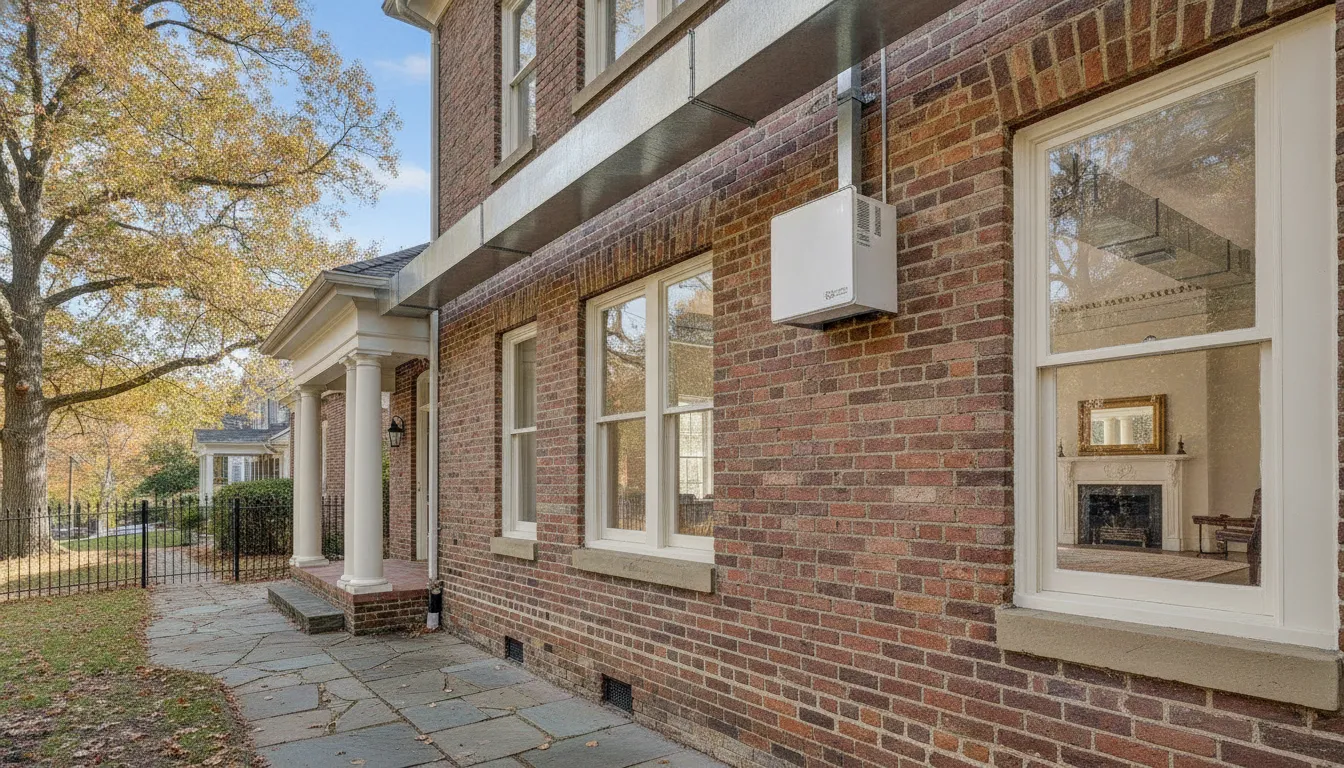
Ductless mini-split heat pumps provide an ideal cooling and heating solution for West End home additions, sunrooms, and spaces that lack ductwork. They require only a small three-inch wall penetration, preserve original plaster and woodwork, and offer zoned efficiency without the energy losses of ducted systems.
Dual comfort without extra ductwork
When you expand an older home with a new sunroom, running standard ducts is often too hard. Original plaster walls make adding new vents a risky task. Ductless mini-split heat pumps offer a great way to heat and cool these spots without needing big pipes to work. They use thin lines to link the indoor unit to the outdoor compressor.
Many local families look for the best Winston-Salem residential HVAC services to solve comfort issues in drafty rooms. A ductless unit cools only one room. This helps you save money and makes it a great choice for new home additions.
Protecting your historic walls
One big concern for West End homeowners is keeping the old charm of their home. Standard cooling systems need large metal ducts. Running these big pipes through historic closets and walls can cause permanent damage. Mini-splits only need a small three-inch hole in the wall to connect the indoor and outdoor parts.
This simple setup keeps your home safe from damage. It is a safe choice that does not change your home’s historic look. When you need AC repair in Winston-Salem, these systems are worth a look. They provide the specialized AC repair West End Winston-Salem homes often need with a great and modern touch.
High efficiency and zoning perks
Traditional ducted systems often waste a lot of power. Standard duct leaks can waste more than 30 percent of energy in a typical home. Because mini-splits do not use ducts, they do not suffer from these losses. They deliver hot or cold air straight to the room, which saves you money on power bills.
Each indoor unit also has its own thermostat. This means you only cool the spaces you are using. You can turn off the unit in a guest room while keeping your main bedroom cozy. This helps you cut waste while setting different zones to fit your daily needs.
Choosing the Right AC Technician for Your West End Winston-Salem Home
Historic West End homes need HVAC technicians who understand old construction, plaster walls, retrofitted ductwork, and older electrical systems. The right technician brings specialized historic retrofit experience, verifiable EPA licensing, and familiarity with the unique layouts of Winston-Salem historic districts.
Aged homes have specific needs. Standard cooling units do not fit well in century-old spaces. This is why you must pick a tech who knows old structures. Look for deep skill in older systems. A good pro will protect your plaster walls and fine wood trim.
Specialized historic retrofit experience
A common tech might try to cut new vents into your historic ceilings. This can ruin the look and value of your home. You need a team that knows how to run tiny flex ducts through small wall voids. They must have years of work with these hidden fits. When choosing a team, ask to see their past local projects. Proper setup work keeps the charm of your home while giving you cold air.
Older electrical system compatibility
Older West End homes often have aged wiring. A new, high-power AC unit can overload an old fuse box. Your tech must check your electrical panel before they put in a new system. Safety is key when dealing with old power grids. Also, the law says all techs who handle coolants must have an EPA license. You can verify this card through the EPA under Section 608. Never hire a worker who lacks this badge.
Familiarity with West End home structures
West End homes have unique layouts. Many have plaster walls, steep roofs, and small crawl spaces. A local crew will know these traits well. For expert help, you can trust QRC. We are a family-owned team and you can learn more about QRC and our local roots since 2003. When you need HVAC services in Winston-Salem, our group brings the right tools. We know how to do the exact AC repair West End Winston-Salem families need to stay cool.
Need AC repair for your West End historic home? Call QRC today.
Preventive AC Maintenance Tips for West End Homeowners
Historic West End homes need a proactive maintenance approach to keep AC systems running efficiently through hot North Carolina summers. Monthly filter changes, proper humidity monitoring, annual professional tune-ups, and duct inspections all help protect both your cooling system and your home’s historic materials.
Challenges in historic homes
Historic West End homes have timeless beauty. But their age can create major headaches for modern cooling systems. Drafty walls, old wood, and plaster tend to trap fine dust and block air. Without proper care, your system will work too hard and fail early. This extra strain often leads to a major breakdown. When that happens, you will need professional AC repair West End Winston-Salem residents can rely on to restore comfort.
Your AC maintenance checklist
You can handle many upkeep tasks yourself to protect your home. Follow this simple checklist to keep your air conditioner running smoothly all summer.
- Change filters monthly. Historic homes build up dust much faster than new ones. The EPA recommends swapping filters every 30 to 90 days, but older homes need a new filter every month. This keeps the air clean and protects the fan motor.
- Clear the outdoor unit. Mature trees in the West End drop leaves, twigs, and pollen. Clean these away from your outdoor AC unit. Keep a clear zone of at least two feet around the metal cage so heat can escape easily.
- Monitor indoor humidity. High humidity damages old plaster walls and historic wood floors. Keep your indoor humidity below 50 percent. This protects your home’s structure and makes the air feel much cooler.
- Check for duct leaks. Many older homes have retrofitted AC systems with ducts in the attic or crawlspace. Inspect these spots for loose tape or gaps. Sealing leaks keeps cold air in your living spaces instead of wasting energy.
- Keep vents open and clear. Do not block indoor supply vents or return grilles with heavy drapes or antique furniture. Your AC needs steady air movement to run right. Blocked vents cause the system to freeze up and stop working.
Long-term system protection
DIY steps are great, but they cannot replace professional care. Older systems need regular tune-ups to stay in top shape. Regular service helps catch small problems before they lead to costly repairs. To make maintenance easy, you can sign up for the QRC Comfort Club membership today. This service program gives you two precision tune-ups every year. It also gives you priority scheduling and discount rates on any future repairs. This plan helps your cooling system run better and last longer.
Frequently Asked Questions About AC Repair in West End
What does a typical AC repair cost in Winston-Salem?
Most AC repairs in the Winston-Salem area range from $200 to $1,200 depending on the issue. Simple fixes like a capacitor replacement or a faulty thermostat may cost on the lower end. More complex repairs involving the compressor, evaporator coil, or refrigerant leaks fall on the higher end. The age and condition of your historic home’s system also affect the final cost. A professional inspection gives you an accurate estimate before any work begins.
What is the $5000 rule for AC replacement?
The $5000 rule is a general guideline used by HVAC professionals. If a single repair costs 50 percent or more of the price of a new system, replacement is usually the better choice. For example, if a new AC unit costs $10,000 and a repair quote comes in at $5,000 or more, replacing the whole system makes more financial sense. This rule helps homeowners avoid sinking money into an aging system that may need more repairs soon.
What is the most expensive AC repair?
The compressor is typically the most expensive AC component to repair or replace. Compressor replacement can cost $1,200 to $2,500 or more. Other costly repairs include the evaporator coil, condenser coil, blower motor, and control board. For historic homes in West End, the labor involved in accessing these parts through tight crawlspaces or attics may add to the total cost.
How often should I service my AC in an older home?
Older homes benefit from AC service twice a year: once in the spring before cooling season and once in the fall after it ends. Because historic homes tend to produce more dust from plaster, wood, and aging insulation, monthly filter changes between professional visits are important. Regular service catches small problems before they turn into emergency repairs during peak summer heat.
Can I install central AC in a historic West End home?
Yes, but it requires careful planning. Many West End homes use retrofitted ductwork routed through closets, attics, or crawlspaces to avoid disturbing original plaster walls and woodwork. High-velocity mini-duct systems and ductless mini-splits are popular alternatives for historic homes. A local HVAC company with experience in historic retrofits can assess your home and recommend the best approach. Check out our guide on ductless mini-split installation for Triad homes for more details.
Ready to Schedule AC Repair for Your West End Home?
Ignoring a struggling AC can lead to a sudden breakdown during a hot summer day. This delay often leads to high power bills and costly, urgent repairs that disrupt your peace of mind. Do not wait for your system to fail. Taking care of your system now keeps your home cool. It also prevents major damage to your historic plaster and woodwork. Our family-owned team has served Winston-Salem since 2003, and we know how to care for older houses. We will find the issue and fix it quickly so you can stay safe and cool.
Ready to cool your historic home? Call (336) 813-1785 to schedule AC repair for your West End home today.