


When an air conditioner stops cooling during a Greensboro, NC summer, the first priority is protecting your household and getting clear information to the right technician. Old Irving Park homeowners should turn the system off if they notice burning odors, unusual electrical sounds, refrigerant concerns, or water spreading around the indoor unit. A few safe checks can help, but do not open equipment panels or attempt electrical or refrigerant work.
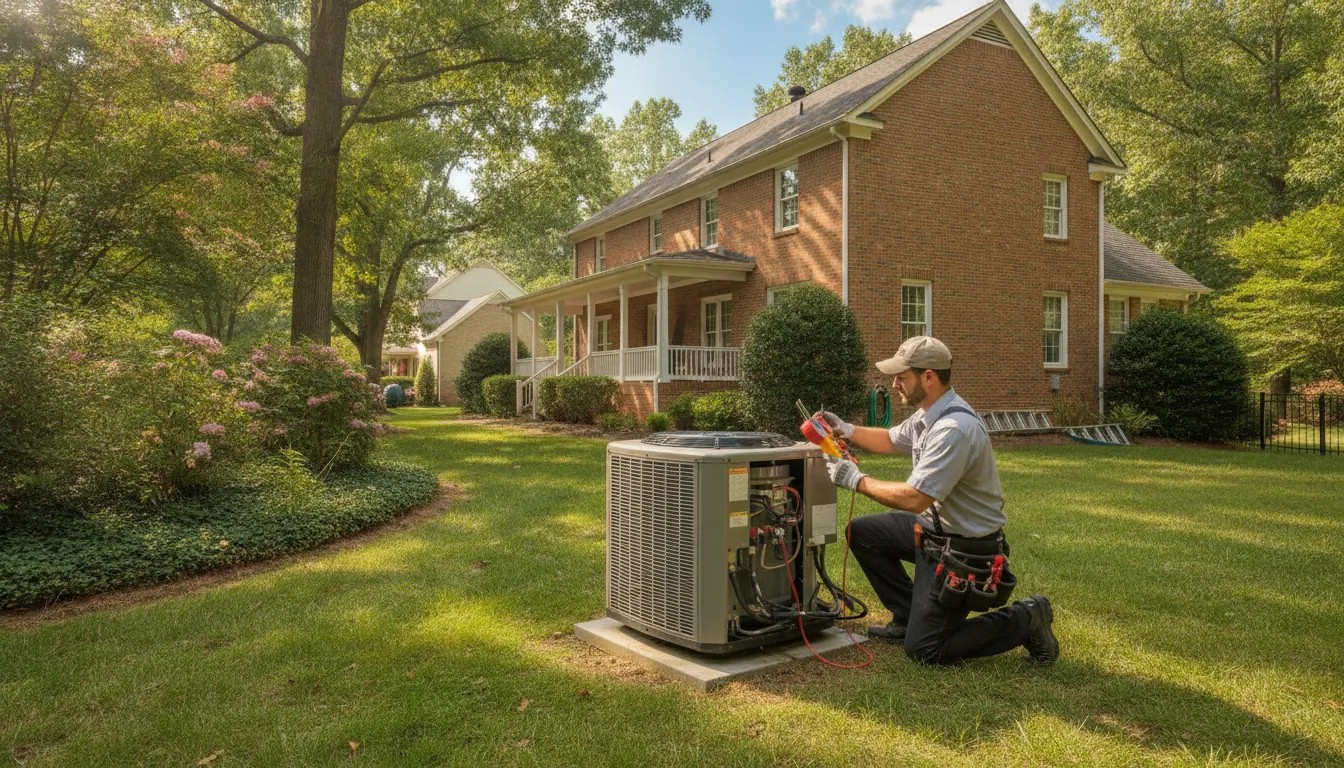
QRC HVAC & Refrigeration documents 24/7 emergency response and same-day availability for urgent repairs, subject to scheduling. For emergency AC repair Old Irving Park homeowners can call QRC’s residential air-conditioning service team at (336) 281-5144 and describe the symptoms, system behavior, and any safety concerns.
Exact arrival timing depends on the day’s schedule and the details of the failure. Knowing what qualifies as urgent, what you can safely check, and what information to share on the call makes the next step more efficient.
Request emergency AC repair in Old Irving Park and call (336) 281-5144
How quickly can Greensboro’s Old Irving Park homeowners get emergency HVAC repair?
QRC HVAC & Refrigeration has 24/7 emergency response and same-day availability for urgent residential AC repair, heat pump repair, or furnace repair in the Greensboro area. That includes Old Irving Park, while the exact arrival time depends on the schedule and call details.
Old Irving Park is within QRC’s documented residential service area, which extends roughly 30 miles from Winston-Salem. That local coverage can make QRC a practical option when the system stops cooling. Indoor temperatures become unsafe, or a problem involves unusual noise, odor, water, or an electrical concern. Availability is not the same as a guaranteed appointment slot. Calling as soon as the problem becomes urgent gives the scheduling team the clearest opportunity to assess the request.
What to expect when you call
Start with the service address and explain what changed. Tell the dispatcher whether the system is blowing warm air, has stopped running completely, or is cycling on and off. Mention when the problem began and whether anyone in the home has a health concern that makes excessive heat more serious. If you see water near the indoor equipment, ice on the refrigerant lines or coil area, an unusual smell, or loud electrical or mechanical noises, include those details.
Also explain whether the thermostat display is working and whether the system has power from its normal operating controls. Tell the team whether a technician can reach the indoor and outdoor equipment. Clear access information can reduce avoidable delays during an urgent visit. If the system is sparking, smoking, producing a burning smell, or creating another immediate safety concern. Turn it off if you can do so safely and tell the dispatcher. Do not open an electrical panel, handle refrigerant, or attempt to bypass a safety control.
Same-day service still depends on scheduling
QRC’s documented same-day urgent repair availability means the request can be considered for service that day, not that every caller will receive a guaranteed same-day arrival. Demand, technician availability, diagnosis, access, and the nature of the failure all affect timing. The team may need to confirm whether the issue requires emergency dispatch, a scheduled diagnostic visit, or another safe next step.
Have the equipment’s approximate age, recent service history, and any visible error code ready if available. Those details help the technician prepare without asking you to perform hazardous troubleshooting.
What makes an AC problem an emergency?
Loss of cooling becomes an AC emergency when indoor heat threatens health, the system shows signs of electrical or refrigerant danger, or continued operation could worsen the damage. Turn the system off when you notice burning odors, smoke, sparking, severe leaking, loud mechanical distress, or a frozen coil, then seek qualified HVAC help.
For Old Irving Park, Greensboro homeowners, the most urgent situation is an air conditioner that stops cooling during extreme heat. Indoor heat can contribute to heat exhaustion and heat stroke, especially for older adults, children, and people with health conditions. If your home is becoming unsafe, move vulnerable occupants and pets to a cooler air-conditioned location while arranging service. A fan can move air, but it does not actually lower the air temperature.
Warning signs that need prompt attention
- Warm air from the vents: If the thermostat calls for cooling but the system blows consistently warm air, the cause may involve airflow, controls, electrical components, or refrigerant. Do not keep running a malfunctioning system for hours while waiting for it to improve.
- Unusual sounds or odors: Grinding, screeching, repeated hard starts, burning smells, or a strong chemical odor deserve prompt evaluation. Turn the system off if the odor suggests overheating or an electrical fault.
- Ice or a frozen coil: Frost or ice on the indoor coil, refrigerant lines, or outdoor unit can indicate restricted airflow or a refrigerant problem. Switch the system off and let a qualified technician diagnose it. Do not chip away the ice or attempt to add refrigerant.
- Water around the indoor unit: A small amount of condensation can be normal, but pooling water, active dripping, or water near electrical equipment can damage the home and create a safety concern. Shut the system down if water is spreading or reaching wiring.
- Electrical or wiring concerns: Sparks, smoke, scorched components, a burning smell, or a breaker that repeatedly trips are not DIY problems. Leave panels closed and keep away from damaged equipment.
When to shut the system down
If the equipment is making a dangerous noise, producing smoke or a burning odor. Leaking heavily, repeatedly tripping the breaker, or showing substantial ice, turn the thermostat to the off position. If there is active smoke or fire, leave the home and contact emergency services. Otherwise, arrange emergency HVAC service and describe exactly what you observed. QRC HVAC & Refrigeration can use those details to determine the safest next step without asking you to open equipment or handle refrigerant.
A thermostat issue or mildly reduced airflow may be suitable for a scheduled visit, but worsening symptoms should not wait. When in doubt, protect people first, shut down questionable equipment, and ask a qualified technician to assess the system.
What can you safely check before calling for help?
Before calling for emergency AC repair in Old Irving Park, check only accessible items: the thermostat, filter, airflow, visible water, and the exterior position of the breaker. These observations can help a technician triage the problem, but they should not turn into an electrical, refrigerant, or equipment repair attempt.
- Check the thermostat. Confirm the display is on, the mode is set to cooling, and the setpoint is lower than the current room temperature. If the system is making an unusual sound, producing an odor, leaking, or repeatedly shutting off, switch the thermostat to off instead of repeatedly restarting it. Note whether the thermostat is blank, flashing an alert, or showing a low-battery message.
- Look at the air filter. If the filter is readily accessible, observe whether it is heavily loaded with dust. A restricted filter can reduce airflow, but do not remove covers or disassemble equipment to reach it. If replacing the filter is a normal homeowner task for your system, use the correct size and install it in the marked airflow direction. Do not delay urgent service if the home is becoming dangerously hot.
- Check visible airflow. Place a hand near a supply register and compare the airflow with another register. Look at return grilles and make sure furniture, rugs, or other household items are not blocking them. Do not insert tools into a grille or attempt to open ductwork, blower compartments, or other concealed areas.
- Look for visible water. Check the area around the indoor unit for pooling water, staining, or a saturated drain pan. Keep people and pets away from wet electrical areas. Do not open the cabinet, manipulate a drain line, or reach near wiring. A visible leak is useful information for the technician, not an invitation to make a repair.
- Observe the breaker from the outside only. If you can safely see the electrical panel and a breaker appears clearly out of position, note that fact. Do not open the panel, remove its cover, reset a breaker repeatedly, or touch exposed electrical components. If you smell burning, see smoke, or notice sparking, leave the area and use appropriate emergency assistance before contacting an HVAC professional.
- Document the symptoms. Write down when the problem started, whether the system blows warm or weak air. Any noises or odors, visible water, thermostat messages, and whether the issue affects the whole home. Photograph the model and serial information only if it can be read safely without climbing, removing covers, or approaching hazardous equipment. Share these details, the service address, and access instructions when you call.
Do not open electrical panels, handle refrigerant, bypass a safety control, climb onto a roof or equipment platform, or attempt compressor, motor, wiring, or other unsafe DIY repairs. Refrigerant handling requires qualified service, and concealed faults are best diagnosed by a trained technician. When the checks are complete, leave the system off if it is malfunctioning and request professional guidance.
What happens during an emergency AC repair visit?
During an emergency AC repair visit, the technician reviews the symptoms, diagnoses the system, makes the equipment safe, and explains the repair options before work begins. For Old Irving Park homeowners, that process is designed to identify the cause of the cooling failure without guessing or encouraging unsafe do-it-yourself repairs.
First, the technician confirms the problem
The visit usually starts with a brief review of what happened. Be ready to describe when the system stopped cooling, whether it is blowing warm air. Any unusual sounds or odors, whether the system has been running continuously, and whether you noticed water or ice. The technician may also confirm the thermostat setting, equipment location, access details, and any recent service history.
Those details help focus the inspection, but they do not replace testing. QRC HVAC & Refrigeration provides service for all makes and models. So the technician evaluates the equipment in front of them rather than assuming the cause from the brand or symptom alone.
Next, diagnosis and safe isolation
The technician inspects the accessible components and tests the system to separate a control, airflow, electrical, refrigerant, motor, compressor, or other equipment problem. If the system is malfunctioning, making an unsafe noise, leaking, or showing signs of an electrical fault, they can recommend shutting it down while the issue is addressed. Homeowners should not open electrical panels, handle refrigerant, or bypass a safety control.
Refrigerant-related work should be handled by a qualified professional. QRC’s technicians hold an EPA 608 certification for refrigerant handling. That matters when diagnosis involves a leak, charge issue, or component that requires recovery or replacement.
Finally, you receive a clear scope of work
Once the cause is understood, the technician explains what failed, what repair is appropriate, and whether any related work is needed. QRC provides transparent pricing as part of its residential repair model, so ask questions about the recommended scope before authorizing work. If a repair is not practical, the conversation may include replacement based on the system’s condition, recurring failures, safety concerns, or parts availability. Replacement is not automatic simply because the system stopped working.
For documented emergency-response information and service guidance, see QRC’s emergency HVAC service page. Availability depends on scheduling and the circumstances of the call, but a clear symptom report helps the team triage the visit responsibly.
Should you repair or replace the AC after a breakdown?
Answer: Repair is often reasonable when the system is in sound condition and the failure is isolated. Replacement deserves consideration when breakdowns keep returning, safe parts or support are becoming difficult to obtain. Comfort remains poor, or the repair would only postpone a larger system, ductwork, or electrical decision.
For an Old Irving Park homeowner, the right choice should follow a complete diagnosis rather than the age of the equipment alone. A qualified technician can identify whether the problem is a repairable component, a refrigerant or airflow issue. A control fault, or evidence that the system is no longer meeting the home’s needs. QRC HVAC & Refrigeration provides repair, troubleshooting, replacement, and installation services for residential air-conditioning systems.
| Consideration | Repair may fit when… | Replacement may fit when… |
|---|---|---|
| Age and condition | The equipment is generally reliable, well maintained, and the failure is limited to one component. | The system is worn across several components or its overall condition is declining. |
| Repeat failures | This is an unusual breakdown with no pattern of recurring service problems. | Multiple failures have interrupted cooling, comfort, or household plans over time. |
| Comfort and efficiency | The home cools evenly after the repair and the system can meet normal demand. | Some rooms stay uncomfortable, run times remain excessive, or airflow problems persist. |
| Parts and safety | Needed parts are available and the repair can be completed without unsafe conditions. | Parts support is limited, or the technician identifies an electrical, refrigerant, or equipment safety concern. |
| Broader scope | The issue is confined to the AC equipment and does not expose larger system concerns. | The project may also require ductwork, electrical changes, or a properly matched system upgrade. |
Look beyond the failed part
A replacement discussion should account for the home’s comfort pattern, airflow, ductwork, electrical requirements, and the condition of the existing equipment. Replacing one part may restore operation, but it will not correct undersized ducts, persistent restrictions, or an installation that cannot distribute cooling evenly. Conversely, a single failed capacitor, motor, control, or other serviceable component does not automatically make the entire system a replacement candidate.
Use a second path when an on-site visit is difficult
QRC also offers a Tele-Tech appointment for an initial replacement discussion. It cannot replace an in-person diagnosis for concealed, electrical, or refrigerant-related problems, but it can help organize thoughts and sizes for equipment replacement and establish next questions before deciding how to proceed.
Until the system is evaluated, turn it off if it is making unusual noises, producing odors, repeatedly tripping a breaker, leaking, or otherwise behaving unsafely. Do not open electrical panels, handle refrigerant, or bypass a safety control. The goal is not to choose repair or replacement under pressure. It is to choose the option that restores dependable, safe comfort for the home.
How can Old Irving Park homeowners reduce the next AC emergency?
Reduce the chance of another AC emergency by combining seasonal maintenance, timely filter care, clear airflow, and early attention to unusual sounds, odors, leaks, or repeat shutdowns. Planned service gives you more choices than waiting for a complete failure.
Preventive maintenance is more than a way to keep an air conditioner running through the season. It gives a homeowner an opportunity to understand the condition of the equipment and make a replacement decision on a reasonable timeline. A technician can identify developing concerns and help you separate a repairable issue from a system that may need broader planning. QRC’s service maintenance program can be a useful starting point for planning regular care.
Consider starting that conversation before an outage if you notice:
- Repeated service calls or breakdowns during the cooling season.
- Uneven comfort that continues after routine troubleshooting.
- Performance changes that make the system work harder or run less consistently.
- A system that is aging and becoming more difficult to plan around.
- A major repair recommendation that raises questions about whether continued repairs make sense.
These signs do not automatically mean replacement is the right answer. The decision should follow a diagnostic evaluation that considers the equipment, comfort concerns, repair history, and the home’s needs. Acting before a complete failure simply gives you more time to compare replacement options, review installation requirements, and choose a schedule that is less disruptive.
Get emergency AC help in Old Irving Park and call (336) 281-5144
Frequently Asked Questions
Why is my AC blowing warm air instead of cold?
Warm air can result from thermostat, airflow, electrical, refrigerant, or equipment problems. Check the thermostat and accessible filter without opening equipment. If the system continues to blow warm air, especially during dangerous heat, turn it off if needed and arrange qualified service.
How long does a typical AC repair visit take?
There is no reliable one-size-fits-all duration. The time depends on the fault, access, testing, parts, and whether the system needs a repair or a larger recommendation. When you call, share the symptoms and equipment details so the technician can plan the diagnostic visit.
Can I repair my AC myself before calling a professional?
You can safely check the thermostat, accessible filter, visible airflow, and visible water. Do not open electrical panels, handle refrigerant, bypass safety controls, climb onto equipment, or attempt wiring, compressor, motor, or concealed drain repairs. Those jobs require qualified service.
What causes an AC unit to freeze up?
Ice can be associated with restricted airflow or a refrigerant problem, among other faults. Turn the system off, do not chip away the ice or add refrigerant, and describe what you see when requesting service. A technician should diagnose the cause before the system runs again.
Will regular maintenance help prevent future AC repairs?
Regular service can help identify developing issues and maintain accessible components. QRC’s service guidance recommends AC service twice a year and describes checking items such as filters, fan blades, refrigerant levels, and motors. Maintenance cannot prevent every failure, but it can support earlier planning.
Ready for Emergency AC Help in Old Irving Park?
When your home loses cooling or the system shows a safety warning, a clear symptom report helps QRC HVAC & Refrigeration determine the next step. Request residential air-conditioning service and call (336) 281-5144 to discuss the problem.