


If you are researching a heat pump water heater, you are probably trying to answer two practical questions: how does this equipment differ from a standard water heater, and will it work well in your home? A heat pump water heater can use electricity more efficiently than conventional electric-resistance heating, but it also needs the right space, airflow, electrical service, drainage, and tank capacity. The best choice depends on your household’s hot-water habits and the conditions where the equipment will be installed.
At QRC HVAC & Refrigeration, we help homeowners in Winston-Salem, Greensboro, High Point, and nearby Triad communities make informed heating and cooling decisions. Our residential heating and cooling guide is a useful starting point for broader home-comfort questions. This article explains what to evaluate before you buy or replace a water heater, without pretending that one tank size or operating mode is right for every home.
Contact QRC for practical home-comfort guidance | (336) 281-5144
What Is a Heat Pump Water Heater?
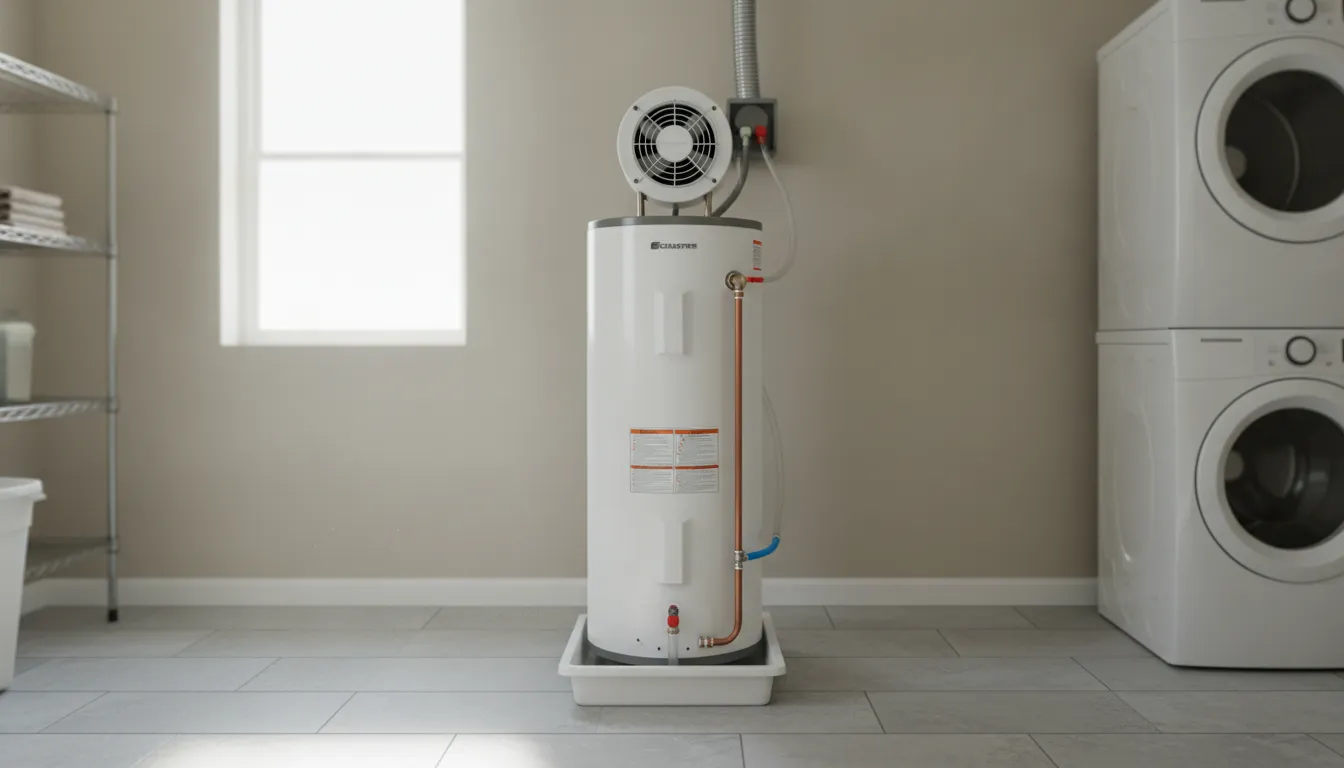
A heat pump water heater is a storage water heater that moves heat from the surrounding air into the water tank. Instead of relying only on an electric resistance element to turn electricity directly into heat, the heat-pump portion uses a compressor and refrigeration cycle to transfer available heat. Many models are hybrid units: they use the heat pump for efficient operation and have electric resistance elements available when the household needs a faster recovery.
The technology is related to the heat-transfer principle used by an air-source heat pump for home heating and cooling, but the equipment has a different purpose. A home heat pump conditions indoor rooms. A heat pump water heater draws heat from the air around the tank and places that heat in stored domestic hot water. The U.S. Department of Energy explains that heat pump water heaters can be two to three times more energy efficient than conventional electric-resistance water heaters, although actual performance depends on the model, installation, operating mode, and surrounding conditions.
How Does a Heat Pump Water Heater Work?
During heat-pump operation, a refrigerant loop absorbs heat from the air around the unit. The compressor raises the refrigerant’s temperature, and a heat exchanger transfers that heat into the water stored in the tank. The refrigerant then cycles back to collect more heat. Because the system is moving heat rather than generating all of it with resistance elements, it can produce hot water with less electricity under suitable conditions.
That efficiency comes with tradeoffs. The tank needs access to enough surrounding air, and the heat-pump portion can cool and dehumidify the room as it operates. It also produces some sound and creates condensate that must drain safely. When demand is high, the unit may use backup resistance heating, which can use more electricity than heat-pump-only operation. These are not reasons to reject the technology. They are reasons to plan the installation around the actual home.
ENERGY STAR’s heat pump water heater installation guide emphasizes that requirements vary by model. Air volume, clearances, temperature, electrical connections, drainage, and manufacturer instructions all matter. We recommend treating the installation requirements as part of the buying decision, not as details to discover after the tank arrives.
What Are the Main Benefits?
Lower energy use than standard electric resistance
For a household currently using an electric-resistance storage water heater, a heat pump model may reduce the electricity required to produce the same general hot-water service. The savings are not a promise of a fixed bill reduction. Household size, hot-water demand, utility rates, temperature settings, maintenance, and the selected operating mode all affect the result. The useful comparison is the expected performance of a specific model in your home, not a generic claim about every heat pump water heater.
One tank can provide familiar storage capacity
A heat pump water heater still stores hot water in a tank, so it is different from an on-demand tankless system. That familiar format can make it easier to plan around showers, laundry, dishwashing, and other daily routines. The heat pump may recover more gradually than a gas-fired unit during a heavy draw, so sizing and operating mode deserve careful attention. A household moving from gas should not assume that the old tank size automatically provides the same recovery experience in every new configuration.
Hybrid operation adds flexibility
Many models allow the homeowner to choose among modes such as heat-pump efficiency, hybrid operation, electric resistance, or vacation settings. Names differ by manufacturer. A high-demand period may call for a different setting than a normal week, and a vacation setting may reduce unnecessary heating while the home is unoccupied. We prefer to think of these modes as tools for managing real usage rather than as buttons that eliminate the need for correct sizing.
It may fit a broader home-efficiency plan
A water heater replacement can be one part of a larger home-comfort and energy-efficiency discussion. Before combining projects, consider the condition of the electrical panel, available space, ventilation, plumbing, condensate drainage, and the heating and cooling equipment already serving the home. A heat pump water heater does not replace the home’s space-heating system, and it should not be selected as a substitute for evaluating a failing furnace or heat pump.
What Should You Check Before Choosing One?
The following table is a useful starting point. A product brochure can tell you what a model is designed to do, but an installation review is needed to determine whether the proposed location and connections are suitable.
| Decision area | Questions to ask | Why it matters |
|---|---|---|
| Household demand | How many people use hot water, and when do showers, laundry, or dishwashing overlap? | Tank capacity and first-hour delivery should match the home’s usage pattern. |
| Available space | Does the room have the model’s required air volume, clearances, and access for service? | The heat pump needs surrounding air and room to operate and be maintained. |
| Temperature | Does the space remain within the manufacturer’s allowed temperature range? | A cold location can affect heat-pump performance and may increase backup-element use. |
| Electrical service | What voltage, breaker, circuit, outlet, and panel capacity does the selected unit require? | Electrical requirements vary, especially between 120-volt and 240-volt models. |
| Condensate | Where will condensate drain, and what happens if the drain backs up? | Water management protects the equipment and surrounding finishes. |
| Plumbing and safety | Are shutoffs, the relief-valve discharge, expansion control, and connections planned correctly? | Domestic-water safety and code-compliant installation are not optional upgrades. |
| Future access | Can the tank be replaced or serviced without removing doors, walls, or other equipment? | Good access reduces disruption during future maintenance or replacement. |
Where Can a Heat Pump Water Heater Be Installed?
Common locations include basements, utility rooms, garages, and large closets, but the best location is not simply the place where the old tank stands. The space needs enough air for the heat pump to operate, and it must stay within the unit’s temperature limits. ENERGY STAR notes that many traditional 240-volt models need roughly 700 cubic feet of air, although requirements vary and some models need less. A closet may need a louvered door or another approved airflow arrangement. Always follow the selected manufacturer’s instructions rather than using a generic room-size rule.
A garage can work in some Triad homes when it stays above the model’s minimum temperature and provides the required protection and drainage. A basement may offer a stable environment, but the installer still needs to consider condensate, access, moisture, and the impact of cooler exhaust air. A small enclosed closet may be unsuitable without an approved venting or airflow plan. Do not box the unit into a tight space just because the previous water heater fit there.
The heat pump may release cooler air into the room. That can be helpful in a warm utility area, but it may be uncomfortable or inefficient if the room is already cold or if the exhaust is directed toward a thermostat or frequently occupied area. The unit also needs service clearance. Measuring the room and the path to it before purchase helps prevent a delivery-day surprise.
How Do You Size a Heat Pump Water Heater?
Sizing starts with usage, not just the number printed on the existing tank. Count the people in the home, identify overlapping hot-water activities, consider unusually large tubs or fixtures, and note whether the household has predictable morning or evening peaks. Ask for the model’s first-hour rating and recovery information, not only its nominal storage volume.
A family replacing a gas water heater may need to evaluate a larger tank or a different operating strategy because electric recovery characteristics can differ. A household with modest, spread-out demand may value heat-pump efficiency more than rapid recovery. A home with frequent consecutive showers may need more stored capacity or a model with a higher first-hour delivery. The right answer should come from the manufacturer’s performance data and the home’s actual pattern.
Oversizing is not automatically harmless. A larger tank may need more floor space and can increase standby losses. Undersizing can lead to frequent resistance-element operation or a disappointing shortage of hot water. We recommend comparing at least two realistic usage scenarios before making the purchase decision: a normal day and the busiest day the household regularly experiences.
What Installation Details Deserve Extra Attention?
Electrical capacity
Some heat pump water heaters use a dedicated 240-volt circuit, while other models are designed for 120-volt installation. The selected unit’s specifications control. An electrician or qualified installer should evaluate the panel, wiring route, disconnecting means, and required protection before the equipment is ordered. Do not assume that an available receptacle is suitable simply because it is close to the tank.
Condensate drainage
Because the heat-pump coil extracts heat from air, it can also produce condensate. The drain needs a safe path, appropriate slope, and protection for the nearby floor and finishes. In some locations, a condensate pump or a secondary protection method may be necessary. The exact solution depends on the model and the room. A drain pan alone does not fix an improperly routed primary condensate line.
Water connections and relief protection
The cold-water inlet, hot-water outlet, shutoff, temperature and pressure relief discharge, and other plumbing components must be installed according to the manufacturer’s instructions and applicable North Carolina requirements. An expansion tank may be needed in a closed plumbing system. These details are part of safe water-heater work and should be handled by the appropriate licensed professional.
Airflow and service clearance
The heat-pump module needs air and the technician needs access. Clearances vary by model and can include space above the tank, around the sides, and in front of service panels. Do not use a storage closet for the unit until you confirm the required air volume and door configuration. Keep boxes, paint, chemicals, and other items away from the airflow path and service area.
Is a Heat Pump Water Heater Right for Every Home?
No. It can be a strong option for some homes, especially those replacing an electric-resistance tank and those with a suitable warm or moderate-temperature location. It may be less convenient when the only available space is too small, too cold, difficult to drain, or unable to support the required electrical circuit. A household with very high simultaneous demand may also need to compare a larger tank, hybrid settings, or other water-heating options.
The decision should also account for how long you expect to remain in the home, your comfort with learning operating modes, the condition of the electrical and plumbing systems, and whether current rebates or utility programs apply. Incentives change and often have equipment, installation, income, or timing requirements. Verify any program directly with the administering utility or government agency before including it in your budget.
If your larger concern is the performance of the home’s heating and cooling system, QRC can help you evaluate residential HVAC needs in our Triad service area. We handle heat-pump questions involving the home’s space-conditioning system, but a domestic water-heater installation must still be matched to the right plumbing and electrical scope. Keeping those boundaries clear helps you get the right professional for each part of the project.
What Maintenance Does It Need?
Maintenance starts with the manufacturer’s instructions. Depending on the model, homeowners may need to monitor or replace an air filter, keep the air path clear, inspect the condensate line, and watch for unusual noise, leaks, error codes, or changes in hot-water availability. The tank may also have an anode rod and other components that require periodic attention. A maintenance schedule should reflect the equipment, water conditions, and installation environment.
Call for help if water appears around the tank, the relief discharge is active, the unit repeatedly switches to resistance operation, the room is becoming unusually wet, or hot water drops sharply. Do not bypass a safety control or keep operating equipment that is leaking near electrical components. A prompt evaluation can distinguish a normal operating characteristic from a plumbing, electrical, airflow, condensate, or equipment problem.
Explore QRC heating guidance for your Triad home | (336) 281-5144
Frequently Asked Questions About Heat Pump Water Heaters
Does a heat pump water heater heat the whole house?
No. It heats domestic water stored in its tank. It does not replace the home’s furnace, air-source heat pump, or other space-heating and cooling equipment. Its heat pump moves heat from the room air into the water.
Does it work during cold weather?
It can operate in cold weather when installed in a space and within a temperature range approved by the manufacturer. Cold surrounding air can reduce heat-pump performance and may increase use of backup resistance heating. Check the model’s specifications and the actual temperature of the proposed location.
Is it noisy?
The compressor and fan make operating sound, so placement matters. A utility room or basement may be more comfortable than a location beside a bedroom. Ask for the manufacturer’s sound information and keep the required service and airflow clearances.
Can it replace a gas water heater?
Some heat pump water heaters are designed for replacement projects involving gas equipment, but the electrical, venting, plumbing, airflow, and recovery differences need to be reviewed. Sizing may need special attention because electric recovery can differ from gas recovery. Compare the proposed model’s first-hour delivery with the home’s demand before ordering.
How much does a heat pump water heater cost?
The total project cost depends on the unit, tank size, electrical work, plumbing changes, condensate drainage, access, permits, and any repairs needed at the installation location. We do not recommend relying on an internet price range as a quote for your home. A written estimate should explain the proposed equipment and the work needed to install it safely.
Ready to Evaluate Your Home’s Heating and Cooling Needs?
A heat pump water heater can be an efficient choice when its capacity, location, airflow, electrical service, plumbing, and drainage all fit the home. Start with those practical questions instead of choosing a tank by price or by the size of the old unit. For residential heating and cooling guidance in Winston-Salem, Greensboro, High Point, and nearby Triad communities, contact QRC HVAC & Refrigeration | (336) 281-5144 to discuss the next step.