


When an air conditioner starts sending an unfamiliar odor through your Winston-Salem home, the smell is useful information, not something to simply mask. Musty, vinegar-like, burning, rotten-egg, and sewer odors can point to very different problems, from trapped moisture to an electrical or gas-related safety concern.
Need help identifying the smell? Schedule an AC odor inspection with QRC HVAC & Refrigeration in Winston-Salem today.
If your ac smells like vinegar, mold, mildew, or bacterial buildup inside the system is a common cause, especially when moisture collects around a clogged drain or dirty filter. However, an overheating electrical component can also create a sharp, vinegar-like odor. Turn the system off and arrange a professional inspection if the smell is strong, new, or accompanied by heat, smoke, or unusual sounds.
A few safe observations can help narrow down where the odor begins, but cleaning coils, treating biological growth, and checking electrical components require the right equipment and training. Start by looking at the likely sources of a sour smell, then compare them with the warning signs that call for faster action.
Why Does My AC Smell Like Vinegar?
If your air conditioner smells sour or vinegary, the odor usually is not vinegar inside the system. In most homes, the vinegar-like smell comes from moisture that has allowed mold, mildew, or bacteria to build up around the evaporator coil, drain pan, or ductwork. This is sometimes called dirty socks syndrome when bacteria on the coil create a musty, sour smell. A clogged condensate drain or dirty filter can make the problem worse by allowing moisture to linger or restricting airflow.
The most common sources of the odor
Air conditioning systems naturally collect moisture while they cool your home. That moisture should drain away, and clean air should move through the equipment. When drainage or airflow is compromised, biological growth can develop in dark, damp areas. A vinegar-like smell is a useful warning that the system may need more than a surface-level deodorizer.
- Mold or bacteria on the evaporator coil: Growth on or near the coil can produce sour or musty odors, especially when the system starts running.
- A clogged condensate drain: A blocked drain can cause water to back up and stagnate, creating conditions that support mold and may lead to water damage.
- A dirty air filter: A loaded filter reduces airflow, which can contribute to excess moisture and make it easier for odor-causing growth to persist.
These causes can overlap. For example, a dirty filter may reduce airflow, while a partially blocked drain keeps moisture near the coil. The result can be an odor that appears only after the system has been running for a while, or that becomes stronger on humid days.
What the smell means for your AC system
A persistent odor should not be covered up with fragrance. It may indicate that the coil, drain pan, condensate line, or nearby ductwork needs inspection and cleaning. A technician can also determine whether the smell is coming from the cooling components or from an overheating electrical part. A sharp burning odor, smoke, or a smell that changes quickly is a safety concern. So turn the system off and seek prompt professional help rather than opening the equipment yourself.
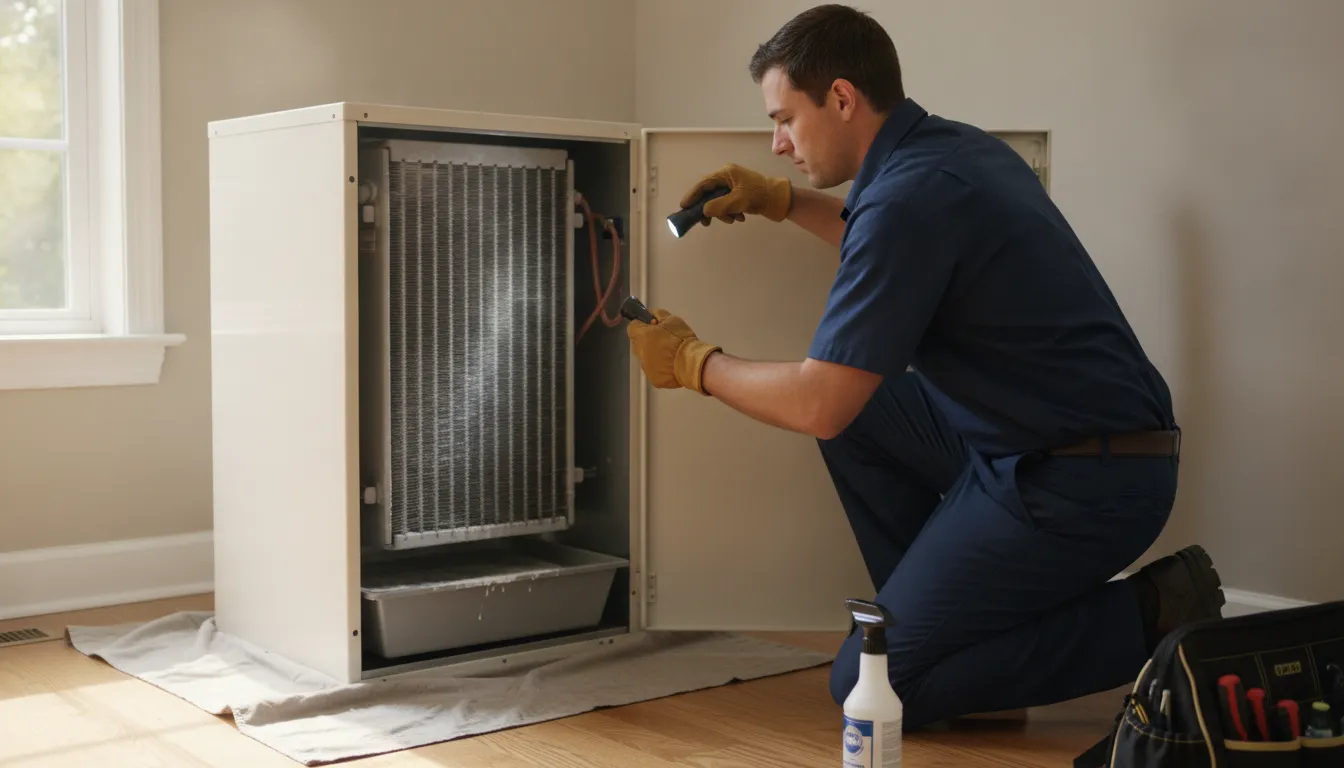
For homeowners who need help identifying the source, QRC provides residential AC service in Winston-Salem. Professional coil and condensate cleaning can address buildup that a filter change cannot reach, while an inspection can help prevent the odor and moisture problem from returning.
Musty Smell From Air Vents: What Causes It
A musty odor is one of the most common residential AC complaints because cooling systems naturally handle moisture. When that moisture does not drain or dry properly, it can support mold, mildew, and bacterial growth. The odor may come from the evaporator coil cabinet, the condensate pan and drain, or damp sections of ductwork. Those sources can smell similar, but the pattern of the odor offers useful clues.
When the evaporator coil is the likely source
The evaporator coil becomes cold as it removes heat and humidity from indoor air. If bacteria build up on the wet coil surface, the result can be a musty or sour odor sometimes called dirty socks syndrome. A clogged condensate drain can make the problem worse by allowing water to back up and stagnate near the coil. Poor airflow can also leave the system damp for longer than it should be. In these cases, the smell often becomes noticeable shortly after the AC starts, then moves through the home as air passes over the coil.
A dirty filter can contribute by restricting airflow and increasing moisture accumulation. Replacing an accessible filter with the correct size may help, but persistent odor usually calls for a professional inspection and coil or condensate cleaning. Do not spray household cleaners into the equipment, since incorrect products can damage components or spread contaminants.
When damp ductwork may be involved
If the odor is strongest at several vents, remains after the system shuts off, or appears in rooms served by the same branch, then damp ductwork deserves attention. Mold can grow in dark, humid duct interiors, especially when moisture has entered through leaks, condensation, or a drainage problem. A vinegar-like or musty smell does not prove that the ducts are contaminated, so a technician should trace the odor before recommending duct cleaning.
Regular maintenance, clean filters, reliable condensate drainage, and professional inspections help prevent mold and bacterial accumulation. Because indoor contaminants can affect comfort and air quality, homeowners in Winston-Salem can review QRC’s indoor air quality services and arrange an evaluation when the smell keeps returning.
AC Odor Guide: Burning, Rotten Eggs, Sewer, and More
Not every air conditioner odor means the same thing. A mild musty smell may point to moisture and biological growth, while a sharp burning odor can signal an overheating component. Use the odor as a clue, not a diagnosis. The urgency column below reflects when to stop operating the system and when a professional inspection is the safer next step.
Match the odor to the safest next step
| Odor | Likely cause | Urgency | Next step |
|---|---|---|---|
| Vinegar or sour | Mold or bacteria associated with moisture, a dirty coil, or a clogged condensate drain | Moderate | Have the coils and drain inspected and professionally cleaned. A blocked drain can allow water to stagnate and support odor-producing growth. Learn more about common vinegar-smell causes. |
| Musty | Mold or mildew in the evaporator coil area, ductwork, or another damp part of the system | Moderate | Arrange an inspection and cleaning. Do not spray unapproved chemicals into vents or the equipment. |
| Burning or hot plastic | An overheated motor, wiring, insulation, or other electrical component | High | Turn the AC off at the thermostat. If the odor continues, smoke appears, or you see sparks, leave the area and contact emergency services. Call an HVAC professional before restarting the unit. |
| Rotten eggs | A possible natural-gas leak near fuel-burning equipment or elsewhere in the home | Severe | Do not operate switches or use an open flame. Evacuate everyone, move away from the building, and call the gas utility or 911 from a safe location. |
| Sewer | A clogged condensate drain, backed-up drain pan, or nearby plumbing issue | Moderate to high | Turn off the system if water is backing up, then request drain and pan service. Prompt attention can limit water damage and additional microbial growth. |
| Refrigerant or sweet chemical | A possible refrigerant leak or chemical reaction within the system | High | Turn the system off. Keep people and pets away from the affected area, and call a qualified HVAC technician. Do not handle refrigerant lines yourself. |
Electrical overheating can create a potential fire hazard, so a burning smell deserves immediate attention even if the AC still cools. Likewise, a rotten-egg odor should be treated as a gas-safety concern rather than an ordinary HVAC maintenance issue. If you are unsure which category fits, shut the system down and seek professional guidance instead of masking the smell with a spray or air freshener.
When an AC Odor Signals an Emergency
Not every unusual smell means the same thing. A mild musty or sour odor may point to moisture, bacteria, or a dirty filter. But a sharp burning smell, rotten-egg odor, or strong chemical smell calls for immediate caution. Do not keep running the system while you try to identify the source.
Turn Off the Unit and Get Help for These Odors
Burning or scorched odor: Burning wire insulation, resin, or an overheated motor can create a sharp smell. Electrical overheating is a potential fire hazard, so switch the air conditioner off at the thermostat. If you see smoke, sparks, or signs of fire, leave the home and call 911. Do not open the equipment cabinet or attempt an electrical repair. Contact a qualified HVAC professional immediately.
Rotten-egg or sulfur odor: This can indicate a possible natural-gas leak, especially if the smell is present beyond the air vents. Do not operate light switches, use flames, or stay inside to investigate. Leave the building, warn others from a safe location, and call your gas utility or 911. Once the area is declared safe, an HVAC technician can evaluate whether the equipment also contributed to the odor.
Strong acidic or chemical odor: A refrigerant leak or chemical reaction can occasionally produce a sharp, vinegary smell. Refrigerant concerns require professional tools and handling. Turn the AC off, keep people and pets away from the equipment, and arrange prompt service. Chemical vapors can irritate the eyes, nose, throat, and respiratory system, so move to fresh air if anyone feels discomfort.
When reporting the problem, describe when the smell began, whether it occurs only when the system runs, and whether you noticed heat, smoke, hissing, or water. Those details can help a technician respond safely and identify the right component without encouraging risky DIY troubleshooting.
Safe AC Odor Checks You Can Do Yourself
Before scheduling service, a few low-risk observations can help you describe the problem clearly. A vinegar-like odor can point to compromised drainage or airflow, while regular maintenance helps limit moisture, mold, and bacterial buildup. Work only with parts that are plainly accessible, and stop if you are unsure.
- Check the air filter. Turn the system off at the thermostat, then look at the filter if it is easy to reach. If it is visibly dirty or clogged, replace it with the correct size and rating for your system. A cleaner filter supports better airflow and can help reduce moisture accumulation. Do not operate the system without a filter.
- Look at the accessible overflow or drain pan. If the pan is visible without removing panels, check for standing water, rust, or signs of an active leak. Do not reach into a moving or recently running unit. Standing water can stagnate and contribute to mold-related odors, and an overflowing pan may cause water damage.
- Inspect the visible condensate drain line. Look for an obvious kink, disconnection, or blockage at the accessible portion of the line. Do not insert tools, pour chemicals into the line, or dismantle fittings. A clogged drain can back up water and create conditions that support sour odors.
- Confirm that a condensate pump is draining. If your system has an accessible pump, observe it during normal operation from a safe distance. Listen for normal cycling and check for water around the pump or discharge tubing. Do not open the pump housing or place your hands near its electrical connections.
- Check the registers and vent covers. With the system off, look for visible dust on nearby registers and covers. Dust can indicate that airflow or filtration deserves attention, but it does not prove that the odor source is inside the ductwork. Wipe accessible covers gently without spraying cleaner into the vents.
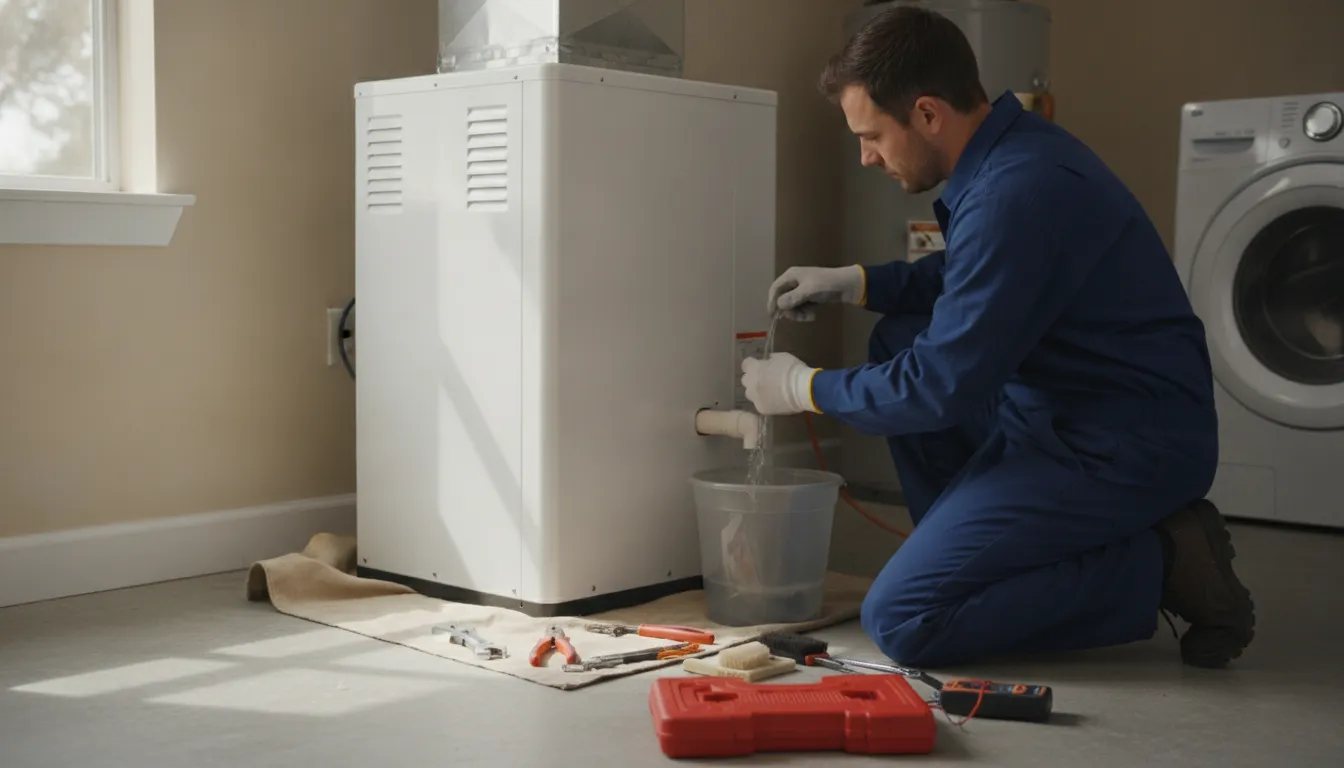
Do not open the electrical panel, handle refrigerant, or attempt to clean the evaporator coil yourself. Those tasks involve electrical, pressure, or chemical hazards and may damage the system. If the smell persists, water returns, airflow remains weak, or the odor becomes sharp or burning, leave the equipment off and arrange a professional inspection. Regular maintenance and professional cleaning are safer ways to address hidden coil, drain, or bacterial buildup.
When to Call a Professional for AC Odor Treatment
If the odor returns after you replace the filter and check the accessible drain area, schedule a professional inspection. A persistent vinegar or musty smell usually means moisture, bacteria, or mold is deeper inside the system than a homeowner can safely reach. The source may be the evaporator coil, condensate pan, drain line, or nearby ductwork.
Why surface cleaning may not solve the problem
Evaporator coils sit inside the air handler, where they collect moisture as the system cools your home. Bacteria can accumulate on the coil and produce the odor sometimes called dirty socks syndrome. A clogged condensate drain can also leave water stagnant, creating conditions that support mold growth and sour odors. Wiping the cabinet or spraying a household cleaner around a vent will not remove biofilm from the coil or clear an obstructed drain.
Professional treatment may include inspecting the coil and drain pan, clearing the condensate line, cleaning the evaporator coil, and sanitizing affected components. A technician can also check airflow and the filter condition, since restricted airflow can contribute to excess moisture. The goal is to remove the source, not simply cover the smell with fragrance.
Call sooner when the odor is persistent or spreading
Arrange service promptly when the smell is constant. Do the same when it returns quickly after basic maintenance, appears throughout the home, or comes with water near the indoor unit. A backed-up condensate line can cause water damage, while mold or bacterial growth in coils and ductwork can affect indoor air quality. Professional technicians have the tools to inspect hidden components without damaging the system, and early attention can help prevent further damage to coils or other parts.
Before the visit, note whether the odor is strongest when the system starts, runs, or shuts off. That detail can help narrow the source. You can also review QRC’s first things to check before an HVAC service call, but avoid opening electrical compartments or applying chemicals inside the unit.
For homeowners who need AC repair and maintenance in Winston-Salem, QRC can evaluate condensate drainage, evaporator coil condition, and indoor air quality needs. Call QRC HVAC & Refrigeration at (336) 281-5144 to discuss the odor, or request service online.
Frequently Asked Questions
Why does my AC smell like vinegar?
A sour or vinegary odor usually points to mold, mildew, or bacterial buildup inside the system, often where moisture remains on coils or near a drain. A dirty filter or a clogged condensate drain can contribute by restricting airflow or allowing water to stagnate. Persistent odors should be inspected rather than covered with air fresheners. Learn more about common vinegar-smell causes.
Could a clogged drain line cause a sour AC odor?
Yes. When a condensate drain is blocked, water can back up and stagnate, creating conditions that support mold growth and sour odors. You may also notice water near the indoor unit or reduced cooling. Change an accessible dirty filter, but do not probe deep into the drain or open panels unless a qualified technician directs you to do so.
How do I get rid of a vinegar smell from my air conditioner?
Start with safe checks: replace a dirty filter, confirm that supply vents are open, and look for visible water around the indoor equipment. If the smell remains, the evaporator coil, drain pan, drain line, or ductwork may need professional cleaning and sanitization. A technician can also check electrical components and refrigerant conditions before recommending a repair.
Is a burning or rotten-egg smell from my AC dangerous?
Treat both odors seriously. A burning smell can indicate overheating electrical parts or wire insulation, so turn the system off if you can do so safely and arrange prompt service. A rotten-egg odor may indicate a gas-related hazard. Leave the area, avoid switches or flames, and contact the appropriate emergency service or gas utility. Do not keep running the equipment to see whether the smell goes away.
Schedule an AC Odor Inspection
Persistent odors can point to buildup around the coil or condensate system, so a professional inspection can help identify the source and point to the cleaning that is needed. QRC HVAC & Refrigeration can inspect your system and discuss coil and condensate cleaning for your Winston-Salem home.
Ready to get rid of the smell for good? Contact QRC HVAC & Refrigeration today to schedule your AC odor inspection, or call (336) 281-5144.