


Chiller Repair Warning Signs for Critical Facility Teams
A chiller rarely fails without warning. The first evidence may be a small rise in leaving-water temperature, a new vibration pattern, or longer compressor run time. For manufacturing and healthcare facility teams, those changes can signal a developing fault that threatens production, controlled environments, equipment, and operating budgets. Prompt chiller repair starts with recognizing the change, protecting the facility, and giving a qualified technician useful operating data.
Schedule chiller service with QRC HVAC & Refrigeration when a new alarm, leak, noise, or loss of cooling puts facility uptime at risk.
The most important warning signs are abnormal noise or vibration, unexplained energy use, short cycling, unstable chilled-water temperatures, leaks, pressure alarms, and reduced cooling capacity. One symptom does not identify the failed component by itself. It does tell the facility team that the chiller should be assessed before the fault becomes a shutdown.
Which chiller repair warning signs require attention?
Any measurable departure from the chiller’s normal operating baseline deserves attention, especially when it persists or appears with an alarm. Facility teams should compare current readings with recent trend logs rather than judging the machine from a single snapshot.
Unusual noise and vibration
Grinding, rattling, squealing, or a new high-pitched sound can indicate trouble with a motor, bearing, coupling, pump, or refrigerant circuit. Increasing vibration can also loosen connections and place stress on piping. Record where the sound is strongest, when it begins, and whether it changes as the load changes. Do not remove guards or open refrigerant components to investigate.
Rising energy use or longer run time
A chiller that runs longer to meet the same load may be losing heat-transfer efficiency or operating outside its intended conditions. Fouled heat exchangers, flow problems, control issues, and refrigerant-side faults can all make the system work harder. Compare energy use with cooling load, weather, occupancy, and production schedules before concluding that the chiller is responsible.
Leaks, unstable temperatures, and recurring alarms
Water on the mechanical-room floor, oil residue, or an unexplained loss of fluid requires investigation. So do repeated high-pressure, low-flow, or freeze-protection alarms. Unstable leaving-water temperature and short cycling are especially important because they show that the system is struggling to maintain control. Clear an alarm only after documenting it and following the facility’s approved procedure.
- New grinding, rattling, or squealing sounds
- Vibration above the normal baseline
- Repeated alarms or nuisance trips
- Temperature drift at a steady load
- Visible water, oil, or refrigerant-related evidence
- Higher energy use without an operational explanation
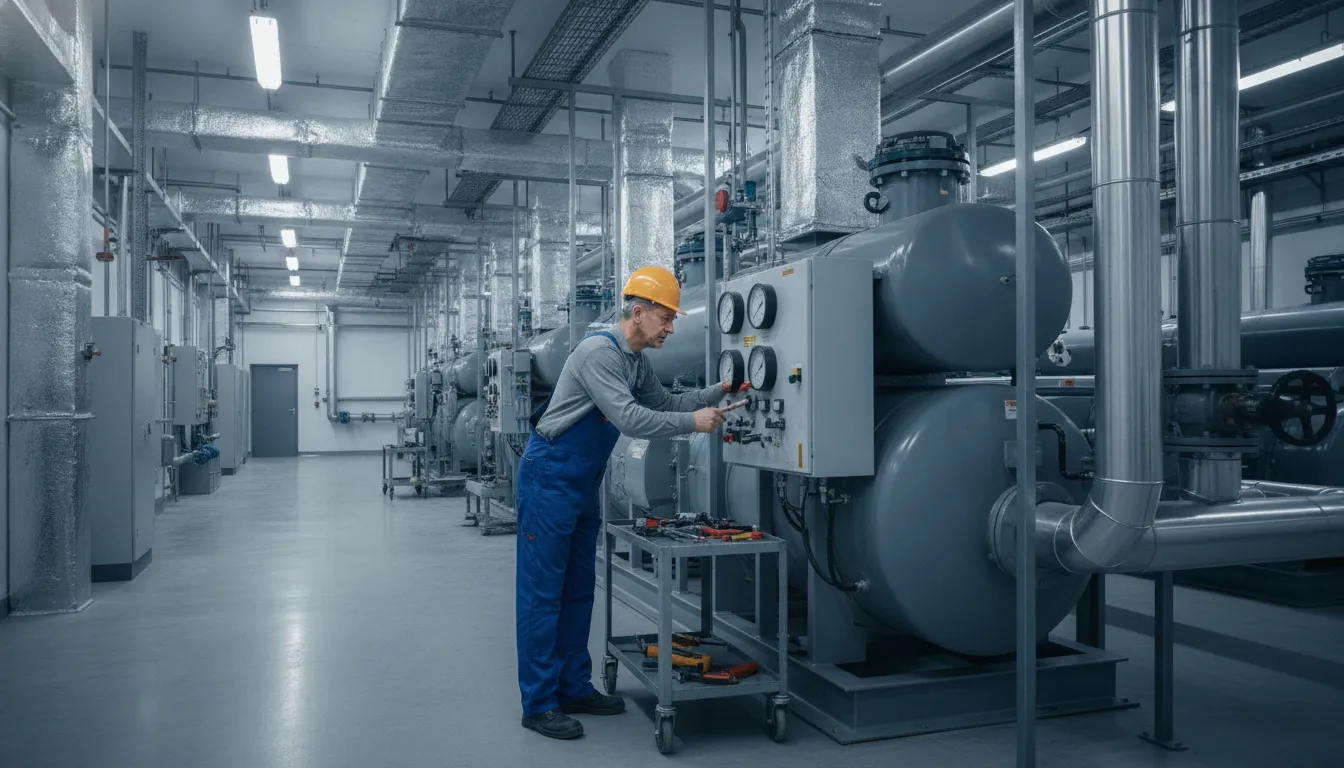
Why do chiller problems carry different risks by facility?
The urgency of a chiller fault depends on what the cooling system protects and how much redundancy the facility has. A temperature deviation that is inconvenient in one building may interrupt production or threaten a controlled healthcare environment in another.
| Facility | Cooling dependency | Potential consequence | First planning question |
|---|---|---|---|
| Manufacturing | Process and equipment cooling | Scrap, line interruption, or equipment stress | Can the affected load be reduced or transferred? |
| Healthcare | Temperature, humidity, and critical spaces | Loss of environmental control or service disruption | Which spaces have the highest operational priority? |
| Laboratory | Controlled rooms and sensitive equipment | Compromised conditions, samples, or testing | What limits trigger the response plan? |
| General commercial | Building comfort and equipment rooms | Occupant disruption and higher operating cost | How long can the building operate safely? |
Risk also changes with the fault’s rate of progression. A stable two-degree temperature drift with standby capacity available calls for a different response than rapidly rising temperature paired with repeated trips and no redundant machine. Facility leaders can make a better service-priority decision by weighing four factors together: the measured deviation, how quickly it is changing, the consequence to the protected load, and the capacity available if the operating chiller stops. This approach turns a vague complaint such as “the chiller is not cooling well” into an actionable risk statement for the service team.
Manufacturing teams should connect symptoms to process load
Plant teams should determine whether the warning appears only at peak production, during a specific shift, or after another piece of equipment starts. That context can help a technician separate a chiller fault from a changing process load or water-flow problem. The cost of downtime may justify an earlier planned service window rather than waiting for a trip.
Healthcare teams should follow the facility response plan
Healthcare environments may depend on stable temperature and humidity across spaces with different priorities. The facility’s approved emergency and continuity procedures should guide the response. Technical staff should communicate what changed, which areas are affected, whether backup capacity is available, and how quickly conditions are moving away from their normal range.
What should facility teams do when a warning sign appears?
Confirm the condition, protect people and operations, document useful data, and call a qualified service provider. Facility personnel should not perform invasive work on high-voltage equipment, pressure vessels, or refrigerant circuits unless they are trained and authorized.
- Confirm the symptom. Compare the alarm, temperature, sound, or vibration with the normal baseline. Note whether the issue is continuous or intermittent.
- Protect the facility. Follow the site’s safety and continuity procedures. Reduce or transfer loads only when the approved operating plan allows it.
- Capture operating data. Record time, active alarms, entering and leaving water temperatures, setpoints, load conditions, and recent changes.
- Gather equipment information. Have the chiller model, serial number, control type, service history, and recent work orders ready.
- Request professional diagnosis. Explain the operational consequence and the evidence already collected so the service team can prepare.
Do not repeatedly reset a chiller that continues to trip. A reset may temporarily hide the evidence a technician needs, and continued operation may worsen some faults. If the problem is affecting refrigeration-dependent operations, QRC’s guide to reducing refrigeration downtime and product loss provides additional continuity-planning considerations.
Get a chiller repair assessment and share your alarm history, trend data, and facility priorities with QRC before the service visit.
What happens during professional chiller repair?
Professional chiller repair is a diagnostic process, not simply a parts replacement. The technician uses controls data, physical inspection, measurements, and system history to isolate the root cause, complete the repair, and verify operation under an appropriate load.
Diagnosis starts with system context
A technician first reviews the reported symptom, recent alarms, maintenance records, and operational changes. They may compare pressure, temperature, flow, electrical, and control readings with the manufacturer’s requirements and the facility’s historical baseline. That process matters because similar symptoms can have different causes. For example, low cooling capacity can result from flow limitations, heat-transfer problems, control faults, or refrigerant-side conditions.
The repair should address cause and consequence
After isolating the fault, the technician explains the repair scope and any related risks. Work may involve cleaning, control correction, electrical repair, leak repair, pump or motor service, or replacement of a failed component. The correct action depends on chiller type, manufacturer guidance, and measured evidence. QRC supports commercial and industrial HVAC systems as part of its broader commercial refrigeration and cooling services.
Verification closes the job
A repair is not complete until the unit is tested and its operation is documented. The service team should confirm that the original symptom is resolved, alarms are clear for the right reason, and temperatures and other readings are moving toward expected values. Facility teams can then retain the findings, work performed, parts used, and final readings as a new baseline.
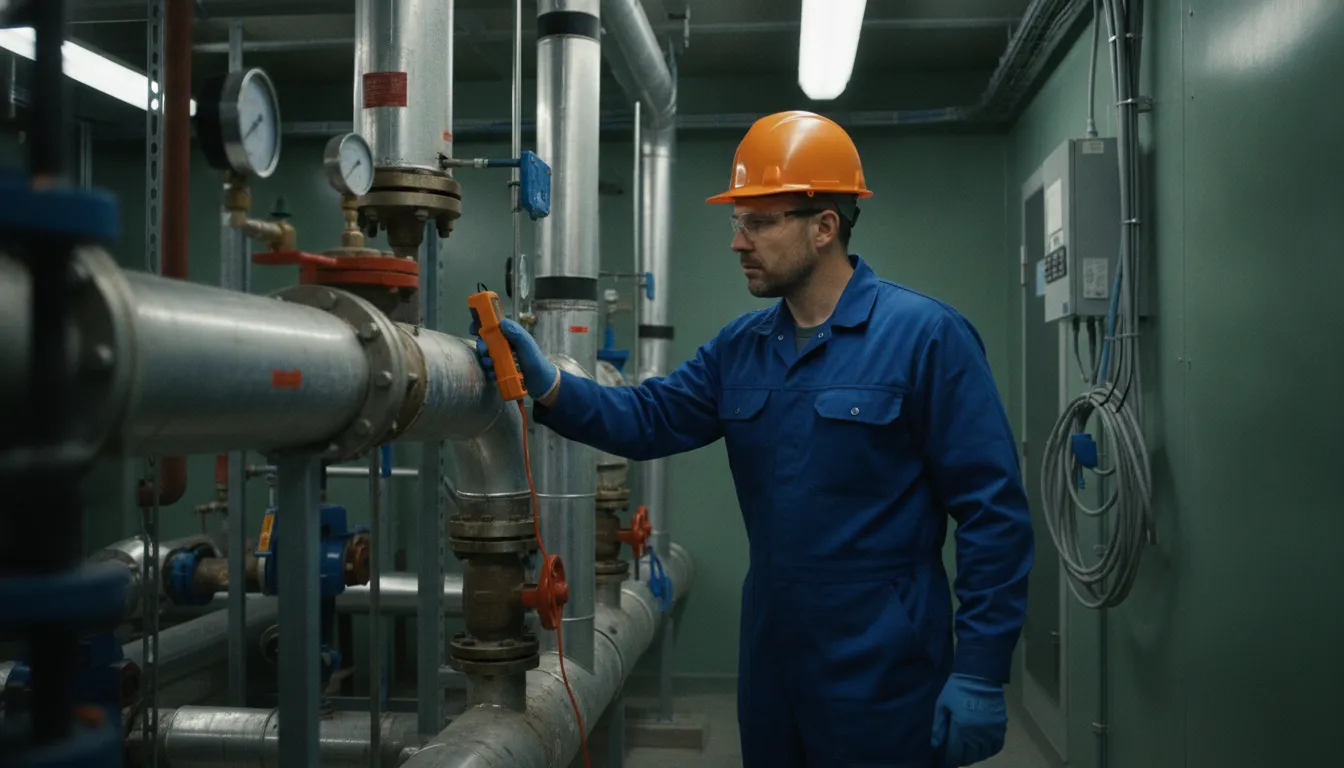
How can operators give technicians better diagnostic evidence?
Good diagnostic evidence shows what changed, when it changed, and what the facility was doing at the time. A concise operating history can reduce guesswork and help the technician reproduce an intermittent problem.
Build a useful symptom timeline
Record the first observed time, alarm text or code, load condition, setpoint, entering and leaving water temperatures, outdoor conditions for air-cooled systems, and any changes made before the symptom appeared. Note whether pumps, valves, cooling towers, or connected equipment changed state. Photos of a visible leak or a short recording of an unusual sound can be useful when collected safely.
Keep trend data comparable
Trend logs are most useful when teams collect the same readings at consistent intervals and under known operating conditions. A single high reading may be noise. A steady change across comparable operating periods can reveal deterioration. Teams should also document recent maintenance, control updates, and changes in production or building use, because those events may explain the apparent change.
When does repair make sense compared with replacement?
Repair usually makes sense when the fault is isolated, parts are available, performance can be restored, and the risk of another interruption is acceptable. Replacement deserves consideration when reliability, capacity, parts availability, or operating cost no longer supports the facility’s needs.
Use a risk-based decision, not a rule of thumb
Age alone does not decide the issue. Facility leaders should review failure frequency, repair history, current capacity, efficiency, refrigerant and parts availability, redundancy, and the cost of an unplanned outage. A repair with a clear cause and predictable result may be sensible on an older machine. Repeated faults across several major components may support a planned capital project.
Compare downtime exposure with the project window
A replacement can reduce long-term risk, but it also requires design, procurement, installation, and commissioning. Critical facilities should compare that project timeline with current failure exposure and available backup capacity. A qualified contractor can help define immediate repairs that stabilize operation while the facility evaluates longer-term options.
How can preventive maintenance reduce emergency repairs?
Preventive maintenance reduces emergency repair risk by finding developing problems during a planned service window. It also creates the trend history needed to recognize small but meaningful changes in performance.
Focus on the complete chilled-water system
The chiller does not operate alone. Pumps, valves, strainers, heat exchangers, cooling towers, controls, and water quality all affect performance. Maintenance planning should account for the connected system instead of treating every symptom as an internal chiller failure. Inspection frequency and tasks should follow manufacturer guidance, operating conditions, and facility risk.
Turn each service visit into a better baseline
Record measurements before and after service, then keep those results with the equipment history. Over time, the records help teams identify recurring alarms, deteriorating components, and changes in energy or capacity. QRC offers commercial maintenance support, and facility teams can learn how professional HVAC diagnostics support repair decisions.
Frequently asked questions about chiller repair
What is the first sign that a chiller needs repair?
The first sign is often a measurable change from the unit’s normal baseline, such as longer run time, unstable leaving-water temperature, a recurring alarm, or new noise or vibration. Confirm and document the change, then arrange diagnosis before it becomes a shutdown.
Can a facility team keep operating a chiller after an alarm?
That depends on the alarm, equipment instructions, and the facility’s approved operating procedure. Do not repeatedly reset a unit that continues to trip. Protect people and operations, record the alarm and conditions, and contact a qualified technician.
What information should we provide when requesting chiller repair?
Provide the model and serial number, alarm codes, symptom timeline, entering and leaving water temperatures, load conditions, recent maintenance, and operational impact. Clear information helps the service team prepare for diagnosis.
How often should an industrial chiller be inspected?
Inspection frequency should follow the manufacturer’s requirements and reflect operating hours, environment, water quality, system history, and facility risk. Critical facilities may require more frequent monitoring and planned service than lower-risk buildings.
Plan chiller repair before a warning becomes downtime
Small changes in sound, vibration, temperature, alarms, and energy use give facility teams a chance to act. Document the evidence, follow the site’s safety and continuity procedures, and use professional diagnosis to identify the cause. QRC HVAC & Refrigeration is family-owned, based in Winston-Salem, and supports commercial and industrial cooling needs across North Carolina.
Contact QRC HVAC & Refrigeration to schedule chiller repair or request a quote.