


If your heat pump is not keeping your Pfafftown home comfortable, a few simple observations can help you decide what to do next. This guide to heat pump repair Pfafftown homeowners can use explains the safe checks to try, the warning signs to take seriously, and what to expect when you schedule service. Some problems have a simple cause; others need a trained technician to diagnose the equipment.
Schedule heat pump service — call (336) 281-5144
What should you check before calling about a heat pump?
Start with the thermostat and the airflow, then look at the outdoor unit from a safe distance. These checks do not require opening the equipment or handling wiring. If you notice smoke, a burning smell, unusual sparking, or another immediate hazard, step away and seek appropriate urgent help rather than continuing to troubleshoot.
- Confirm the thermostat setting. Check that it is set to Heat or Cool as intended, and that the temperature setting is several degrees beyond the current room temperature. If the display is blank or behaving oddly, note that before making changes.
- Check the air filter. A heavily clogged filter can restrict airflow. If the filter is due for replacement, use the correct size and type for the system, following the equipment instructions. Do not run the system without a filter.
- Make sure supply and return vents are open. Check that rugs, furniture, or curtains are not blocking them. Avoid closing many vents to redirect air; that can interfere with system airflow.
- Look at the outdoor unit. From outside the unit, check whether leaves, grass, or other loose debris are crowding the cabinet. Keep the area clear, but do not remove panels or reach into the equipment.
- Check for an obvious drain or water issue. If you see water near indoor equipment, note where it is coming from and protect nearby belongings if safe. Do not open the cabinet or try to clear internal components.
- Write down what the system does. Is it running continuously, starting and stopping, making an unfamiliar sound, or blowing air that feels wrong? Note when the problem began and whether it affects every room or only one area.
If the system still does not respond after these basic checks, stop changing settings and arrange a diagnosis. Repeatedly resetting equipment can hide useful clues or make an underlying fault harder to identify.
Why might a heat pump stop heating well in Pfafftown?
A heat pump moves heat rather than creating warmth in the same way as a fuel-burning furnace. Its performance depends on the outdoor conditions, equipment operation, airflow, and the way the home distributes conditioned air. A symptom alone rarely identifies the failed part, so a technician will consider the system as a whole.
Restricted airflow
A dirty filter, blocked return, or obstructed supply vent can reduce airflow. The system may run longer while rooms feel uneven. Start with the accessible filter and vents. If airflow remains weak after the easy checks, the cause may be inside the system or ductwork and needs further assessment.
Ice or frost on the outdoor coil
A light layer of frost can occur in cool, damp weather, and a heat pump has a defrost process to manage frost buildup. A thick coating of ice that remains, returns quickly, or seems to prevent normal operation is different. Do not chip at the ice, pour hot water over the unit, or try to force the equipment through a cycle. Record what you see and request service.
Unusual cycling or weak comfort
Frequent starts and stops, a system that runs for a long time without improving comfort, or a large difference between rooms may have more than one possible cause. Airflow, thermostat operation, equipment condition, and the home’s distribution system are all worth considering. Describe the pattern rather than assuming a particular component is at fault.
Auxiliary heat runs often
Some systems use auxiliary heat when the home needs additional warmth. Seeing it operate sometimes does not, by itself, prove that anything is broken. If the system seems to rely on auxiliary heat for long periods, comfort is poor, or energy use changes sharply, arrange an evaluation. QRC’s explanation of what auxiliary heat is and why it may run can help you understand the terminology before the visit.
Age, wear, or a developing component problem
Moving parts and controls can wear over time. A new rattle, repeated clicking, or a sudden change in operation may be a useful clue, but sound is not a reliable diagnosis on its own. Avoid removing covers or attempting repairs; share the sound, timing, and operating conditions with the service team.

What if only one part of the home feels uncomfortable?
A single room that feels too warm or too cool does not always point to a heat pump fault. Start with simple room-level observations: check that the supply vent is open, the return path is not blocked, and furnishings are not covering airflow openings. Note whether the discomfort changes when an interior door is open or closed. Do not make large thermostat adjustments to compensate for one room; that may leave the rest of the home uncomfortable without correcting the cause.
If the pattern continues, tell the technician which rooms are affected and whether the issue occurs during both heating and cooling. Mention any recent changes in how rooms are used, such as a space becoming an office or a door staying closed more often. Air distribution, thermostat location, duct conditions, and equipment operation can all be relevant. An inspection can help separate a system-wide problem from a room-specific comfort issue.
In homes with more than one heating and cooling system, note which areas each system serves and whether the symptoms are limited to one zone or unit. Do not assume two similar thermostats operate the same equipment. Clear notes about which controls and rooms are involved can save time during diagnosis.
Which symptoms mean you should arrange service promptly?
Do not wait for a complete shutdown if the heat pump is repeatedly failing to heat or cool, making a new harsh noise, or showing persistent ice buildup. A prompt assessment can identify whether the condition is minor or needs repair before it causes more disruption. If the system is simply not reaching the thermostat setting and there is no immediate hazard, note the symptoms and contact a qualified HVAC provider for guidance.
- The system will not start or repeatedly stops shortly after starting.
- Airflow is very weak or noticeably different from the usual pattern.
- The outdoor unit has heavy frost or ice that does not clear through normal operation.
- You notice a new grinding, banging, or persistent metallic sound.
- Indoor comfort has changed suddenly, or some rooms are consistently much colder than others.
- Water is appearing around indoor equipment, or there is a strong unusual odor.
For a burning odor, visible smoke, or another immediate danger, prioritize safety and do not keep operating the system. For less urgent performance problems, provide the service team with a clear description and ask what to do while waiting.
What information helps a heat pump repair visit?
A few details can help a technician understand the issue and plan the visit. You do not need to identify the failed part. Focus on what changed and what you can observe safely.
- Equipment details: If the model information is easy to see without removing a panel, take a photo of the label. Do not climb, reach into the unit, or move heavy objects to find it.
- Symptoms and timing: Note when the trouble began, whether it is constant or intermittent, and how the system behaves when it starts.
- Thermostat display: Record the mode, set temperature, room temperature, and any displayed alert or code. A photo can be useful.
- Recent changes: Mention a recent filter change, thermostat adjustment, power interruption, or other change you observed.
- Room-by-room pattern: Identify which spaces feel uncomfortable and whether airflow seems different at particular vents.
Before approving work, ask what the inspection found, which repair is recommended, and whether the system should be left off or operated in a particular way until the work is completed. A clear explanation should connect the observed symptom to the proposed next step.
What can you expect during a heat pump service visit?
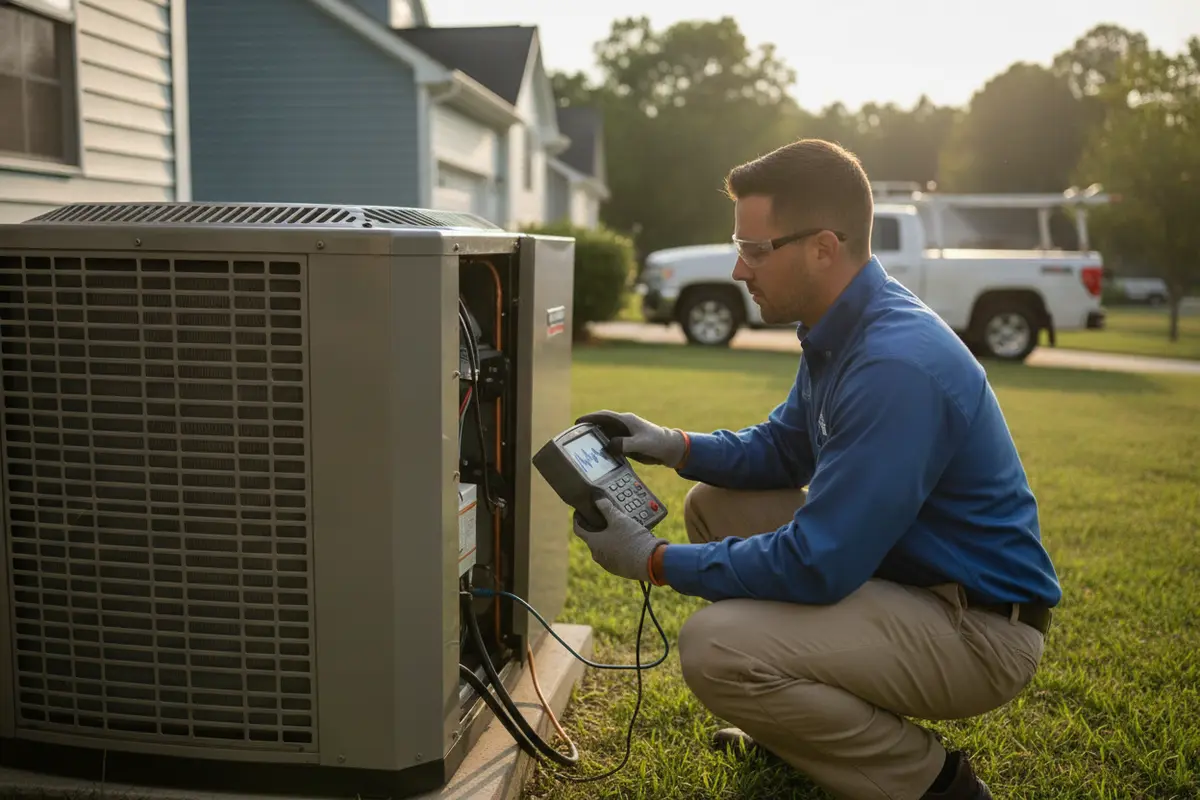
The technician will ask about the symptoms and inspect the system to narrow down the cause. Depending on what is observed, the evaluation may include operating checks, airflow review, thermostat and control checks, and inspection of accessible components. The exact process depends on the equipment and the complaint; no single checklist fits every situation. A technician may need to see the system operate to understand an intermittent problem. If the symptom comes and goes, explain how often it happens and what the thermostat showed at the time. A short video of a sound or visible symptom can sometimes help explain what you observed, but do not put yourself near moving equipment or attempt to reproduce a hazardous condition.
It can also help to explain any comfort pattern in the home. For example, tell the technician whether the upstairs is consistently warmer or colder, whether one room has weak airflow, or whether the issue began after a change in how the home is used. Those details do not prove a cause, but they can help guide the inspection. If you have had prior service, mention what was done and whether the same symptom returned. This keeps the conversation focused on the current problem and its history.
Once the cause is better understood, ask for an explanation in plain language. Useful questions include:
- What did you find, and how does it explain the symptom?
- What repair is recommended, and what could happen if I wait?
- Are there other reasonable options for this system?
- What should I watch for after the repair?
- Is there a maintenance concern that can be addressed separately from the immediate repair?
QRC provides residential HVAC service in its Winston-Salem/Triad market. Pfafftown homeowners can contact QRC to discuss the problem and service availability. For general background, see the company’s guide to heat pump repair and service and its overview of routine heat pump care.
Should you repair the heat pump or consider replacement?
There is no single age or repair-cost rule that makes the decision for every household. Consider the system’s condition, repair history, comfort, performance, and the scope of the recommended work. A qualified in-home evaluation can explain what is wrong and whether a repair is likely to address the problem.
| What to compare | Repair may make sense when… | Discussing replacement may make sense when… |
|---|---|---|
| Repair history | The issue is identifiable and the system has otherwise operated reliably. | Problems are recurring or several significant concerns have appeared. |
| Comfort | The system has generally kept the home comfortable and the current symptom is limited. | Uneven temperatures or poor comfort continue despite prior work. |
| Equipment condition | The technician finds a specific repair that can restore normal operation. | The assessment identifies broader wear or a major system concern. |
| Household priorities | You prefer to address a defined fault and reassess performance afterward. | Reliability, long-term plans, or changing comfort needs favor comparing system options. |
| Home and ductwork | The existing setup appears suitable for the home and the repair addresses the issue. | Changes to the home or distribution system mean the next system should be evaluated as a whole. |
Do not choose equipment size based only on the old unit’s label or square footage. A replacement recommendation should account for the home and its requirements, including load and ductwork considerations. Ask for an explanation of the evaluation and how the proposed option fits your priorities. QRC’s heat pump cost guide offers general decision context, while financing information is available for customers considering major work. The right next step depends on an assessment of your home, not a generic online estimate.
When comparing a proposed repair with another option, ask for the recommendation in writing and make sure you understand what is included. Clarify whether the work is meant to correct the present symptom or address a broader performance concern. Ask what follow-up, if any, is recommended and what signs would mean the problem has returned. If more than one option is presented, compare the expected purpose of each, the condition it addresses, and how each fits your plans for the home. A useful conversation separates the immediate repair from optional future work, so you can decide based on the condition found and your own priorities.
It is also reasonable to ask how the technician reached the conclusion. A simple explanation of the observation or test that points to the issue can make the decision easier to follow. If the recommendation involves replacing the system, ask how the home’s heating and cooling needs were considered, rather than assuming a like-for-like change is automatically the best fit. Keep the service notes and any equipment documentation with your household records.
How can Pfafftown homeowners reduce avoidable heat pump trouble?
Basic upkeep helps you notice changes and keep airflow pathways clear, but it is not a substitute for diagnosis when the equipment behaves abnormally. Follow the manufacturer’s care guidance and schedule service if you observe persistent performance problems.
- Check the filter regularly and replace it when needed, using the size and type specified for the system.
- Keep leaves, branches, and other loose debris from accumulating around the outdoor cabinet.
- Keep indoor supply and return vents unobstructed.
- Pay attention to new sounds, repeated cycling, or changing room temperatures.
- Keep a brief record of service and any recurring symptoms.
It is useful to separate routine observations from hands-on maintenance. You can note a thermostat setting, check an accessible filter, and keep the outdoor area clear. Leave internal cleaning, refrigerant work, and component adjustments to a qualified professional. If you are unsure how to access a filter safely or which replacement is correct, check the equipment manual or ask the service provider rather than guessing.
Comfort can also depend on more than the outdoor unit. An interior door kept closed, blocked return grille, or changed use of a room may affect how comfortable that space feels. If the same room is often uncomfortable, note whether its door is usually open, whether the vent is unobstructed, and whether the pattern happens in both heating and cooling seasons. These observations give the technician a clearer picture without requiring you to diagnose the system.
Seasonal conditions in the Piedmont can shift between mild days and colder nights. If your heat pump’s behavior changes with outdoor temperature, note the conditions when you notice the problem. That context may help a technician reproduce and evaluate an intermittent concern.
For additional local context, QRC’s HVAC service information for Lewisville and Bermuda Run service overview discuss nearby Triad-area HVAC needs. Service availability can vary by address, so confirm coverage when arranging a visit. The Better Business Bureau maintains a directory of heating and air conditioning providers near Advance, North Carolina; that listing can be viewed as a directory, not an endorsement: heating and air conditioning directory near Advance.
Talk with QRC about heat pump service — call (336) 281-5144
Frequently Asked Questions
Can I run my heat pump if it has a little frost?
A light frost layer can occur in cool, damp conditions, and the system may clear it during a defrost cycle. Heavy ice that persists, returns quickly, or interferes with operation needs professional attention. Do not scrape or chip ice from the unit.
Why is my heat pump blowing air that does not feel very warm?
Heat pump supply air may feel different from the hotter air many people associate with a furnace. But a sudden change, rooms that keep getting colder, or a system that cannot reach the thermostat setting deserves investigation. Check the thermostat and filter first, then describe what you notice to a technician.
Should I turn the heat pump off before service?
There is not one answer for every symptom. If there is smoke, a burning smell, or another immediate hazard, stop using the equipment if it is safe to do so and seek urgent help. For ordinary comfort problems, call the service provider and follow the guidance they give for your system.
Does a heat pump need service even if it is still running?
Repeated cycling, persistent ice, weak airflow, unusual sounds, or worsening comfort can be worth checking before a full breakdown. Routine inspection and upkeep also give you a chance to discuss small changes before they become harder to manage. See QRC’s heat pump service overview for more on regular care.
Ready to Get Help With Your Pfafftown Heat Pump?
When basic checks do not restore comfort, share the symptoms and timing with QRC and ask about service availability for your address. Call (336) 281-5144 or contact QRC to discuss the next step.
A careful diagnosis can help you understand the problem and make a practical decision for your home.