


In a Lewisville home, the right number of indoor mini-split heads depends less on a simple room count than on the home’s layout. Insulation, window exposure, and the outdoor unit’s approved capacity. A bedroom, bonus room, or converted space may need its own zone, while an open living area may be served by one strategically placed head.
How many indoor heads can one outdoor mini split unit support in Lewisville? Many standard multi-zone systems support up to 5 indoor units, while some model-specific systems can support 2 to 8 heads. The final number must match the manufacturer’s specifications, refrigerant piping limits, and a proper load calculation.
For Triad homeowners, multi-zone ductless cooling can provide independent comfort without installing several outdoor condensers. The next step is understanding how the system’s capacity translates into practical room-by-room zoning, and why more heads is not always better.
Schedule a ductless mini-split consultation with QRC HVAC & Refrigeration to see how many indoor heads your Lewisville home can support. You can also call QRC at (336) 281-5144 to discuss your layout.
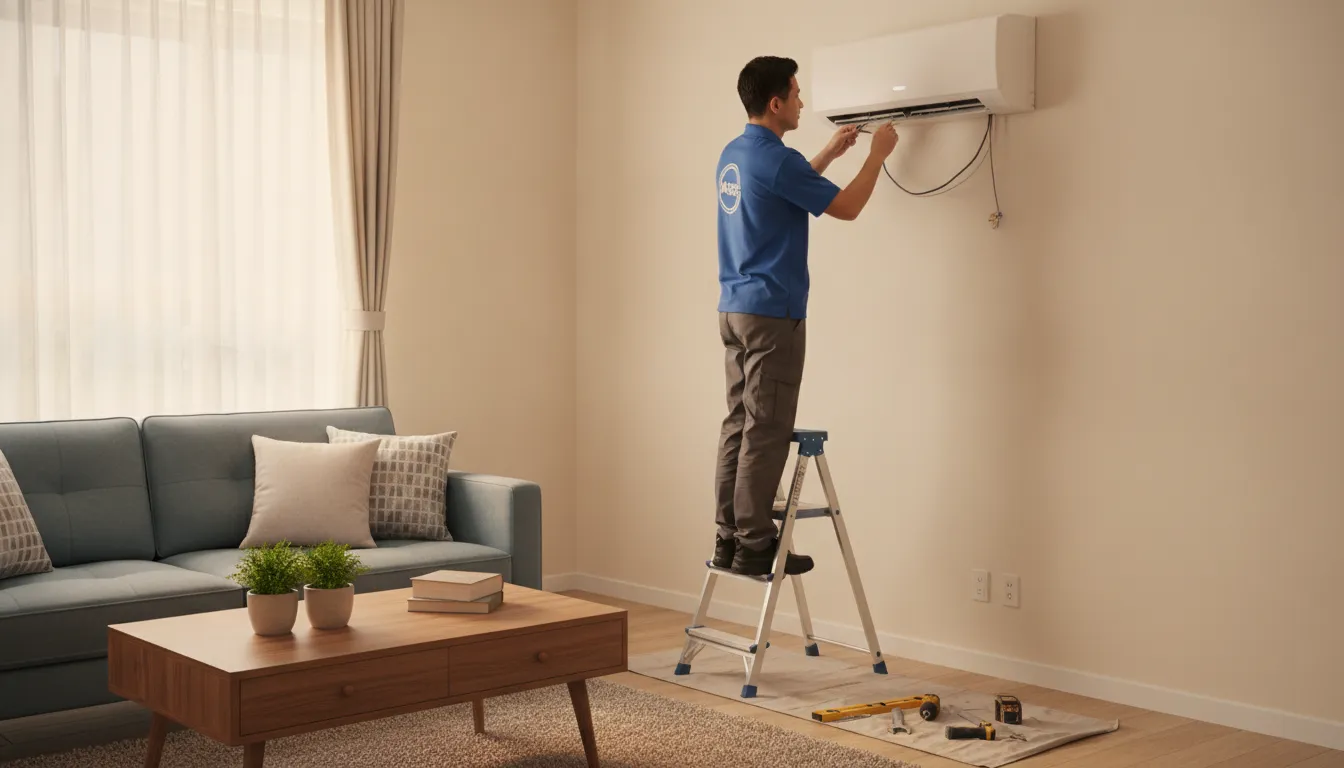
How Many Indoor Heads Can One Outdoor Mini Split Unit Support in Lewisville NC?
For most residential multi-zone systems, one outdoor mini split unit supports two to five indoor heads. Some equipment is designed to handle more, with certain models supporting as many as eight indoor units. The exact limit depends on the outdoor unit’s design, the manufacturer’s approved combinations, and the capacity required by each room. Carrier, for example, describes multi-zone configurations that connect up to five indoor units to one outdoor unit. Other model families may offer a wider range, from two to eight heads. Carrier’s multi-zone guidance and the model specifications should be reviewed before equipment is selected.
That means the answer to “How many indoor heads can one outdoor mini split unit support in Lewisville?” is usually not a single number. A two-head system may be a good fit for a primary bedroom and an upstairs bonus room, while a larger home may need four or five zones. Lewisville homes vary in layout, insulation, window exposure, and room use. So the number of heads should follow the comfort plan rather than the maximum listed on a product page.
One head usually serves one independently controlled zone
Each indoor head delivers conditioned air to its own room or zone. If a homeowner wants separate temperature control in an enclosed bedroom, office, playroom, or addition, that space will generally need its own indoor unit. Open areas may be served by one head when air can move freely between connected rooms, but a closed door changes the equation. A head installed in a hallway, for example, may not condition a distant bedroom evenly or provide the independent control many homeowners expect.
Head count also should not be confused with square footage alone. Five small indoor units do not automatically make a system appropriate for every five-room house. The outdoor unit must have enough capacity to serve the connected heads. And the indoor units must be matched to the heating and cooling loads of their individual zones. A professional design also considers whether rooms are used at the same time. How much sun they receive, and whether the home has areas that need conditioning only occasionally.
Plan the system around how your household uses the home
Start by listing the rooms that need reliable heating and cooling, then identify which spaces require separate controls. A guest room used occasionally may not need the same capacity as a living room used every day. From there, an installer can determine whether one outdoor unit with multiple heads is practical or whether separate systems would provide better performance and flexibility. For a closer look at the number of indoor units a ductless installation may require, review the room layout with a qualified HVAC professional instead of choosing by head count alone.
What Limits How Many Heads One Outdoor Unit Can Handle?
The maximum head count is set by the equipment design, not simply by the number of rooms in a Lewisville home. A multi-zone system must match the outdoor condenser, indoor units, refrigerant piping, controls, and electrical requirements as one engineered system. A manufacturer may offer a standard configuration that connects up to five indoor units to one outdoor unit, while other models support a different range. Carrier, for example, describes multi-zone systems that connect up to five indoor units to one outdoor unit in many standard configurations: Carrier’s multi-zone guidance.
Manufacturer design and outdoor-unit capacity
Every condenser has a rated capacity and a specified combination of compatible indoor units. The compressor and controls must be able to deliver enough heating or cooling for the connected zones, especially during demanding summer or winter conditions. A larger outdoor unit is not automatically the right answer. The system still has to operate within the manufacturer’s approved combinations, refrigerant-line limits, and control strategy.
That is why published head counts are useful starting points, not a substitute for a load and equipment review. Some multi-zone equipment can support two to eight indoor heads, depending on the model, but a standard five-head configuration is a common reference point. The correct answer for a particular Lewisville home depends on the condenser selected and the capacity each room requires.
Total load matters more than room count
One head is generally planned for each enclosed room or zone that needs independent temperature control. That does not mean every room can receive an identical indoor unit. A sunny bonus room, shaded bedroom, open living area, and well-insulated office can have very different heating and cooling loads. Window area, insulation, ceiling height, air leakage, orientation, and the way rooms connect all affect the design.
If too many heads are connected to an undersized outdoor unit, or if the connected indoor capacity is poorly matched. The system may struggle when several rooms call for conditioning at once. It can run inefficiently, fail to maintain setpoints, and experience short cycling in lighter-load conditions. Short cycling reduces comfort and wastes energy because the equipment starts and stops instead of operating steadily.
Branch-box and piping limits
On systems that use a branch box, the box must be rated for the number and type of connected indoor units. Its ports, refrigerant distribution, line-set lengths, elevation changes, and allowable combinations all place practical limits on the layout. More heads may require a different branch-box arrangement or more than one outdoor unit rather than forcing every zone onto one condenser.
For a reliable plan, compare the home’s rooms with the equipment schedule and the manufacturer’s approved configuration. QRC can help evaluate the mini-split system capacity needed for your Lewisville home, including whether one multi-zone condenser or multiple outdoor units makes better sense.
How a Branch Box Distributes One Outdoor Unit Across Multiple Rooms
A multi-zone mini-split system starts with one outdoor unit containing the compressor and other primary refrigeration components. Instead of sending one large line set to a single indoor unit. The system routes refrigerant from the outdoor unit to a branch box, sometimes called a distribution box. The branch box then divides that refrigerant flow among several indoor heads.
Each indoor head connects to the branch box through its own smaller refrigerant line set. These lines, along with the required control wiring and condensate provisions, allow the heads to serve separate rooms or defined zones. A bedroom, home office, finished room over a garage, and main living area can each have an indoor unit without requiring a separate outdoor condenser for every space.
How the refrigerant path supports independent zones
The branch box does not simply send the same amount of refrigerant to every room at all times. The system responds to the demand from each indoor head and directs refrigerant where it is needed. If the Lewisville homeowner’s living room needs cooling while a guest room is already comfortable. The controls can adjust operation by zone rather than treating the entire home as one temperature area.
That is the central advantage of a multi-zone design: one outdoor compressor supports several indoor comfort zones, while each zone can have its own temperature setting. Independent control is especially useful when rooms have different sun exposure, insulation, occupancy, or schedules. It can also make more sense than conditioning a rarely used room at the same level as the rest of the house.
Branch-box capacity is set by the equipment model
A branch box is not universal, and the number of connections cannot be expanded indefinitely after installation. The manufacturer sets the branch-box capacity and compatible indoor-unit combinations for each equipment model at the factory. The outdoor unit, branch box, indoor heads, line lengths, elevation changes, and total heating and cooling load must all work together.
That is why the answer to how many heads one outdoor unit can support depends on the specific system, not just the number of rooms. Standard multi-zone configurations commonly support up to five indoor units, while some equipment platforms support more. The practical limit may be lower if the home’s load, line routing, or electrical and structural conditions do not support the proposed arrangement.
QRC designs and installs both single-zone and multi-zone ductless mini-split systems for North Carolina homes. A professional design review can match each indoor head to the room it serves. Confirm branch-box compatibility, and avoid overloading one outdoor unit with an unsuitable combination of zones.
Tonnage and Sizing: Planning a Multi-Zone System for a Lewisville NC Home
Head count is only one part of the design. A Lewisville homeowner may need several indoor units for separate bedrooms, a bonus room. Or an open living area, but those heads still have to work within the capacity of one outdoor condenser. The outdoor unit’s tonnage must match the combined heating and cooling load of the connected zones, not simply the number of indoor units installed.
A useful early planning estimate is approximately 20 BTUs per square foot. That is a starting point, not a final equipment selection. Insulation, window exposure, ceiling height, air leakage, occupancy, and the home’s layout can move the actual load substantially. A professional load calculation is especially important in Piedmont North Carolina, where summer heat and humidity can put sustained demand on cooling equipment. Conservative sizing helps avoid a system that struggles during the hottest Lewisville afternoons, while excessive oversizing can create its own comfort and efficiency problems.
| Home size or layout | Typical indoor heads | Outdoor-unit planning consideration |
|---|---|---|
| Smaller home or limited number of enclosed zones | 2-3 | One appropriately sized multi-zone condenser may serve the primary living areas and bedrooms. |
| Mid-size home with several bedrooms and shared living spaces | 3-5 | Confirm the combined indoor capacity, line-set layout, and whether every zone needs independent control. |
| Large home, 4+ bedrooms, or approximately 3,000+ square feet | 5-8 | One outdoor unit may not be the best fit. Compare a larger multi-zone design with multiple outdoor units and verify total load. |
The ranges above are planning guidelines, not a promise that every Lewisville home will use the same configuration. Research on multi-zone systems commonly cites up to five indoor units in standard configurations, while some model families support more. For a 4-bedroom or 3,000-square-foot-plus home, five to eight heads may be considered, but the outdoor equipment, controls, and refrigerant piping must be selected as one coordinated system. More heads do not automatically mean more cooling capacity.
Match the system to the rooms you actually use
Bedroom count and square footage help establish the scope, but zoning decisions should follow how the home is occupied. A rarely used guest room may not need the same capacity as a west-facing family room with large windows. Likewise, an open floor plan may be served by fewer strategically placed heads than a home with many enclosed rooms. Each head should have a clear purpose, and the design should account for airflow between spaces rather than assuming one unit will condition every closed room.
QRC designs and installs both single-zone and multi-zone ductless systems for North Carolina homes. A site evaluation can turn the 20-BTU-per-square-foot baseline into a room-by-room recommendation, then determine whether one outdoor unit. Multiple condensers, or another HVAC approach provides the better fit for the home’s load and layout.
Is a Single Outdoor Unit With Multiple Heads Right for Your Triad Home?
For many homeowners in Lewisville and across Forsyth County, one outdoor unit connected to several indoor heads offers a clean way to create room-by-room comfort. The best choice depends less on the biggest possible head count and more on how your home is used. How well it holds conditioned air, and whether each zone needs independent control.
A multi-zone system can reduce outdoor equipment, preserve yard and patio space, and simplify the appearance of the home. It can also match comfort to occupancy. A guest room that is rarely used does not need to be conditioned at the same level as a bedroom, kitchen, or family room. Zoned control can reduce energy use by conditioning occupied areas instead of treating every room as occupied all day. Although actual savings depend on equipment, settings, weather, and the home’s envelope. Zone-Air’s overview of multi-zone operation explains this occupied-space approach.
Why one outdoor unit can be a strong fit
Modern mini-split heat pumps adjust output as demand changes. The U.S. Department of Energy identifies part-load operation, rather than constant maximum output, as the system’s most efficient operating state. That modulation can be useful in a Triad home where different rooms gain or lose heat at different rates throughout the day. Instead of forcing one large system to run at full output, the equipment can respond to the combined demand from the active indoor units. Department of Energy research on mini-split heat pumps provides additional context on modulation and performance.
One outdoor unit is especially attractive when the home has a practical zoning plan. Limited space for condensers, and rooms that can share capacity without demanding maximum heating or cooling simultaneously. A well-insulated, low-leakage home can be an even better match because less conditioned air is lost to the outdoors. In that setting, the system may spend more time making small, efficient adjustments instead of chasing large temperature swings.
When separate single-zone units may make more sense
Several single-zone systems can provide more independent control and greater redundancy. If one outdoor unit needs service, the other zones may remain available. Separate systems may also be preferable when rooms are far apart, line-set routing would be difficult. Or one area has a dramatically different load, such as a sun-exposed addition, finished attic, or workshop. Multiple units can also simplify future expansion when the home will be renovated in phases.
The tradeoff is more outdoor equipment, more potential maintenance points, and a larger visual footprint. A multi-zone design can be efficient, but it still needs accurate load calculations and equipment matched to the home’s layout. QRC designs both single-zone and multi-zone ductless systems for North Carolina homes, so the decision can be based on room loads. Occupancy patterns, insulation, line routing, and long-term service access rather than head count alone.
Choosing a Ductless Installer in Lewisville NC
Choosing the right installer matters as much as choosing the equipment. A multi-zone mini-split system has to match the rooms you want to condition, the home’s layout, and the heating and cooling demands of each space. An outdoor unit may be capable of supporting several indoor heads, but that does not mean every home should use the maximum number. Careful design helps prevent uneven temperatures, unnecessary cycling, and a system that does not perform as expected during a hot Lewisville summer or a cold Triad night.
QRC HVAC & Refrigeration provides professional design and installation for both single-zone and multi-zone ductless mini-split systems. Our team can evaluate whether one indoor head is appropriate for a bedroom, office, addition. Or other enclosed area, or whether a multi-zone arrangement makes more sense for several rooms. The goal is a practical layout tailored to your North Carolina home, not a one-size-fits-all equipment recommendation.
What a professional ductless design should include
A proper evaluation considers room size, windows, insulation, air leakage, ceiling height, sun exposure, and how each space is used. It also reviews where the outdoor unit can be placed and how refrigerant lines can be routed with minimal disruption. These details influence the number and capacity of indoor heads, the outdoor unit selected, and whether a single-zone or multi-zone configuration is the better fit.
QRC technicians are EPA-certified for refrigerant handling and follow industry standards during installation. That qualification is important because ductless systems depend on correctly sized and installed refrigerant lines, secure connections, proper evacuation, and accurate charging. Installation quality affects comfort, efficiency, equipment life, and future serviceability.
Homeowners can review QRC’s ductless mini-split systems to learn more about the service route. If the project includes a heat-pump system that will provide winter comfort as well as summer cooling, QRC also offers residential heating service in Winston-Salem.
Local service for Lewisville and the Triad
QRC serves homeowners in Lewisville and throughout Forsyth County, with service extending across neighboring Triad counties including Guilford, Davidson, Davie, Stokes, and Yadkin. Local knowledge helps the installation conversation stay grounded in the homes, weather, and comfort concerns common across the Piedmont. During an assessment, ask the installer to explain how many zones the proposed system supports. Why each head is located where it is, and how the equipment will be maintained.
For a ductless design that fits your home’s actual needs, contact QRC HVAC & Refrigeration at (336) 281-5144. A clear plan before installation can help you get dependable room-by-room comfort without paying for capacity or zones that do not serve your household.
Get a room-by-room mini-split plan from QRC HVAC & Refrigeration before you choose how many heads your system needs. Call QRC at (336) 281-5144 for a Lewisville consultation.
Frequently Asked Questions
How many indoor heads can one outdoor mini split unit support in Lewisville?
There is no single number for every system. Many standard multi-zone models support up to five indoor units, while some equipment is designed for a broader range, commonly two to eight heads depending on the model. Confirm the manufacturer’s approved combination before planning a Lewisville installation. Carrier describes systems supporting up to five indoor units, while Burnside notes a typical two-to-eight-head range.
Does every room need its own indoor mini-split head?
Not necessarily. Plan one head for each enclosed room or zone that needs independent temperature control. But an open layout may be served by one strategically placed head if airflow can reach the connected space. Room size, insulation, sun exposure, ceiling height, and door placement all affect the final design.
Can a five-head system cool a Lewisville home effectively?
It can, if the outdoor unit, indoor heads, refrigerant lines, and room loads are matched correctly. Head count alone does not determine performance. A home with several smaller bedrooms may need a different arrangement than a home with large open rooms, vaulted ceilings, or significant afternoon sun. A load-based design is more reliable than choosing equipment by room count.
What should I ask an installer before choosing a multi-zone system?
Ask which outdoor-unit and indoor-head combinations are approved, how each zone will be sized, where line sets and a branch box will go. And how the system will operate when only one or two rooms call for cooling. Also verify that the installer is qualified to handle refrigerants. QRC provides single-zone and multi-zone ductless design and installation, with EPA-certified technicians for refrigerant handling.
Schedule Your Lewisville Mini-Split Consultation
The right multi-zone design can help match indoor comfort to the rooms and spaces your household uses most. Schedule a ductless mini-split consultation with QRC HVAC & Refrigeration for help planning your system. You can also call QRC at (336) 281-5144 to get started.