


Planning ice maker installation for restaurants in Kernersville starts with more than choosing a machine that fits the kitchen. A reliable setup depends on matching ice output and storage to your service pattern, confirming the site can support the equipment, and planning delivery and startup before installation day. A little preparation helps avoid an undersized machine, a crowded work area, or preventable delays.
Discuss your restaurant ice maker installation with QRC or call (336) 281-5144.
What should a Kernersville restaurant plan before installing an ice maker?
Start with the way your restaurant uses ice, not a machine specification alone. A busy dining room, a bar, a takeout counter, and a kitchen may all draw from the same supply at different times. The right installation plan considers both how much ice the operation uses over a full day and how quickly it is needed during peak service.
Write down the basics before requesting an installation discussion:
- Which stations use ice, and whether ice is used for beverages, food presentation, or other approved kitchen needs.
- When demand is highest: opening, lunch, dinner, events, or late service.
- Whether demand changes by weekday, season, catering schedule, or patio service.
- How staff currently access and move ice, and whether the current path creates congestion.
- Available floor space, nearby water supply and drainage, and the route from the delivery entrance to the final location.
These details give a refrigeration professional a useful picture of the operation. If the restaurant is expanding, changing its menu, or adding a service station, mention that too. A machine selected only for today’s average usage may not suit the busiest shift or a planned change in service.
Make the notes specific enough to compare a normal day with a busy one. For example, record whether beverage service peaks at lunch while kitchen use stays steady, or whether an event causes several stations to draw ice at once. You do not need a perfect inventory to start the conversation. A short log of bin levels and replenishment during several representative shifts can reveal whether the issue is total daily supply, a brief rush, or the location of the bin.
It can also help to identify who handles ice during service. If one employee repeatedly leaves a station to refill containers, or staff must cross a food-preparation route, the installation location may be as important as machine capacity. Bring those workflow observations to the site review so the proposed arrangement addresses daily use, not just equipment fit.
How do you estimate the ice capacity your restaurant needs?
Begin with observed usage. If the restaurant already has an ice maker, note how often the bin runs low, when staff refill containers, and whether service slows while waiting for ice. If you are opening or adding equipment, estimate demand by station and operating period, then review those assumptions with the installer. A menu and service plan can help clarify where ice is actually used.
Daily production and storage are related but different considerations. Production describes how much ice a unit can make under stated conditions; the bin holds the ice available for staff to use. A restaurant with sharp demand peaks may need enough stored ice to cover the rush, even if the machine’s overall daily output appears adequate. Conversely, a large bin is not a substitute for production that can replenish what the operation consumes.
Ask the installer to review the equipment manufacturer’s published capacity information and the conditions attached to it. Site conditions and the way a machine is used can affect real-world output, so avoid choosing by a headline capacity figure alone. The goal is not simply the largest unit that can fit. It is a setup that supports the restaurant’s actual pattern without creating unnecessary space or workflow problems.
A practical demand worksheet can separate the problem into useful questions. List each station, its main use, and the time window when it draws the most ice. Add notes on whether the station takes ice continuously or in several large batches. Compare those notes with what staff observe at the bin: a low level immediately after the dinner rush suggests a different pattern from a bin that stays low throughout the day. The installer can use this operating picture alongside equipment data when discussing a suitable production and storage combination.
Include changes that are not visible in a typical week’s log. A restaurant that plans to add outdoor seating, extend service hours, host regular events, or change beverage offerings may face a different demand pattern soon. Explain which changes are confirmed and which are only possibilities. That distinction helps avoid selecting equipment around a speculative peak while still allowing the project team to discuss future needs.
| Planning factor | What to review | Why it matters |
|---|---|---|
| Ice demand | Busy periods, stations served, and changes in service | Helps match production to the restaurant’s operating pattern |
| Storage bin | Peak-use buffer and staff access | Supports short periods of high demand and convenient scooping |
| Available footprint | Machine, bin, access, and service clearance | Prevents a fit that obstructs work or routine service |
| Water and drainage | Connection locations and approved drain route | Confirms the proposed location can be prepared appropriately |
| Delivery route | Doors, corridors, turns, and final placement | Reduces delivery-day access surprises |
Which type of ice maker and bin should you consider?
The ice style, machine arrangement, and storage setup affect fit and daily use. Restaurants should consider the purpose of the ice as well as the available space and service routine. A bar that needs ice for drinks may have different preferences from a kitchen using ice for general food-service tasks. Confirm the desired ice type with the equipment supplier and the refrigeration professional before selecting a unit.
Commercial units may be configured with an ice-making head and a separate bin, or as a more integrated arrangement. A separate bin can offer flexibility in how the components are positioned, while an integrated configuration may suit a compact location. The actual choice depends on compatible equipment, dimensions, access, and the manufacturer’s installation instructions.
Consider these practical questions:
- Can staff reach the bin without crossing a busy food-preparation path?
- Is the bin opening convenient for the containers or scoops staff use?
- Will the machine and bin fit while leaving room for cleaning and service?
- Does the unit’s ice type fit the restaurant’s service needs?
- Can the storage arrangement keep ice handling orderly during a rush?
Think through a typical busy shift, not just an empty kitchen. If two employees need ice at once, consider whether they can both work safely around the storage area. If a container must be carried to another station, map that route and look for crossings with hot food, dish return, or active prep. These are everyday workflow details, but they can determine whether the chosen location is practical after the equipment is running.
For a broader look at equipment choices, see QRC’s commercial ice maker guide. If the project also involves other cold-storage planning, QRC’s walk-in versus reach-in comparison can help frame that separate decision.
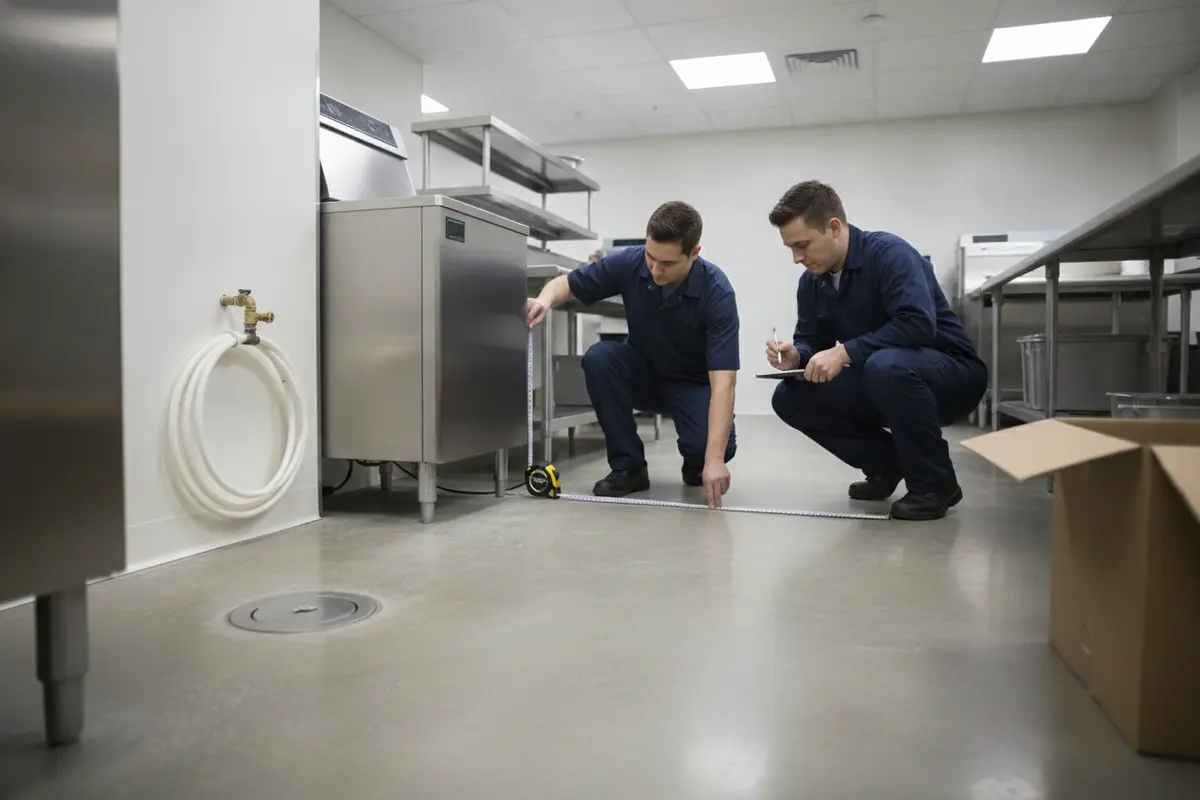
How should you check the installation location?
A suitable location needs more than enough floor area for the equipment. Staff need room to move around it, access the bin, clean the surrounding area, and allow a technician to reach components for service. Check the manufacturer’s specified clearances and placement instructions with the installer. Do not assume a space is suitable because an older unit occupied it; the new equipment may have different dimensions or service needs.
Review water supply and drainage early. The installer can assess where connections are located, whether the proposed arrangement is appropriate, and what site preparation is needed. Drainage should be planned as part of the installation rather than improvised after the machine arrives. Discuss any floor, wall, or other building work with the appropriate contractor before scheduling the equipment delivery.
Also consider the surrounding environment. Heat from nearby equipment, limited airflow, moisture, and cramped placement can affect the space around a machine and make routine cleaning more difficult. Follow manufacturer guidance on clearance and environmental conditions. If the proposed location is near a hot cooking line or in a tight storage room, flag that during the site review instead of waiting until installation day.
Ask the installer to walk through the proposed location from several viewpoints: where the machine sits, where staff stand to use the bin, and where a technician would need to work. Confirm that doors, carts, and nearby equipment will not block routine access. A plan that leaves just enough room to slide a unit into place may still be unsuitable if it leaves no practical space to clean or service it later.
For equipment that uses refrigerant, confirm applicable requirements with qualified professionals and consult the U.S. Environmental Protection Agency’s refrigerant information for current federal resources. Requirements can depend on the equipment and work involved.
What should you measure before delivery?
Measure the complete route, not just the final space. Record doorway widths and heights, corridor pinch points, turns, ramps, and any steps between the delivery point and the kitchen. Note whether doors can be opened fully and whether other installed equipment narrows the path. Confirm the equipment’s shipping dimensions and delivery method with the supplier or installer.
At the destination, measure the planned footprint and identify nearby obstacles. Include room for the machine, bin, required clearances, and access for staff and service. Check the location of the water supply and drain in relation to the proposed arrangement. Share photographs and measurements when arranging a site review, but have the installer verify critical dimensions before equipment is ordered.
Use a simple measurement record rather than relying on memory: write down each opening, the narrowest point along the route, ceiling or overhead obstructions, and the direction of each tight turn. Note if a door can be removed or held open, but do not assume that will happen without agreement from the person responsible for the building. Send the equipment’s packaged dimensions to the installer, since shipping size and installed size can differ.
Coordinate the schedule with restaurant operations. A delivery during a prep period or service rush can disrupt staff and obstruct access. Plan how the team will manage ice needs during any installation or commissioning period, and confirm who will be available to provide access and answer site questions. If there are building or finish updates underway, agree on their sequence with the relevant contractors.
What should you ask before scheduling the work?
Before you approve an equipment order or installation date, make sure everyone has the same understanding of the project. A brief conversation can surface practical questions while there is still time to adjust the plan. Ask the refrigeration professional:
- Which machine and bin configuration is being proposed, and how does it fit the restaurant’s demand pattern?
- What site measurements, manufacturer clearances, water supply, and drain conditions must be confirmed first?
- Does the project require any separate site preparation, and who is responsible for coordinating it?
- What is included in delivery, placement, initial checks, and staff orientation?
- What should the restaurant do if the unit does not make ice as expected after startup?
Share the information that affects the design, including the planned location, service hours, access limitations, and any known changes to the kitchen. If there are multiple decision-makers, identify who can approve equipment and site work so the project does not stall after measurements are complete. Ask for the proposed equipment details and installation scope in writing, then compare them against the restaurant’s needs and the manufacturer’s requirements.
Clarify who is handling each task. The restaurant may need to arrange access, move nearby items, or coordinate building preparation, while equipment delivery, placement, and technical checks are covered by the agreed installation scope. Do not assume that plumbing changes, finish work, disposal of an old unit, or after-hours scheduling are included. Ask which items are included and which require a separate arrangement before setting the date.
For restaurants opening or remodeling, sequence the installation alongside other kitchen work. The equipment location, surrounding surfaces, drainage route, and delivery access all need to be settled before the final appointment. Avoid scheduling delivery based only on an estimated completion date from another trade; confirm that the area is actually ready and accessible. Clear communication keeps the installer from arriving to a blocked or unfinished space and gives the restaurant a chance to plan temporary ice needs.
Before confirming, decide how the restaurant will operate if the work overlaps with a service period. Assign one contact who can make on-site decisions, tell staff which route must stay clear, and set aside a temporary plan for ice use if access to the bin will be interrupted. The right plan depends on the schedule and equipment, so agree on the details with the installation team rather than improvising while service is underway.
What happens during installation and startup?
The installation professional should confirm the equipment model and intended location, inspect the prepared site, and follow the manufacturer’s instructions for placement and connections. The work plan can vary with the unit and site. Avoid assuming every installation is identical or that a connection from a previous machine can be reused without review.
After placement, the machine should be checked through its initial operating cycle according to manufacturer directions. The installer can verify that the equipment is operating as intended, inspect for leaks or drainage concerns, and review how the ice moves into storage. Ask what should be observed during the first day of operation and who to contact if something appears abnormal.
Use the handoff to establish a clear starting point. Confirm the model information and where the operating instructions will be kept. Ask the installer to point out the normal controls and any visible conditions staff should report, such as unexpected water around the machine or an unusual change in operation. Staff should not be asked to make technical adjustments they have not been trained to perform.
QRC provides commercial HVAC and refrigeration services. Learn more about its commercial services and commercial refrigeration work. For a specific installation plan, the site and equipment details need to be discussed directly.
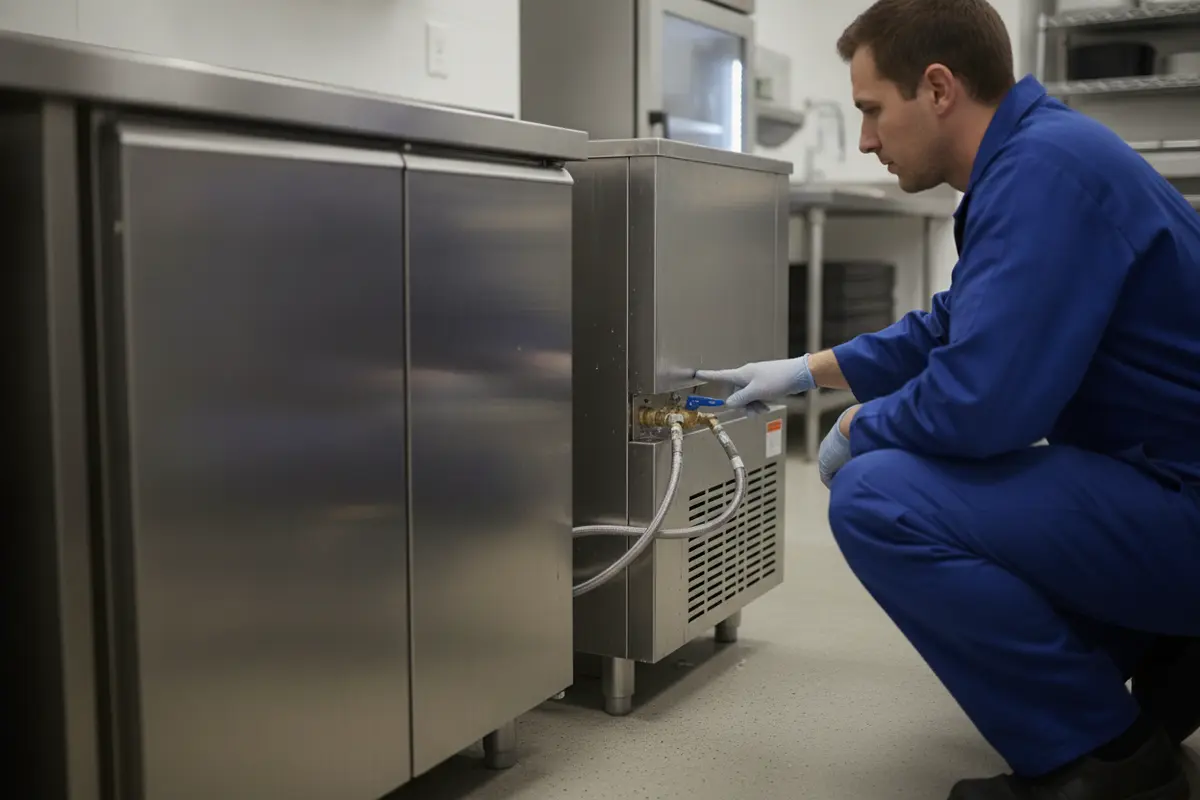
What should restaurant staff check after installation?
Before returning to a normal service routine, make sure the people who will use the machine know its basic operating and cleaning procedures. Keep manufacturer instructions accessible, and confirm who is responsible for routine cleaning and monitoring. Staff should know how to handle ice hygienically and keep the bin area orderly.
During the first several shifts, pay attention to whether the ice supply keeps pace with demand. Note when the bin level drops, whether a particular station uses more than expected, and whether staff have easy access. These observations help identify whether the original demand estimate reflects actual service. If the machine does not appear to produce or store ice as expected, follow the equipment instructions and contact the installer or service provider rather than attempting adjustments beyond staff training.
A short shift log makes these checks useful without turning them into a complicated process. Note the date, service period, approximate bin level at the beginning and end of the rush, and any access or workflow problems. If staff had to borrow ice from another station or pause to wait for a refill, record that too. Patterns over several shifts are more informative than a single unusually busy day and can help the service professional understand what the restaurant is seeing.
For continuing commercial refrigeration needs, QRC’s commercial HVAC service information and its Manitowoc installation overview may be useful starting points. For troubleshooting signs, see the guide to common ice machine repair concerns. These resources do not replace an on-site review of your particular equipment and location.
How can you make an installation project go smoothly?
Use a short pre-installation checklist with the people responsible for the restaurant, equipment, and site work:
- Document where ice is used and when demand peaks.
- Share the planned menu, service schedule, and any expected operational changes.
- Confirm the machine and bin dimensions, required clearances, and manufacturer guidance.
- Measure the delivery route and planned placement; ask the installer to verify critical measurements.
- Review water supply, drainage, and site-preparation needs before ordering or scheduling.
- Coordinate access and timing so delivery does not interfere with peak restaurant activity.
- Agree on startup checks, staff instructions, and who to contact with questions.
Restaurants in Kernersville can also discuss the broader project with a refrigeration professional if the installation is part of a kitchen redesign, new opening, or equipment change. QRC’s contact page is the place to begin a conversation about the location, equipment, and service needs.
To keep the project moving, collect the key documents and decisions in one place: the equipment model and dimensions, delivery route measurements, site photos, the proposed installation scope, and the name of the person approving site preparation. If a detail changes, such as the selected bin or final location, share the update with everyone involved. A change that seems small on paper can affect access, clearances, or the delivery path.
Plan a commercial ice maker installation conversation or call (336) 281-5144.
Frequently Asked Questions
How do I know what size ice maker my restaurant needs?
Track where ice is used, how much is needed during peak periods, and how often the bin runs low. Then review those observations, the planned service pattern, and the equipment’s published capacity information with an installer. Daily production and bin storage both matter.
Can a new ice maker go where the old one was?
Possibly, but the location should be checked rather than assumed suitable. The replacement may have different dimensions, clearance needs, connection locations, or service access requirements. Have the installer review the site and manufacturer instructions before ordering.
What should I do if the delivery route is tight?
Measure each doorway, corridor, turn, and change in level from the delivery entrance to the final space. Confirm the equipment’s shipping dimensions and handling plan with the supplier or installer. Resolve access concerns before delivery is scheduled.
Does QRC install restaurant ice makers in Kernersville?
QRC provides commercial refrigeration services. Contact the company to discuss your restaurant, equipment, site conditions, and whether the project fits its service offering.
Ready to Plan Your Restaurant Ice Maker Installation?
Talk with QRC about your commercial refrigeration project or call (336) 281-5144.
With demand, site conditions, delivery access, and startup expectations reviewed in advance, your team can make a more informed installation plan for the restaurant.