


If you have started shopping for a new air conditioning system or scheduled a routine tune-up recently, you may have heard about a major industry shift. The transition to A2L refrigerants is reshaping how home cooling systems are designed, installed, and serviced. Backed by the Environmental Protection Agency (EPA) and international climate agreements, this regulatory phase-down replaces high-GWP coolants like R-410A with environmentally friendlier alternatives. Understanding these changes is essential for homeowners preparing for system replacements in Winston-Salem and the surrounding Triad area. The good news is that manufacturers have been preparing for this transition for years, and the equipment available today is more efficient and environmentally friendly than ever before.
Ready to explore your AC replacement options? Contact QRC HVAC and Refrigeration today to speak with an EPA-certified technician about A2L-compatible systems for your home.
At QRC HVAC and Refrigeration, we have served residential, commercial, and industrial clients throughout North Carolina since 2003. We believe in providing clear and transparent guidance to help our community make informed comfort decisions. In this guide, we break down what A2L refrigerants are, why the industry is transitioning, how safety standards are maintained, and what North Carolina homeowners need to know when purchasing a new cooling system. Whether you are planning an immediate upgrade or just gathering information for the future, we are here to help you make an informed decision.
Why Are Residential Refrigerants Changing?
For more than a decade, R-410A has been the standard refrigerant in residential air conditioners and heat pumps. While R-410A does not deplete the ozone layer, it is a hydrofluorocarbon (HFC) with a high Global Warming Potential. R-410A has a GWP of 2,088, meaning it traps more than two thousand times more heat in the atmosphere than the same amount of carbon dioxide. Over the past several years, the EPA has recognized that reducing HFC emissions is one of the fastest ways to slow global warming.
To address this, the EPA is executing a phased reduction of high-GWP HFCs under the federal AIM Act, which was signed into law in 2020. The regulations mandate that newly manufactured residential AC and heat pump systems must transition to refrigerants with a GWP of 750 or less. This represents a reduction of more than 60 percent compared to the current standard. By shifting to lower-GWP alternatives, the HVAC industry will significantly reduce its environmental impact while maintaining the cooling performance homeowners expect.
In North Carolina, these regulations are shaping building and safety standards today. The North Carolina Office of State Fire Marshal (NCOSFM) and local code enforcement bodies have been updating guidelines to align with the 2024 North Carolina Mechanical Code (NCMC). Because North Carolina operates under structured code cycles, HVAC contractors must stay ahead of compliance dates to ensure all new installations are fully permitted and meet the latest standards. Homeowners in Winston-Salem, Greensboro, and High Point should confirm their contractor is current on these evolving requirements before signing a contract.
What Are A2L Refrigerants?
To meet the GWP cap of 750, manufacturers are adopting a new class of coolants called A2L refrigerants. The name A2L refers to a specific safety classification from ASHRAE, the leading authority on HVAC standards. Here is how the classification breaks down:
- A (Toxicity): Low toxicity, meaning these refrigerants are safe for standard residential applications.
- 2 (Flammability): Indicates flammability, but at a lower level than propane or other fully flammable class refrigerants.
- L (Burning Velocity): Stands for low burning velocity, meaning any flame propagates slowly and is difficult to sustain.
While legacy refrigerants like R-410A are classified as A1 (non-flammable and low toxicity), A2L refrigerants represent a mild increase in flammability. However, they are highly distinct from flammable hydrocarbon refrigerants like propane, which is Class A3, or toxic industrial alternatives like ammonia, which is Class B2L. A2L refrigerants are as stable as R-410A under normal operating conditions and offer comparable energy efficiency.
The primary A2L replacements entering the residential market are R-32 and R-454B. Both offer excellent thermodynamic efficiency with GWPs well below the federal limit. R-32 sits at approximately 675, and R-454B comes in at approximately 466. These represent a 60 to 80 percent reduction in GWP compared to R-410A. Major manufacturers including Carrier, Trane, Lennox, and Rheem have already begun rolling out A2L-compatible equipment lines, giving homeowners several reliable brand options to choose from.
Comparing Refrigerant Types for Home AC Systems
The table below shows how A2L refrigerants compare to other common types you may encounter.
| Refrigerant | ASHRAE Class | GWP | Flammability | Typical Use |
|---|---|---|---|---|
| R-410A | A1 | 2,088 | None | Current residential AC |
| R-32 | A2L | 675 | Mild (low velocity) | New residential AC |
| R-454B | A2L | 466 | Mild (low velocity) | New residential heat pumps |
| R-290 (Propane) | A3 | 3 | High | Limited commercial only |
| Ammonia | B2L | 0 | Mild plus toxic | Industrial refrigeration |
As the table shows, A2L refrigerants offer the best balance of low GWP and safe handling for home use. They cut the greenhouse impact dramatically compared to R-410A without introducing the toxicity or high flammability of industrial alternatives. For most North Carolina homeowners, R-32 and R-454B will be the refrigerants they encounter in their next AC purchase. If you are considering a replacement, our AC installation experts can help you evaluate which system type fits your home and budget.
Are A2L Refrigerants Safe for Your Home?
Homeowners often feel concerned when they hear the term mildly flammable. Here is the important context. A2L refrigerants are incredibly difficult to ignite. To spark an A2L gas, it must reach a high concentration in the air and contact a high-energy ignition source like an open flame or high-voltage arc. Standard household items like cigarettes, static electricity, and electrical outlets do not produce enough energy to ignite A2L refrigerants under any normal circumstance.
Safety is also built directly into modern equipment design. New AC units and heat pumps engineered for A2Ls must comply with UL 60335-2-40 safety standards. Manufacturers install factory-calibrated leak detection sensors inside the equipment. If a leak is detected, these sensors immediately shut down the compressor and trigger indoor blower fans to safely dilute the refrigerant charge. This prevents any refrigerant concentration from reaching flammable levels. These systems are tested extensively before they ever reach the market.
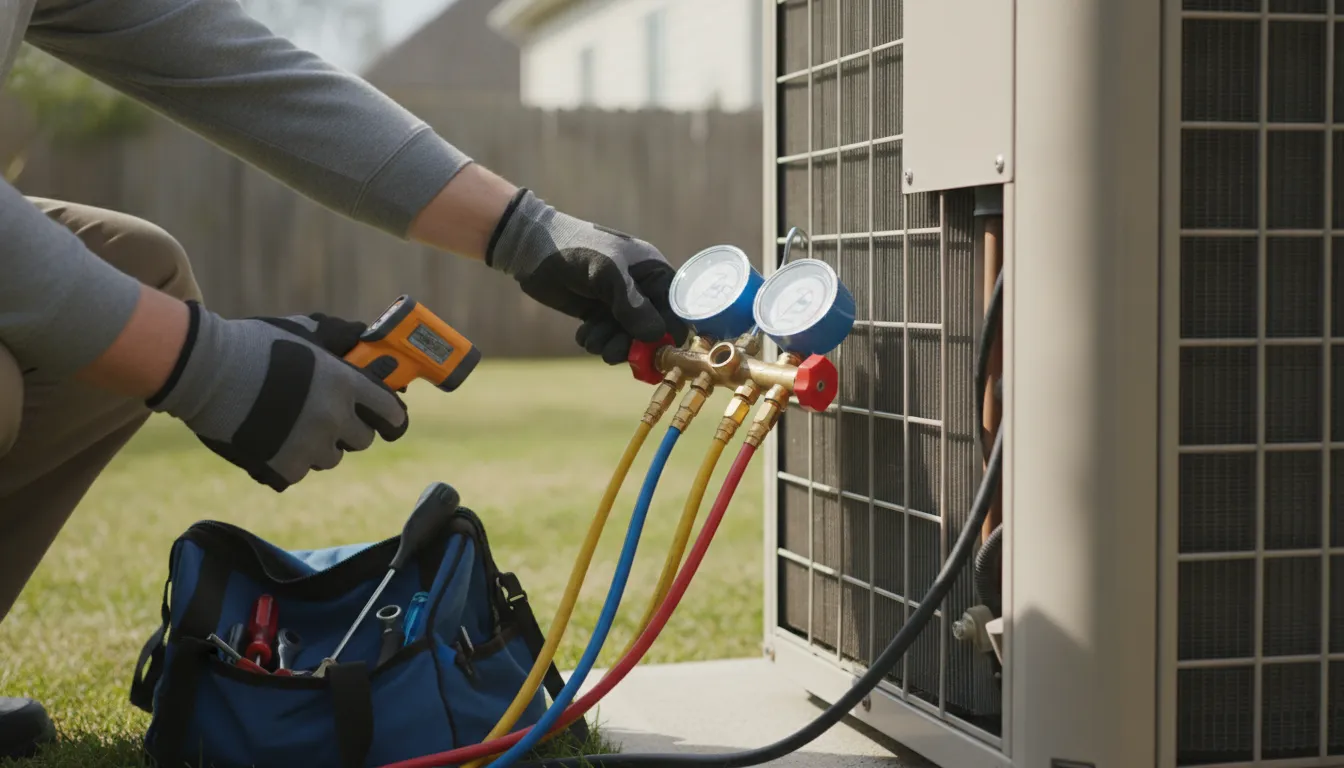
Because these systems use specialized safety features, proper installation is critical. Handling A2L refrigerants safely requires advanced tools, specialized recovery machines, and precise nitrogen purging techniques. Homeowners should work exclusively with certified and licensed professionals who hold up-to-date EPA Section 608 certifications. Our HVAC technicians at QRC meet all of these requirements and receive ongoing training in A2L handling and safety protocols.
Concerned about your current system? Call QRC today to schedule a system evaluation and learn whether an A2L-ready upgrade is right for your home.
When Will This Transition Affect My AC System?
The transition is already underway, but there is no need for concern if your current system is working well. If your R-410A air conditioner or heat pump is running smoothly, you do not need to replace it. Existing systems are protected by law, and technicians can service and repair R-410A systems for the remainder of their operational lifespan. Replacement parts and refrigerant will remain available for years to come.
However, if your system is over 10 to 15 years old and you are planning an upgrade, this transition will affect your purchase. Over the next few years, manufacturers will phase out R-410A equipment entirely, and A2L-ready systems will become the standard option nationwide. As the production of R-410A declines due to EPA quotas, the cost of R-410A refrigerant for future repairs is expected to rise. Upgrading to a modern A2L system now protects you from escalating repair costs later. Many homeowners find that the energy savings from a new high-efficiency system offset the upfront investment within a few years.
What NC Homeowners Need to Know About A2L Refrigerants
As you evaluate your home comfort options in Winston-Salem, Greensboro, or High Point, keep these important points in mind.
- SEER2 Standards: As of 2023, North Carolina enforces updated SEER2 efficiency minimums. New AC installations must meet 14.3 SEER2, which corresponds to roughly 15.0 SEER under the old rating system. Pairing SEER2 with high-efficiency A2L systems delivers strong energy savings and lower monthly power bills.
- System Compatibility: You cannot put A2L refrigerant into an older R-410A system. The components, safety sensors, and compressor oils are completely different between the two designs. If you replace your outdoor condenser, you must also replace your indoor evaporator coil to ensure proper operation and protect your manufacturer warranty.
- Installation Timeline: A2L-compatible equipment is available now from major manufacturers. Most HVAC contractors in North Carolina already stock and install these systems. There is no need to wait, and acting early can help you avoid potential price increases as R-410A availability declines over the next several years.
- Service and Maintenance: A2L systems require specialized knowledge for servicing. Leak detection sensors, pressure switches, and electronic expansion valves all need proper calibration. Regular HVAC maintenance plans with a trained technician keep your A2L system running at peak efficiency and ensure all safety features remain operational.
- Cost Considerations: While A2L systems are competitively priced with high-efficiency R-410A equipment, the total cost depends on your home size, existing ductwork condition, and efficiency rating. A professional load calculation ensures you get the right size system without overspending.
- Local Service Area: QRC services the Winston-Salem metro and surrounding counties including Forsyth, Guilford, Davidson, Davie, Stokes, and Yadkin. We deliver compliant installations in Clemmons, Kernersville, Lewisville, Buena Vista, Ardmore, and Bermuda Run. Homeowners in High Point and Greensboro are also welcome. If you live in one of these neighborhoods and your AC system is nearing the end of its useful life, now is an excellent time to explore your options.
Choosing an HVAC Contractor for the A2L Transition
Because A2L equipment incorporates sophisticated safety sensors and electronics, choosing a qualified contractor is more important than ever. Amateur installations can lead to sensor errors, system lockouts, reduced equipment lifespan, and potential code violations that could complicate a home sale later.
When requesting quotes for AC replacement in North Carolina, ask these questions.
- Are your technicians EPA-certified and specifically trained in A2L safety standards?
- Will you perform a full Manual J load calculation to ensure the system is sized correctly for my home?
- Does the installation include a comprehensive warranty that covers the modern electronic safety controls?
- How does your team stay current with North Carolina mechanical code updates for A2L systems?
- What ongoing maintenance do A2L systems require compared to traditional R-410A units?
At QRC, our EPA-certified technicians undergo continuous training to master the latest technologies, safety standards, and local mechanical codes. We invest in ongoing education so our team stays ahead of every regulatory change affecting the HVAC industry. Whether you need proactive refrigeration maintenance plans or a complete energy-efficient home upgrade, we have the expertise to get the job done right. You can learn more about our AC replacement in Winston-Salem and surrounding areas on our residential page.
We also serve commercial clients who need to stay ahead of these regulations. Our commercial refrigeration and HVAC teams stay current with all code changes affecting businesses across North Carolina. For industrial facilities with complex chiller and boiler systems, we provide compliance-focused maintenance that protects your operation and keeps your facility running efficiently. From restaurants needing ice machine R-410A phase-down planning to cold storage warehouses converting existing systems, we help every client navigate the transition on their own timeline.
Frequently Asked Questions About A2L Refrigerants
Are A2L refrigerants safe to have in my home?
Yes, A2L refrigerants are very safe. They are classified as mildly flammable because they are difficult to ignite and burn extremely slowly. Modern AC systems include factory-installed leak detection sensors and automatic shutdown controls that prevent any safety risk.
Can I use R-410A in a new A2L system?
No, you cannot mix or swap refrigerants between system types. A2L systems require specific compressor designs, expansion valves, and electrical wiring. Mixing refrigerants will damage the equipment, void the manufacturer warranty, and violate EPA regulations.
Will A2L air conditioners cost more to install?
Installation costs for A2L systems are competitive with current high-efficiency R-410A equipment. The improved efficiency of modern A2L systems helps offset any upfront cost difference through lower monthly energy bills. Most homeowners find the total cost of ownership is comparable or better over the life of the system.
How long will R-410A be available for repairs?
R-410A will remain available for servicing existing systems for years to come. However, as production declines under EPA quotas, prices are expected to rise over time. This is one reason homeowners with aging systems should consider upgrading sooner rather than later.
Do I need to do anything right now?
If your current system is working fine, you do not need to do anything. Simply keep up with regular maintenance and plan for an A2L-compatible system when it is time for your next replacement. QRC can help you evaluate your current system and create a replacement timeline that fits your budget and comfort needs.
Schedule Your Consultation Today
Navigating industry regulations does not have to be stressful. Whether you are planning a residential AC replacement, exploring energy-efficient upgrades, or need commercial climate support, our team is here to guide you every step of the way. Trust the experts who have kept the Triad comfortable since 2003.
Ready to take the next step? Call QRC HVAC and Refrigeration today at (336) 273-1226 to schedule a consultation with our EPA-certified experts. You can also explore our residential services page to learn more about how we serve your area.