


A cooler that starts running warm during dinner service can put inventory, food safety, customer trust, and the night’s revenue at risk. This restaurant refrigeration repair checklist helps North Carolina operators identify trouble early, take safe first steps, protect products under their food safety plan, and give a technician the details needed to diagnose the problem faster.
Schedule restaurant refrigeration repair with QRC
Use this checklist during opening and closing routines, after an alarm, and whenever equipment behaves differently. If temperatures fall outside your operation’s food safety plan, move or evaluate products according to that plan and request professional help. Staff should never bypass controls, open electrical panels, or attempt sealed-system repairs.
Restaurant refrigeration repair checklist: start here
A reliable inspection starts with consistent observations, not a single temperature glance. Assign one person on every shift to inspect and record the condition of walk-ins, reach-ins, prep tables, ice machines, and freezers. A written log makes gradual changes easier to recognize and gives technicians a useful operating history.
| Check | Normal condition | Warning sign | Action |
|---|---|---|---|
| Temperature | Consistent with the unit setting and food safety plan | Repeated upward trend or alarm | Protect inventory and request service |
| Door and gasket | Closes fully with an even seal | Torn gasket, sagging hinge, or door left ajar | Remove obstructions and schedule repair |
| Airflow | Clear vents and space around products | Blocked vents or weak circulation | Rearrange products without overfilling |
| Sound | Steady operating sound | Grinding, banging, clicking, or repeated cycling | Document the sound and call a technician |
| Moisture | Dry floor and clear drain area | Water, ice buildup, or oily residue | Keep people safe and request service |
Check temperatures and alarms
Record readings at consistent times instead of relying on a single glance. A trend across multiple shifts is often more useful than one measurement. Compare readings with the restaurant’s documented food safety plan and applicable regulator guidance. Record alarm codes exactly as displayed rather than clearing them before they are documented.
Inspect doors, gaskets, hinges, and airflow
Warm kitchen air enters whenever a door does not seal. Look for torn gaskets, loose hinges, dirty contact surfaces, or products that prevent closure. Confirm that products are not packed against internal vents. Never force a damaged door shut or use an improvised object to hold it closed.
Look and listen around the unit
Notice new sounds, unusual odors, ice accumulation, water, and changes in compressor cycling. These observations can help a commercial technician narrow the diagnosis. Photograph visible conditions when it is safe to do so, and note whether the symptom is constant or appears only during the busiest operating periods.
What warning signs require immediate repair?
Treat a refrigeration issue as urgent when it threatens safe product storage, creates a hazard, or could damage equipment. A repeated temperature rise, standing water near electrical components, burning odors, damaged wiring, or a unit that will not start all justify prompt professional attention. Staff should protect people and inventory, not attempt technical repairs.
- Follow the food safety plan. Move or evaluate food according to documented procedures when temperatures are out of range.
- Limit door openings. Keep cold air inside while arranging the next step.
- Document the problem. Record the time, temperatures, alarms, sounds, and visible conditions.
- Isolate obvious hazards. Keep employees away from standing water, damaged wiring, or hot components.
- Call for restaurant refrigeration repair. Share equipment details and symptoms with a qualified commercial provider.
Temperature keeps climbing
A rising trend across multiple readings needs prompt attention. Do not wait for the unit to stop completely before calling. Confirm the reading using the approved methods in your operation’s food safety plan, minimize door openings, and document when the change began so a technician has a clear timeline.
The unit cycles constantly or will not start
Constant operation can indicate that the system is struggling to maintain its setting. A unit that will not start may involve electrical, control, or component problems that staff should not troubleshoot internally. Record any clicks, alarms, or breaker activity, but do not repeatedly reset a breaker or bypass a safety device.
You see leaks, heavy ice, or damaged wiring
Water can create slip and electrical hazards. Oily residue, damaged conductors, burning odors, or repeated breaker trips require professional evaluation. Keep employees away from the affected area and explain the visible condition when requesting service. Do not chip ice from coils or dismantle drainage and refrigeration components.
What can restaurant staff safely troubleshoot?
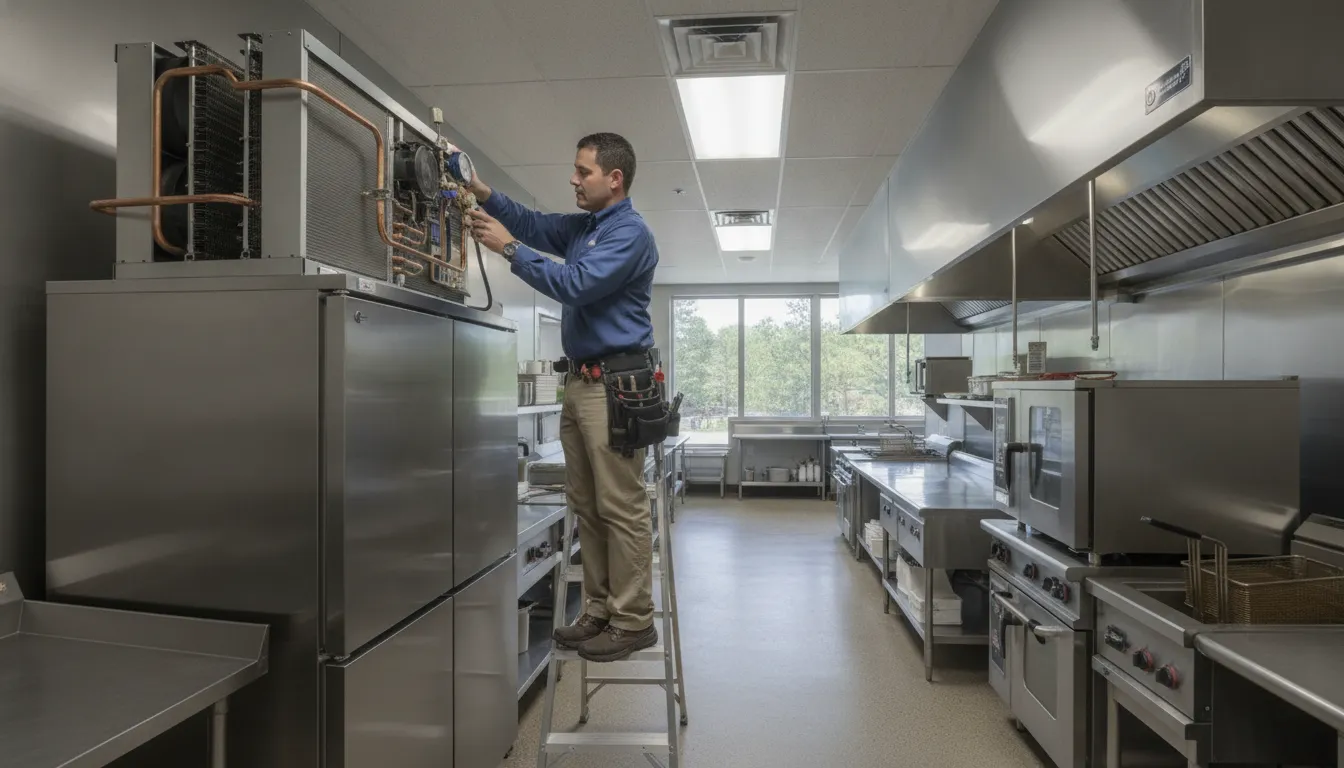
Employees can complete basic visual checks, confirm settings, document symptoms, and handle routine housekeeping that is permitted by the equipment instructions. Refrigerant, electrical, sealed-system, defrost-control, and component repairs belong with trained commercial refrigeration technicians. A safe handoff protects employees and prevents an attempted shortcut from making the failure more expensive.
Safe staff checks
- Confirm the unit has power and that its controls were not changed accidentally.
- Make sure doors close and products do not block internal vents.
- Clean reachable food debris and keep the area around equipment clear.
- Record displayed temperatures, alarms, sounds, and the time the issue began.
- Check whether nearby equipment shows a similar operating change.
Leave technical work to a professional
Do not open electrical panels, bypass safety controls, add refrigerant, chip ice from coils, or dismantle components. These actions can cause injury, worsen damage, or make diagnosis harder. QRC uses EPA-certified technicians for commercial refrigeration work. Review the signs you need commercial refrigeration repair for more service indicators.
How should you prepare for a service call?
A complete service request helps the dispatcher understand urgency, send an appropriately prepared technician, and reduce avoidable delays after arrival. Gather the unit identity, current conditions, operating history, and access details without delaying an urgent call. Tell the provider immediately when products, employees, or customers may be at risk.
Identify the equipment
Provide the equipment type, manufacturer, model, and serial number when available. Explain whether the issue affects a walk-in, reach-in, prep table, ice machine, display case, or another unit. If several units are affected, say whether they share a room, electrical circuit, or recent service history.
Describe the operating change
Share current and recent temperature readings, displayed alarm codes, unusual sounds, leaks, ice, odors, and how often the problem occurs. Note recent cleaning, power interruptions, maintenance, changes in product loading, and whether the symptom appeared gradually or suddenly. A clear timeline helps focus the initial diagnosis.
Prepare the work area
Give the technician safe access to the unit and relevant electrical panels. Assign a manager who can explain the timeline, answer questions, and approve work. Have service records available when possible. Keep staff and stored items away from the work area without blocking required exits or normal kitchen safety routes.
Get commercial HVAC and refrigeration help from QRC
Ask QRC about a Tele-Tech refrigeration consultation
Prevent breakdowns with a maintenance routine
Preventive maintenance cannot eliminate every failure, but it can uncover wear and operating changes before a busy service. North Carolina heat, kitchen grease, frequent door openings, humid air, and heavy product loads can make consistent attention especially valuable. Combine daily staff observations with a professional schedule suited to each unit.
Daily and weekly habits
- Log temperatures at consistent times and respond to trends.
- Check that doors self-close and gaskets make an even seal.
- Keep vents clear and avoid overloading cabinets.
- Clean spills promptly and keep visible drain areas clear.
- Report new noises, alarms, odors, and ice buildup.
- Confirm staff know where equipment records and response plans are stored.
Planned professional maintenance
A commercial refrigeration maintenance visit can include inspection, cleaning, testing, and documentation appropriate to the equipment. The right schedule depends on equipment type, use, environment, and manufacturer guidance. QRC provides commercial refrigeration services across North Carolina, including repair and maintenance support.
When does replacement make more sense than repair?
Repair is often appropriate when a unit is otherwise reliable and the problem is isolated. Replacement deserves consideration when failures become frequent, parts are difficult to source, performance no longer meets operational needs, or downtime creates unacceptable business risk. The right decision considers the complete operating picture rather than equipment age alone.
Evaluate the full operating picture
Review repair history, current condition, energy use, capacity, product requirements, and the effect of another interruption. Ask whether the equipment reliably supports today’s menu, volume, and workflow. Avoid a rigid rule based only on age or one repair estimate, because operational risk can differ significantly between restaurants.
Plan before an emergency
Discuss options while the current unit is still operating. A planned project allows time to evaluate sizing, layout, installation needs, service access, and business scheduling. QRC supports commercial refrigeration design, sales, service, and maintenance. Operators can review commercial refrigeration sales and design options before a crisis limits choices.
Choosing a North Carolina refrigeration partner
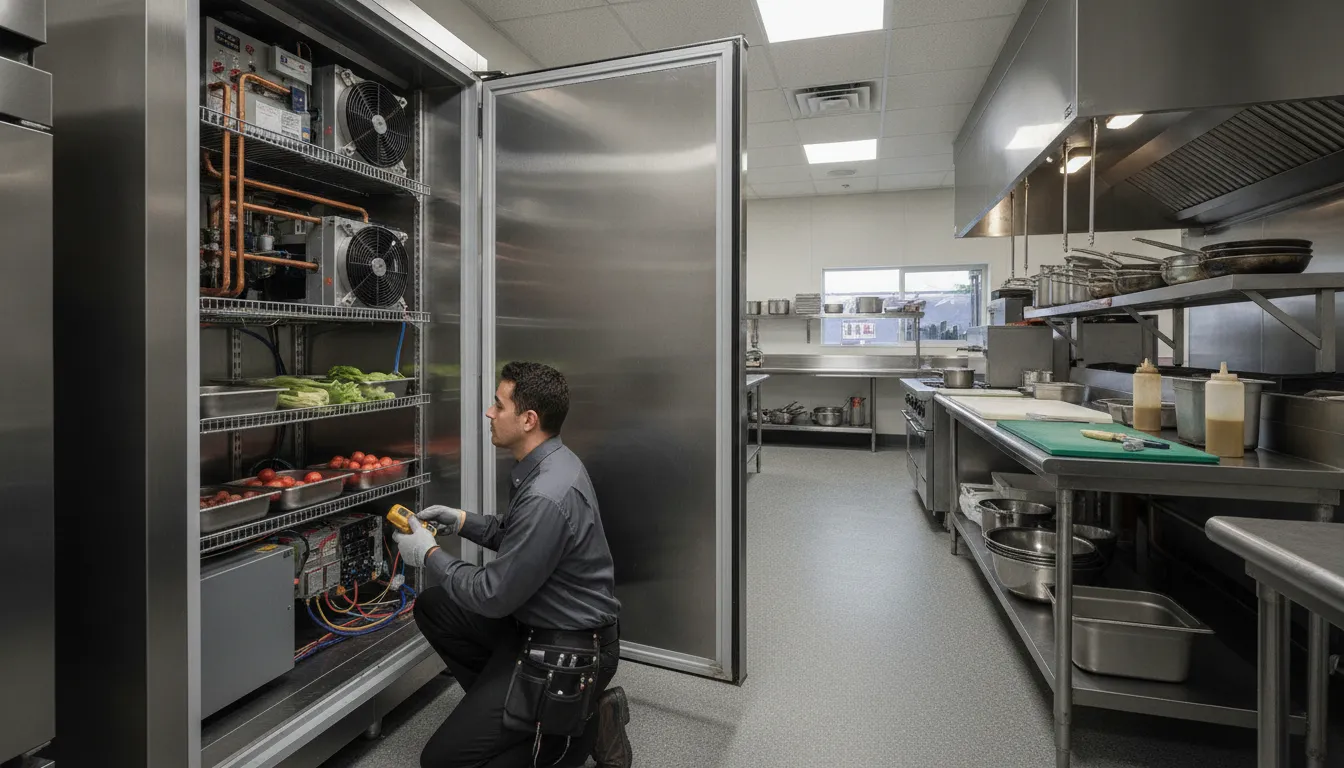
A restaurant needs a provider that understands commercial equipment and the operational cost of downtime. Ask about commercial specialization, technician qualifications, service coverage, documentation, maintenance support, and experience with the equipment used in your operation. Clear communication before an emergency makes the eventual service process easier to manage.
Look for commercial experience
Restaurant systems differ from household refrigerators in scale, controls, duty cycle, and repair requirements. Choose a company prepared to work on the equipment types used in your operation. Ask how the provider documents findings and recommendations so managers can make informed decisions and maintain an accurate service history.
Confirm qualifications and coverage
QRC HVAC & Refrigeration is a family-owned company founded in 1999 and based in Winston-Salem. QRC serves commercial HVAC and refrigeration customers statewide in North Carolina with EPA-certified technicians. Operators can request restaurant refrigerator repair in Winston-Salem or review statewide service options.
Build a response plan before equipment fails
A response plan turns a stressful refrigeration problem into a controlled process. Write down who checks equipment, who makes food safety decisions, who contacts the repair provider, and where products can be moved under approved procedures. Keep the plan available to every shift manager and review it whenever equipment or staffing changes.
Assign clear roles
The first employee to notice a problem should know whom to notify. A manager should confirm the condition, protect inventory under the food safety plan, and decide whether the unit should remain in use. Another team member can gather equipment details and prepare safe access for the technician.
Keep equipment records together
Store model numbers, serial numbers, manuals, warranty information, and service history in one location. Good records help the restaurant explain recurring problems and compare repair recommendations over time. They also make it easier to identify every unit affected by a shared electrical, environmental, or operating issue.
Plan temporary product storage
Decide where products can go if a cooler or freezer becomes unreliable. The backup plan may involve another suitable unit or another approved option in the operation’s food safety procedures. Avoid improvising after temperatures have already changed, and make sure every shift leader knows who can authorize the plan.
Common causes of restaurant refrigeration trouble
The same symptom can have several causes, which is why a professional diagnosis matters. Restaurant staff can still reduce risk by understanding operating conditions that often contribute to trouble. Restricted airflow, worn door components, drainage problems, controls, and electrical faults can each affect performance while requiring very different repairs.
Restricted airflow
Products packed against vents can prevent cold air from circulating. Grease and dust around accessible exterior areas can also affect performance. Keep required clearances open and follow the equipment maker’s cleaning instructions. Internal coil cleaning and system diagnosis should be handled by a qualified commercial technician.
Door, gasket, and moisture problems
Busy kitchens open refrigeration doors frequently. A weak hinge, torn gasket, or misaligned latch allows warm, humid air to enter and can contribute to moisture or ice buildup. A blocked or damaged drain can also lead to water around equipment. Include doors and visible drain areas in routine inspections.
Control or electrical faults
Sensors, controls, wiring, and power supplies can affect operation. Repeated breaker trips, damaged conductors, burning odors, or intermittent starts require professional attention. Do not reset a breaker repeatedly or bypass a safety device. Document exactly what happened and keep employees away from an obvious electrical hazard.
Contact QRC to discuss commercial refrigeration service
Photograph conditions without disturbing equipment
A clear photo of an alarm display, door gap, ice pattern, or leak area can help explain what the team observed. Take pictures only from a safe position. Do not remove guards or panels, and keep employees away from exposed wiring, hot surfaces, or standing water.
Review the trend after service
After a repair, continue the normal temperature log and note whether alarms, cycling, or moisture return. This creates a practical record for follow-up and future maintenance planning. It also helps managers distinguish a resolved incident from a recurring condition that needs another professional evaluation.
Frequently asked questions
These answers cover the practical questions restaurant managers often ask before arranging restaurant refrigeration repair. Use them to prepare for a service call and set safe staff boundaries. Equipment condition and operating requirements vary, so a qualified commercial technician should diagnose the specific unit and recommend the next step.
Restaurant operators often need to decide what to document, what staff can safely check, and when professional help is necessary. The answers below support a faster, safer response, but they do not replace the restaurant’s food safety plan, equipment instructions, or a diagnosis by a qualified commercial refrigeration technician.
What information should I give a refrigeration repair company?
Share the equipment type, model and serial number when available, current temperatures, alarm codes, sounds, visible conditions, and when the issue began. Mention any recent maintenance, cleaning, product-loading changes, or power interruptions. Also explain whether the unit contains products at risk and who will meet the technician.
Can restaurant staff add refrigerant?
No. Refrigerant work requires appropriate training, tools, and compliance. Ask an EPA-certified commercial refrigeration technician to diagnose leaks and handle refrigerant-related work. Adding refrigerant without finding the underlying problem is not a safe staff troubleshooting step and may make later diagnosis more difficult.
How often should restaurant refrigeration be inspected?
Staff should complete visual and temperature checks as part of daily operating routines. Professional maintenance frequency depends on equipment, use, environment, manufacturer recommendations, and service history. A qualified provider can help create a practical schedule for each unit instead of applying one interval to every piece of equipment.
Should I repair or replace a failing restaurant refrigerator?
Consider condition, repair history, parts availability, efficiency, capacity, reliability, and business risk. A qualified provider can compare repair needs with replacement options without relying on one rigid rule. Planning the decision while equipment still operates usually gives the restaurant more time to evaluate alternatives and schedule work.
Schedule restaurant refrigeration repair with QRC
If this checklist reveals a rising temperature, damaged door, leak, alarm, unusual sound, or repeated operating change, act before the problem disrupts another service. QRC HVAC & Refrigeration helps North Carolina restaurant operators with commercial refrigeration repair, maintenance, design, and sales, backed by statewide commercial coverage and EPA-certified technicians.