


A silent commercial refrigerant leak can drain your restaurant’s profits and spoil thousands in inventory overnight. These hidden failures often go unnoticed until your walk-in cooler stops holding temperature and your power bill spikes.
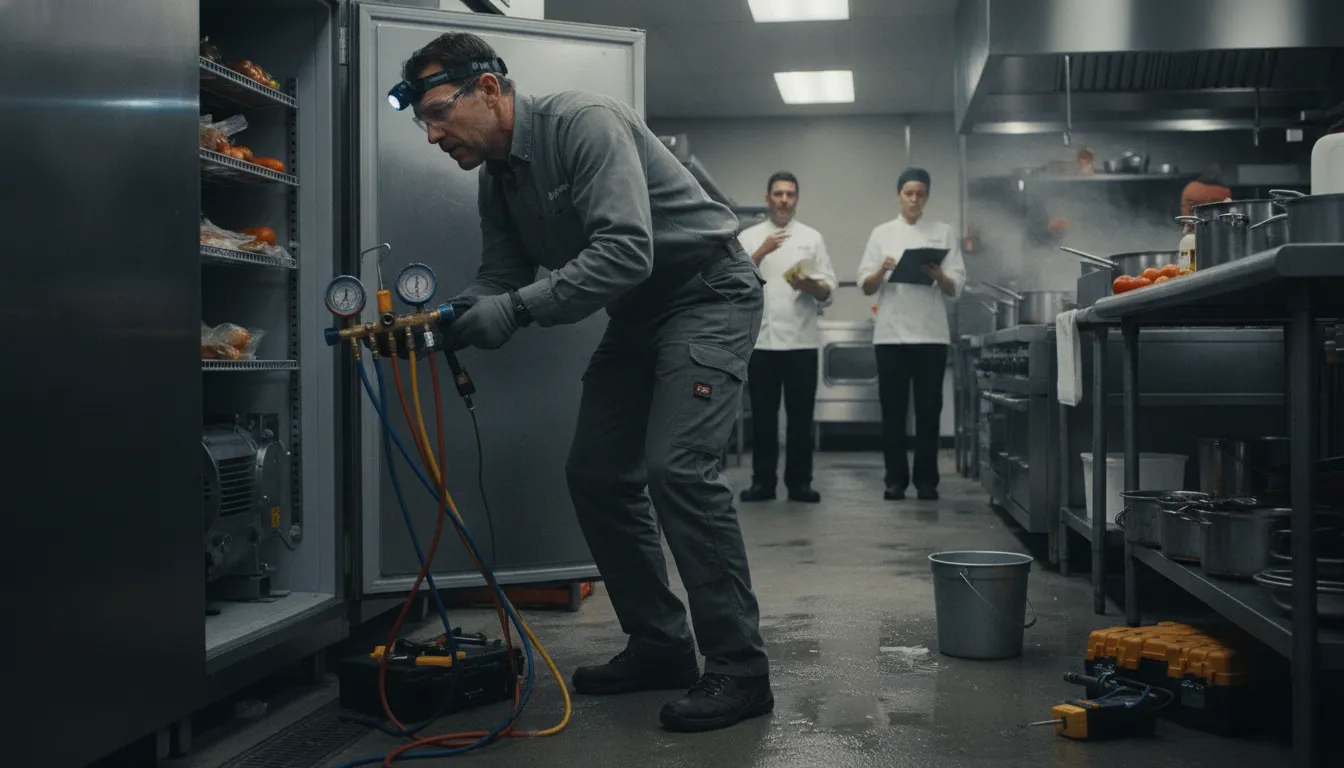
A commercial refrigerant leak happens when physical stress or vibration causes cracks in your cooling lines, which forces your units to work much harder than normal. This issue raises bills and leads to failure, while the Centers for Disease Control and Prevention notes that leaking gases cause health risks. Local business owners in Winston-Salem must watch for oily spots or warm temperatures to prevent food loss and call QRC technicians for fast, expert repairs. Our EPA-certified team handles every single step of the diagnostic process to keep your walk-in coolers and freezers running at peak efficiency all year long. We take painstaking care to find the source of the leak so your system can be fixed correctly and your inventory stays safe and cold.
Identifying a leak early is the best way to avoid high repair costs and lost food. As the only Winston-Salem provider with expertise in both HVAC and refrigeration, QRC helps you maintain your equipment better. The first step in protecting your cooling systems is knowing What Causes Commercial Refrigerant Leaks? The path begins with
What Causes Commercial Refrigerant Leaks?
Commercial refrigeration units work much harder than home systems. These machines run all day and night to keep food safe and fresh. Because they face constant stress, a commercial refrigerant leak is a common issue for many business owners. On average, these systems leak about 11% of their charge each year. In units that do not get regular care, that number can jump to 30%.
Physical Stress and Vibration
Vibration is a top reason for leaks. High-power compressors create constant movement through the piping. Over time, this shaking causes copper lines to rub against each other or the frame. This wear leads to small holes or cracks in the joints. Unlike home units, commercial setups have long pipe runs that increase the risk of these physical stresses. If a leak goes unchecked, the gas buildup can cause health issues like dizziness or headaches, according to the Centers for Disease Control and Prevention.
Temperature and Pressure Changes
Constant shifts in temperature also damage the system. Metals grow when they get hot and shrink when they cool. In a busy kitchen, a cooler may cycle hundreds of times a day. These changes put huge pressure on the seals and connections. High pressure inside the lines can eventually force refrigerant out through the weakest points. You can often troubleshoot a walk-in cooler by looking for oily spots near these joints. These spots often show where the gas is getting out.
Lack of Proper Maintenance
Many leaks start small and grow because of poor care. When a system is not cleaned or checked, it has to work harder to stay cool. This extra strain raises the pressure and heat within the coils. Corrosion can also eat away at the metal if the air is damp or has acid. Regular refrigeration equipment maintenance helps find these small weak spots before they become major breaks. Keeping the unit in good shape is the best way to prevent the high costs of lost gas and wasted power.
6 Warning Signs Your Commercial Refrigeration System Has a Leak
Finding a leak early can save your business from high costs. Commercial systems often lose refrigerant slowly over time. This means you might not notice a problem until your food starts to spoil. It is vital to check your units often. Our trained team knows how to spot these issues before they lead to full system failure. Use these six signs to tell if your cooler or freezer is leaking.
Visual and Sound Clues
Most leaks happen in places where pipes join or where the unit vibrates. These small cracks let gas escape, which makes the system work harder. You can often hear or see the signs if you know what to look for. For example, hissing sounds or ice on the coils are clear red flags. Finding these signs you need commercial refrigeration repair early helps keep your shop or kitchen running. Early detection keeps your power bills low and stops your food from rotting.
Common Leak Signs
- Rising energy bills. When gas is low, your unit uses more power to stay cold. You may see a 10% to 20% jump in your monthly power costs as the system struggles to work.
- Ice on the coils. Low refrigerant levels cause the evaporator coils to get too cold. This leads to ice buildup, which blocks air from flowing and stops the unit from cooling.
- Unsteady cooling. If your cooler stays at the right level one day but gets warm the next, you likely have a leak. These shifts often go unnoticed until the cooling fails completely.
- Hissing or bubbling sounds. You might hear a faint hissing noise near the lines or the compressor. This is often the sound of pressurized gas escaping through a small hole or crack.
- The compressor runs all day. A healthy system turns off once it reaches the set temperature. If your compressor runs all day without a break, it is trying to make up for lost cooling power.
- Food spoils too fast. If your stock is rotting before its due date, your unit is not cold enough. This leads to rapid food loss and higher costs for your kitchen or store.
Health and Safety Risks
Ignoring a leak is dangerous for your staff and your bottom line. Some old units may use gases that cause health issues if you breathe them in. For instance, breathing too much chloromethane can cause dizziness or headaches. To keep your team safe and your units running, you should fix a leak as soon as you spot a change. Getting a pro to find the leak early is the best way to avoid a big repair bill later.
Our team uses tools that can find even the smallest leaks. These tools can pick up gas levels as low as one part per million. This lets us fix the hole and recharge your system before you lose your entire stock. Taking quick action helps your business stay safe and keeps your monthly bills low. We use data from billions of samples to know exactly where leaks happen in food stores.
How Refrigerant Leaks Cost Your Business Money
A commercial refrigerant leak does more than hurt the air. It hits your bottom line in three big ways: power bills, food loss, and repair costs. Most owners do not see these costs until they are too high. Small leaks can hide for months while they slowly drain your cash. When you skip refrigeration equipment maintenance, you take a big risk with your profits.
Higher energy bills
When gas leaks out, your system must work harder to stay cold. A system that is low on gas can see its energy use go up by 10% to 20% to keep up with the heat. This extra work puts stress on your motor and parts. Over time, poorly kept units can leak up to 30% of their gas each year. This makes your power bills climb while your cooling stays weak.
Food and stock loss
In a food business, cold air is your lifeblood. A leak can cause temps to rise fast, leading to rapid food loss and high costs. If a walk-in cooler fails at night, you could lose thousands of dollars in stock by morning. Beyond the food itself, you lose the time spent to prep it. Safe food storage is also a health rule. Exposure to some old gas types can even pose health risks like headaches or dizziness for your staff.
Expensive system repairs
A small leak today can lead to a dead compressor tomorrow. When the gas is low, the system runs too hot and lacks oil. This can kill the heart of your unit. Replacing a commercial compressor costs much more than fixing a tiny hole early on. Also, the cost of the gas itself is rising. Buying new gas to fill a leaky unit is like pouring money down a drain. Smart owners fix leaks fast to save their gear and their cash.
The Safety Risks of a Commercial Refrigerant Leak
A commercial refrigerant leak is more than an equipment problem. It creates real safety risks for your staff and customers. While modern systems use safer gases than older units, a leak in a closed kitchen or storage room still poses a threat. You must act fast if you suspect a leak to keep your workplace safe.
Oxygen Displacement in Confined Spaces
Refrigerant gases are often heavier than air. If a large leak occurs in a walk-in cooler or a small prep area, the gas can settle near the floor. This displaces the oxygen in the room. In a small space, this can lead to a lack of air for workers. Staff may not notice the drop in oxygen until they feel weak or short of breath.
Central Nervous System and Cardiac Effects
Breathing in refrigerant fumes can harm the body. Short-term exposure can cause dizziness, headaches, or a loss of coordination. In more severe cases, some gases like Freon 113 can cause cardiac arrhythmias or central nervous system depression. This is why you should never try to find a leak by sniffing for it. If you see signs you need commercial refrigeration repair, call an expert right away.
The Danger of Older Systems
Some older commercial units may still use chloromethane. This chemical was common in past decades but is much more toxic than modern options. If an old unit leaks, the fumes can cause severe brain and nerve issues. Exposure to these older gases may lead to a coma or long-term health damage. If your facility uses older gear, refrigeration equipment maintenance is vital to prevent sudden leaks.
Professional Handling and Compliance
Repairing a leak is not a job for a general handyman. Federal law requires anyone who works with these gases to be EPA-certified. Our team at QRC has the right training and tools to find and fix leaks safely. We use high-end sensors to find the source of the gas without putting your team at risk. Proper care ensures your system stays in line with health and safety rules.
EPA Regulations and Compliance for Commercial Refrigeration
Fixing a commercial refrigerant leak is about more than just cold air. For shop owners in Winston-Salem, it is also a legal task. The Environmental Protection Agency (EPA) has strict rules on how you must handle leaks. If you fail to follow them, you could face big fines. These rules protect the air and keep your business safe. You should know how these laws change your repair plans and your daily work.
EPA Section 608 Rules
The main rule for businesses is Section 608 of the Clean Air Act. This law sets leak repair requirements for large systems. If your unit holds 50 or more pounds of gas, you must follow these steps. When a leak gets too big, you must fix it within 30 days. You must also keep a log of every repair and all the gas you add to the unit. State agents may ask to see these logs at any time. Your logs must include:
- The date you added gas to the unit.
- The amount and type of gas used.
- The cause of the leak and how it was fixed.
- The name of the certified person who did the work.
The EPA tracks how much gas a system loses each year. A typical commercial unit leaks about 11% of its gas each year. But if you do not take care of the unit, that loss can hit 30%. High leak rates force you to make repairs by law. Using a quarterly refrigeration maintenance checklist helps you find small holes early. This keeps your system legal and saves you money on power bills. It also stops the need for a full system trade.
New Standards and Monitoring
Rules for cooling systems change as the country seeks to be more green. In 2020, the California Air Resources Board (CARB) set new rules for shops. These rules often lead to new federal laws for all states. They push for better ways to find leaks fast. New systems now use tools that can find a leak as small as one part per million. This stops a tiny leak from becoming a big mess for your shop.
Modern rules also call for better ways to watch your system. Good care is key for following the law and refrigeration equipment maintenance. You should use tools that check gas levels all the time. This helps you find a fault before it hurts your food stock. Acting early means you can plan a repair rather than dealing with a sudden break. It also keeps your system running at the best level for the least cost.
Mandatory Certified Technicians
The law says that only a licensed person can open a cooling unit. Every worker on your site must be an EPA-certified technician. This ensures they know how to catch gas and keep it out of the air. Hiring a person without this license puts your shop at risk of high fines. It can also lead to bad repairs that do not last. A poor fix can cause more leaks and hurt your unit over time.
At QRC, our team holds all the right licenses for North Carolina work. We do not just add more gas to a leaky unit. We find where the gas is getting out and fix it for good. We take great care to find the real cause of the problem. This helps the earth and keeps your power bills low. Our goal is to keep your business safe, legal, and ready for work every day.
How QRC Diagnoses and Repairs Commercial Refrigerant Leaks
When your business faces a commercial refrigerant leak, every hour of delay risks food loss and high energy costs. QRC uses a clear, multi-step process to find and fix leaks fast. Our goal is to get your cooling system back to peak health with no hidden fees or extra sales pitches.
Initial System Assessment
The process starts with a full check of your cooling units. Our team looks at your walk-in coolers, freezers, and prep tables to see where the cooling fails. We listen for odd sounds and look for ice or oil spots that often point to a leak. This first look helps us plan the best way to troubleshoot a walk-in cooler with care.
Advanced Electronic Leak Detection
Small leaks can hide for months before they cause a total system crash. QRC uses tools that find minor leaks before they become big failures. We use gas detectors that can find leaks as low as 1 ppm for halogenated gases. This high-tech gear lets us spot the exact source of the leak, even in large kitchens or storage areas.
Expert Repair and Verification
Once we find the leak, our EPA-certified techs step in to fix it. We focus on a deep technical check to make sure the repair lasts. Our trucks carry a large stock of parts, so we can often finish the job during the first visit. After the repair, we recharge the unit and test it to make sure your units meet all industry standards for safety.
- Inspection: We check all prep tables, reach-in units, and coolers for visible signs of damage.
- Electronic Testing: We use tools to find gas leaks at levels as low as 1 part per million.
- Expert Diagnosis: A certified tech explains the exact cause of the leak and the best fix.
- Accurate Repair: We fix the leak without pushing for parts or services you do not need.
- Stocked Inventory: We use parts from our trucks to get your system running on the same day.
- System Recharge: Our team adds the right amount of gas to restore cooling efficiency.
- Final Testing: We run the system through a full cycle to ensure the commercial refrigerant leak is gone.
We take pride in honest work for all commercial refrigeration services in the state. By focusing on the facts and the fix, we save you money and protect your stock.
Frequently Asked Questions
What is an acceptable refrigerant leak rate for commercial systems?
Most commercial refrigeration systems lose about 11% of their charge every year. If you do not maintain your units, this leak rate can climb as high as 30%. High leak rates lead to higher power bills and poor cooling. According to Temperature Control Systems, keeping your system in good shape helps you avoid these costly losses. Quick repairs keep your food safe and your energy costs low.
How much extra energy does a refrigerant leak use?
A commercial system with low refrigerant levels must work harder to stay cold. This extra effort can raise your energy use by 10% to 20% over time. These leaks often go unnoticed until your cooling performance drops significantly. Data from industry experts shows that finding leaks early is the best way to stop efficiency loss. Fixing these small holes keeps your monthly bills from spiking unexpectedly.
Are commercial refrigerant leaks toxic to humans?
Refrigerant gas is usually not toxic in small amounts. However, it can be dangerous in tight spaces because it replaces the oxygen you need to breathe. Large leaks can cause dizziness, headaches, or even loss of consciousness. According to the CDC, some older systems use chemicals like chloromethane that pose higher risks to your health. You should always have a certified expert check any suspected leaks to keep your staff safe.
Can a small refrigerant leak cause food spoilage?
Yes, even a slow leak can cause your walk-in cooler or freezer to lose its cooling power. When temperatures rise above safe levels, you face the risk of rapid food loss. This can lead to thousands of dollars in wasted inventory for a restaurant or shop. Our EPA-certified technicians find and fix these leaks quickly. We help you protect your perishables and keep your business running smoothly without downtime.
Ready to Fix Your Commercial Refrigerant Leak?
Ignoring a leak leads to lost food and high power bills. A small leak today can turn into a total system crash by next week. When your coolers lose charge, they work twice as hard and burn more power. This extra wear leads to costly repairs that you could have stopped with a quick check. You also risk losing thousands of dollars in fresh food if the cold air stops. Acting now is the best way to stop downtime and keep your shop running well. Our team knows how to find even the smallest leaks in your pipes. We come with stocked trucks to get the job done right on the first trip. Do not wait for your unit to stop working on a busy day. You can save money and avoid stress by taking care of your gear today. We serve Winston-Salem with fast and honest help you can trust.
Ready to schedule commercial refrigeration service? Call (336) 813-1785 to book your inspection.