


Your air conditioner might seem like it’s doing its job, but if it’s more than a decade old, it could be quietly costing you. Technology has changed significantly, and older systems are often inefficient, running on outdated refrigerants and consuming far more energy than modern units. An AC that runs constantly or struggles to maintain temperature isn’t just inconvenient; it’s a sign of inefficiency. Understanding the technical reasons to replace your air conditioner, from low SEER ratings to obsolete parts, is key to lowering your energy bills and improving your home’s comfort. Let’s explore the practical benefits of upgrading your system.
 Your air conditioner can feel like a lifeline during the muggy North Carolina summers. It’s the only thing standing between your comfort and hot, sleepless nights. Temperatures can reach an ultra-hot 90+ degrees in the summertime, which can be dangerous to pets, small children, and the elderly. What do you do if your AC isn’t working properly?
  Read on to learn about the top five signs you need to replace your air conditioner and how the QRC team can help with ongoing maintenance, repairs, or choosing a brand new unit to cool your home.
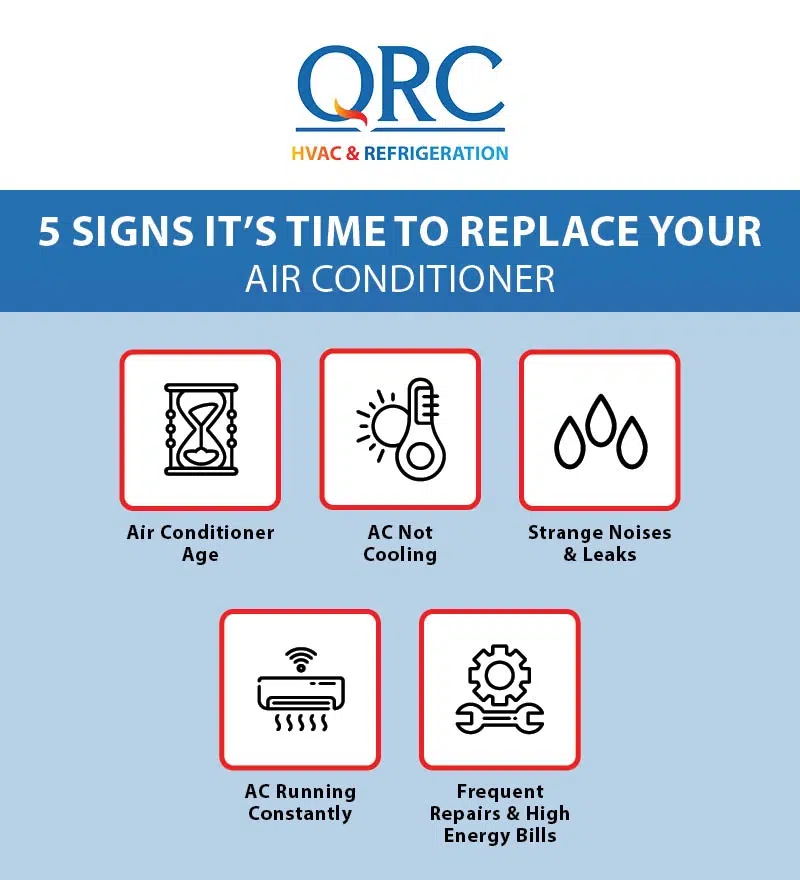
Air Conditioner Age: The Clock is Ticking
One of the first signs to replace an AC is an aging system. If your window air conditioner is over five years old or your central AC is over fifteen years old. These machines are designed to work at their peak within these timeframes, but once they reach a certain AC age, their effectiveness drops off, especially if they haven’t been regularly maintained. If your AC is old, consider purchasing a new model before it gives out completely.
AC Not Cooling: The Most Obvious Sign
An AC blowing warm air is an obvious sign of when to replace your air conditioner. The purpose of an air conditioner is to cool down your house, so if your AC’s not cooling the room, it’s either time for serious repairs or a full replacement.
Strange Noises and Leaks: Don’t Ignore the Warning Signs
If your AC is making strange noises or leaking water, it might be time to consider replacing it. These warning signs often indicate bigger issues, like broken pieces, broken fan motors, refrigerant leaks, or faulty components. In some cases, repairs may be more costly than replacement, making it a better financial decision to remove the failing unit sooner rather than later.
AC Running Constantly: A Sign of Overwork
If your AC’s running constantly, it could be a sign that you’ve got an undersized unit struggling to keep up with demand. This usually means your house won’t ever cool down sufficiently, which may cause humid spots, high energy bills, and more wear and tear on the machine. Upgrading to a larger machine gives you whole-home cooling capability while saving energy (and money) in the long run.
Frequent Repairs and High Energy Bills: Time for a Change
There comes a time when the money you’re spending on repairs and higher-than-necessary energy bills outweighs the convenience of sticking with your older model AC. Upgrading to a newer, more efficient Energy-Star-rated AC is a cost-effective option. As a bonus, you’ll get greater peace of mind knowing you can rely on your new air conditioner to do its job without worrying about the next repair bill.
Technical Reasons for an Upgrade
Sometimes, the decision to replace your air conditioner isn’t just about how well it’s cooling your home. Technology changes, and older systems can become obsolete, inefficient, and expensive to maintain. Even if your AC seems to be working fine, it might be costing you more than you realize due to outdated components and standards. Understanding these technical factors can help you make a proactive decision that saves you money and headaches down the road. It’s about looking beyond the immediate performance and considering the long-term health and efficiency of your home’s cooling system.
Outdated Refrigerant Type
One of the biggest technical reasons to upgrade is the type of refrigerant your AC uses. Many older units run on R-22, also known as Freon. Due to its harmful effects on the ozone layer, the production and import of R-22 were phased out. While it’s not illegal to continue using an R-22 system, servicing it has become incredibly expensive. According to Energy Star, the remaining supply of R-22 is limited, making repairs that require a refrigerant recharge costly. Upgrading to a new system that uses modern, environmentally-friendly refrigerants isn’t just better for the planet—it ensures that future maintenance will be more affordable and accessible.
Low Energy Efficiency Ratings (SEER2)
Energy efficiency standards for air conditioners have improved dramatically over the years. The efficiency of an AC unit is measured by its SEER (Seasonal Energy Efficiency Ratio) rating—or the newer SEER2 standard. The higher the rating, the more efficient the unit. If your current system has a low rating (for example, below 13 SEER), it’s using far more electricity to cool your home than a modern unit would. This inefficiency translates directly into higher monthly energy bills. A new, high-efficiency model can significantly reduce your energy consumption, and the savings can help offset the cost of the new unit over its lifespan.
Repair or Replace? How to Make the Call
Deciding whether to repair or replace your air conditioner can feel like a major financial puzzle. A small, inexpensive repair on a relatively new unit is usually a clear choice. But when you’re facing a costly repair on an older system, the lines get blurry. You have to weigh the immediate cost of the repair against the long-term investment of a new system. There are a few practical guidelines and factors you can consider to bring clarity to the situation. Using a simple formula can provide a starting point, but it’s also important to look at the bigger picture, including your unit’s history and overall condition.
Using the “$5,000 Rule” to Guide Your Decision
A helpful guideline for this decision is the “$5,000 Rule.” To use it, you simply multiply the age of your AC unit in years by the estimated cost of the repair. If the result is more than $5,000, replacement is generally the more sensible financial option. For example, if you have a 10-year-old unit and are quoted a $600 repair, the calculation is 10 x $600 = $6,000. Since this is over the $5,000 threshold, investing in a new system is likely the better long-term choice. This rule helps you avoid sinking money into an aging unit that is likely to need more repairs in the near future.
Understanding Common AC Repair Costs
To apply the $5,000 rule, it helps to know what common repairs cost. A minor fix like replacing a capacitor might only run you between $100 and $400. However, major component failures are much more expensive. A new compressor can cost anywhere from $900 to $2,900, while replacing a condenser coil can range from $1,000 to over $4,000. When you’re looking at repairs in the thousands, especially on a unit that’s over a decade old, the math often points toward replacement as the smarter investment for your home.
Factors Beyond the Math
While the $5,000 rule is a great tool, it’s not the only thing to consider. The overall history and condition of your unit play a huge role. Has the system been meticulously cared for with regular tune-ups? If so, a significant repair on a 12-year-old unit might still be worthwhile. On the other hand, if the unit has had a history of problems, even a smaller repair might be a sign of more trouble to come. Consistent professional maintenance can extend the life of your system, making a repair a more viable option even as the unit ages.
Warranty, Safety, and Overall Condition
Don’t forget to check your warranty. If your AC is still under warranty, a repair could cost you very little or nothing at all, making it an easy decision. Safety is another critical factor; issues like electrical problems or refrigerant leaks can pose risks, and replacement might be the safest option. A trusted technician can perform a thorough inspection to assess the overall health of your system. Here at QRC, our service maintenance programs are designed to keep your system in top shape and help you get a clear picture of its condition before you make a big decision.
Understanding the Cost of a New Air Conditioner
When it’s time for a new air conditioner, the first question on everyone’s mind is, “How much is this going to cost?” The price of a new AC system isn’t a one-size-fits-all number; it can vary widely based on the type of unit, the size of your home, and several other factors. Generally, replacing a central air conditioner is a significant home investment, with costs typically ranging from $5,500 to $16,000. While that’s a wide range, understanding what goes into the final price can help you budget accordingly and choose a system that fits both your home’s needs and your finances.
Average Cost and Price Range
The cost of a new air conditioner is largely determined by its performance and features. You can think of AC units in three general tiers. Entry-level, single-stage systems are the most budget-friendly, usually costing between $5,500 and $8,800. Mid-range, two-stage units offer better efficiency and typically fall in the $6,700 to $9,400 range. For the highest efficiency and most precise temperature control, high-end, variable-speed systems are the top choice, with prices ranging from $8,300 to $16,000. These price points generally include both the unit and the cost of professional installation.
Costs for Different Tiers of AC Units
The difference between these tiers comes down to how the compressor works. A single-stage unit’s compressor is either on or off—there’s no in-between. A two-stage unit can run at a lower speed (around 60-70% capacity) for milder days, saving energy. A variable-speed unit can make tiny adjustments to its output, running anywhere from 40% to 100% capacity. This provides the most consistent cooling and the best energy efficiency, which can lead to significant savings on your utility bills over the life of the system.
Factors That Affect the Final Price
The size of your home is one of the biggest factors influencing the final price. Larger homes require more powerful—and therefore more expensive—air conditioners to cool them effectively. The condition of your home also matters. If you have an older home with poor insulation or drafty windows, you might need a larger unit to compensate. The brand of the air conditioner, any available warranties, and even the region you live in can also affect the total cost. Getting a personalized quote is the only way to know for sure what to expect for your specific situation.
Potential Additional Costs
The quote for your new AC unit typically covers the equipment and standard installation, but sometimes extra work is needed. The most common additional cost is new ductwork. If your existing ducts are old, leaky, or improperly sized for the new system, they may need to be replaced. For an average 2,000-square-foot home, this could add another $2,100 to $4,000 to your total project cost. It’s an important investment, as efficient ductwork is essential for your new system to perform at its best and deliver comfort evenly throughout your home.
Ductwork and Electrical Work
Beyond ductwork, you might also encounter costs for electrical upgrades. Modern, high-efficiency air conditioners can have different electrical requirements than older models. Your home’s electrical panel might need to be updated to safely handle the load of the new system. A professional HVAC contractor will assess your existing infrastructure during the initial consultation to identify any necessary upgrades. This ensures that your new system will run safely and reliably from day one. At QRC, we offer virtual Tele-Tech appointments to provide an initial evaluation and help you understand potential costs upfront.
The AC Replacement Process: What to Expect
Once you’ve decided to replace your air conditioner, you’ll want to know what the process looks like. It’s more involved than just swapping out one box for another. A proper installation is key to ensuring your new system runs efficiently and reliably for years to come. The process involves getting professional advice, ensuring the new unit is the right size for your home, and understanding exactly what parts will be replaced. Knowing what to expect can make the entire experience smoother and help you feel confident that you’re making a great investment in your home’s comfort.
Why You Should Get Multiple Quotes
Installing a new HVAC system is a major purchase, so it’s wise to do some comparison shopping. You should aim to get quotes from at least three different qualified HVAC contractors. This allows you to compare not just the price but also the equipment they recommend, their installation process, and the warranties they offer. Pay attention to how thorough each contractor is during their evaluation. A reputable professional will take the time to inspect your current system, your ductwork, and your home’s layout before providing a detailed proposal. This diligence is often a sign of quality workmanship.
The Importance of Professional Sizing and Inspection
One of the most critical steps in the replacement process is making sure your new air conditioner is the right size for your home. A unit that’s too small will run constantly without ever properly cooling your space, while a unit that’s too large will cycle on and off too frequently. This is not only inefficient but also ineffective at removing humidity, leaving your home feeling cool but clammy. A professional contractor should perform a detailed analysis to determine the perfect size for your home’s specific needs, ensuring optimal comfort and efficiency.
What is a Manual J Load Calculation?
To size a system correctly, professionals use a method called a “Manual J Load Calculation.” This isn’t a simple guess based on square footage. It’s a comprehensive calculation that takes into account many factors, including the size of your home, the number and quality of your windows, the amount of insulation, local climate, and even the number of people living in the house. This detailed analysis determines the exact cooling “load” your home requires. Insisting on a Manual J calculation ensures you won’t end up with an oversized or undersized unit.
What Gets Replaced During Installation
A standard central air conditioner replacement involves more than just the outdoor unit. Typically, the installation includes a new outdoor condenser, the indoor evaporator coil (which is usually located inside your furnace or air handler), and the copper pipes that connect them, known as the lineset. Replacing all three components as a matched set is crucial for the system to achieve its advertised efficiency rating and perform reliably. Using an old indoor coil with a new outdoor unit can lead to poor performance and premature system failure.
Should You Replace Your Furnace at the Same Time?
Since the indoor coil of your AC is housed with your furnace, many homeowners wonder if they should replace both at the same time. In many cases, it’s a smart move. Your furnace and air conditioner share the same blower motor to circulate air, so they function as an integrated system. Replacing them together ensures all components are designed to work in harmony, which can improve overall efficiency. It can also be more cost-effective, as you’ll only have to pay for the labor of one installation instead of two separate ones down the line.
Benefits Beyond Better Cooling
A new air conditioner does more than just provide reliable, cool air on a hot day. It’s an upgrade that can deliver a host of other benefits that improve your home and your finances. While the immediate comfort is the main motivation, the long-term advantages are what make a new AC system a truly valuable investment. From lower monthly bills to a more attractive home for potential buyers, the positive effects of a modern, efficient cooling system can be felt for years. Thinking about these added perks can help you see the full value of your decision.
Long-Term Energy Savings
One of the most significant benefits of a new air conditioner is the potential for long-term energy savings. As technology has advanced, modern AC units have become incredibly efficient. Upgrading from an older, low-SEER unit to a new high-efficiency model can drastically reduce the amount of electricity your system uses to cool your home. This translates directly into lower monthly utility bills. While the upfront cost is an investment, the cumulative savings over the lifespan of the unit can be substantial, helping the new system pay for itself over time.
Increased Home Value
A new, modern HVAC system is a highly attractive feature for potential homebuyers. It provides peace of mind, assuring them that they won’t have to worry about a costly replacement shortly after moving in. This can make your home more appealing on the market and can even increase its resale value. Unlike purely cosmetic updates, a new HVAC system is a functional upgrade that improves the core comfort and efficiency of the home. It’s an investment not just in your daily comfort but also in the long-term value of your property.
Call QRC Today
If you’ve recognized some common AC replacement signs in your HVAC system, contact QRC to speak to an expert about your options, such as ductless mini-split cooling systems and central air units. We’re available to North Carolina residents living in our service area, which spans Winston-Salem, Greensboro, High Point, Lexington, Oak Ridge, Thomasville, King, Jamestown, Advance, and many other NC cities. We’ll help you choose and install your new AC unit so your family can stay cool no matter what it’s like outside. Contact us today by phone, or schedule your service using our handy online calendar feature.
Frequently Asked Questions
How do I know if my air conditioner needs to be replaced?
Some of the most obvious signs that it’s time to replace your air conditioner are strange noises like banging or squealing or if it no longer cools your home the way it used to. It may also be time for an upgrade if your unit is over 15 years old, running constantly, or leaking water.
What are the telltale signs that my AC is beyond repair?
If your air conditioner is old, blowing warm air, has weak airflow, or sounds or smells strange, it’s likely time to replace it. Have your AC unit checked if it continuously short-cycles (turns on and off continuously) or causes your energy bill to skyrocket every summer.
How long should an air conditioner typically last?
On average, most window units last five to ten years, while HVAC system air conditioners last between 10 and 20 years. This number varies by how much maintenance work is done to reduce wear and tear. Proper inspections, lubrication, adjustments, and calibrations can exponentially increase lifespan.
Is it more cost-effective to repair or replace my AC unit?
It depends on the issues you’re having with the air conditioner. Sometimes, all it takes is a filter change or a cleaning to get the unit working as good as new, but you may be better off replacing an older air conditioner with bigger issues. If you’re unsure, call QRC to schedule an air conditioner inspection.
What are the benefits of replacing my old air conditioner?
Benefits of replacing an old air conditioner include more reliable whole-home cooling, lower energy bills, convenient programmable temperature settings, and better compatibility with smart-home features.
How often should I have my AC unit serviced to prolong its lifespan?
It’s best to have your air conditioner serviced at least once a year in the spring to prepare it for heavy summer use. At QRC, we have helpful maintenance plans to ensure your air conditioner is in tip-top shape when needed.
Key Takeaways
- Evaluate your AC’s true condition: Look beyond obvious issues like poor cooling or strange noises. Technical factors, such as outdated R-22 refrigerant and low energy efficiency ratings, can make an older unit expensive to run and repair, signaling it’s time for an upgrade.
- Use a simple rule for the repair versus replace debate: Apply the “$5,000 Rule” to make a clear financial choice. If your AC’s age multiplied by the repair quote exceeds $5,000, investing in a new system is typically the more sensible long-term decision.
- Prioritize a professional installation process: The performance of your new AC hinges on proper installation. Get multiple quotes, insist on a professional sizing calculation (Manual J) for your home, and replace the indoor and outdoor units together to ensure optimal efficiency.