


A furnace problem can turn a cold Mocksville morning into a rushed decision. The right answer is not always a new system, and it is not always another repair. You need a clear look at the furnace’s age, repair history, safety condition, comfort, efficiency, and expected reliability.
Talk with QRC about Mocksville furnace service: (336) 281-5144.
Upgrading instead of repairing your furnace in Mocksville may make sense when an older system has repeated failures, a major repair, safety concerns, or declining comfort and efficiency. Repair may be better when the failure is isolated and the furnace is safe, well maintained, and reasonable to keep operating.
Use the questions below to compare the next repair with the condition and future needs of the whole heating system.
When should you consider upgrading instead of repairing your furnace in Mocksville?
Consider an upgrade when the furnace is older, repairs are becoming frequent, a major component has failed, or the system no longer delivers dependable and even heat. A repair may still fit when the failure is isolated, the furnace is safe and well maintained, and the cost is reasonable for its remaining service life.
Age is useful context, but it should not decide the outcome by itself. A furnace that has been maintained and needs one occasional minor repair may still be a practical asset. The decision becomes more urgent when service calls are clustering together or when the latest failure exposes broader wear.
As a planning guideline, a furnace around 12 years old deserves a closer replacement conversation, while equipment over 15 years old may warrant an especially careful comparison. These are not mandatory replacement dates. Installation quality, maintenance, operating hours, sizing, fuel type, and the home’s conditions all affect service life.
Review the repair pattern, not just the latest invoice
Write down the date and type of each repair. Ignition problems, blower trouble, control failures, unusual noises, and recurring airflow complaints can reveal whether the newest problem is isolated. Several unrelated failures may indicate that multiple components are aging at the same time.
Parts availability also matters. A repair that depends on an obsolete part or a temporary workaround may restore heat today without providing dependable service during the next cold spell. Ask how long the part is expected to last, whether it has a warranty, and what other components were inspected.
Use a complete inspection before deciding
Ask a qualified technician to evaluate the heat exchanger, burners, venting, electrical components, controls, blower, airflow, thermostat, and ductwork. A repair estimate should explain what failed and what testing confirmed it. A replacement estimate should explain sizing, installation scope, venting, connections, startup testing, and any ductwork work required.
Is furnace repair worth it when the equipment is older?
Furnace repair can be worthwhile on older equipment when the problem is limited, the system is safe, and the repair offers reasonable expected reliability. Replacement deserves more attention when the unit has repeated failures, expensive major-component work, poor comfort. Limited parts availability, or a repair cost that does not fit its remaining service life.
There is no universal age at which every furnace should be replaced. An older furnace with a strong maintenance history and a minor failure may be a better short-term choice than an immediate upgrade. Conversely, a younger system with serious installation, safety, or reliability problems may need more than a routine repair.
A commonly used rule of thumb treats a repair that approaches half the cost of a comparable new furnace as a replacement warning. It is not a law or a promise. Compare the repair warranty, expected remaining life, operating costs, comfort, and full replacement scope before relying on a percentage.
Reviewing a local furnace repair cost guide can help you identify the questions to ask, but an online range cannot diagnose your equipment. The model, failed part, access, labor, warranty, and safety conditions all affect the actual recommendation.
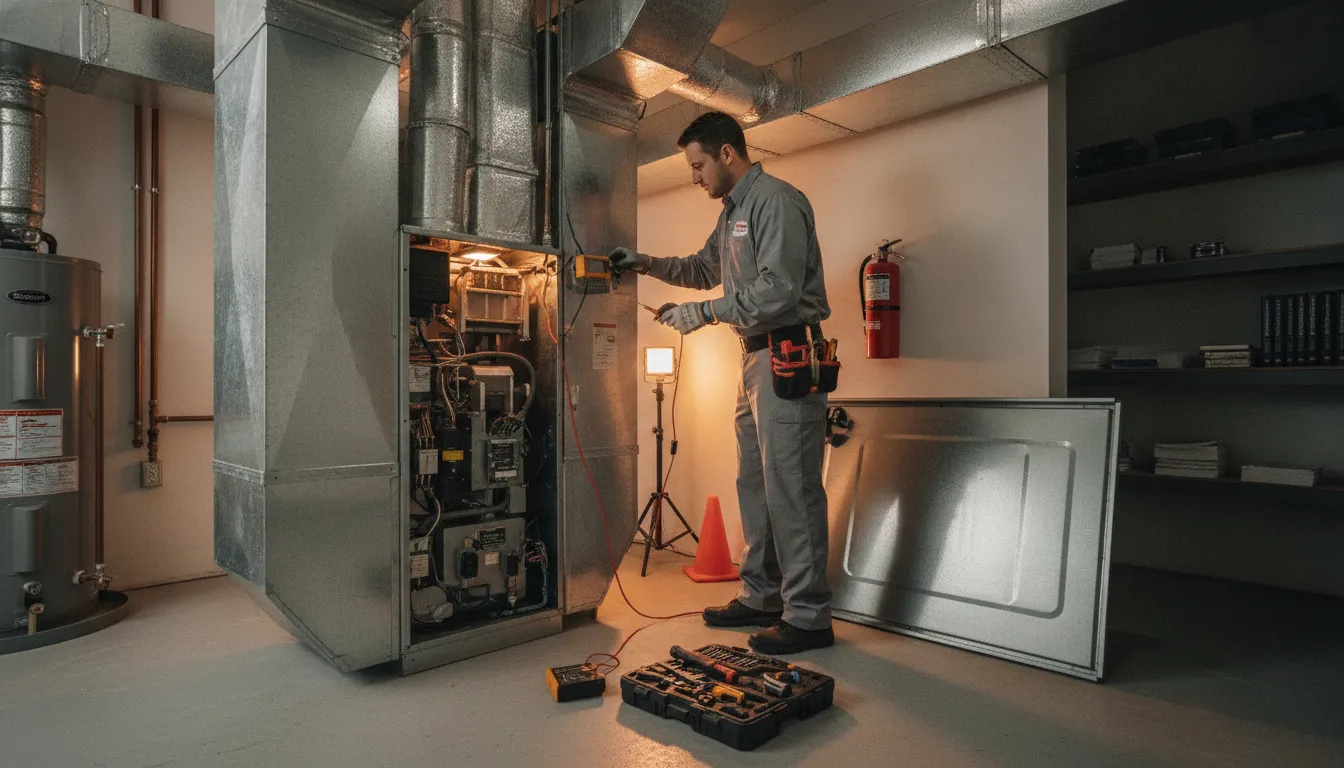
For a Mocksville homeowner, the strongest repair decision is based on documented testing. Ask whether the proposed work addresses the cause of the failure or only replaces a symptom. Also ask what the technician found when checking connected components that could create another outage.
How does furnace efficiency affect a repair-versus-upgrade decision?
Efficiency matters most when an older furnace combines rising energy use with repeated repairs, uneven comfort, or long run times. AFUE describes how much fuel becomes usable heat, but a rating alone cannot predict a home’s bills. Duct condition, sizing, controls, insulation, weather, fuel prices, and maintenance also shape results.
AFUE means annual fuel utilization efficiency. A higher AFUE generally means a larger share of the fuel becomes usable heat and less is lost through combustion and exhaust. It does not guarantee a specific savings amount for a Mocksville household.
ENERGY STAR guidance on replacing heating and cooling equipment says heating and cooling account for about half of the average home’s energy use. It also says replacing equipment more than 10 years old with an ENERGY STAR certified model may reduce heating and cooling costs by up to 20 percent. Treat that as a potential, not a promise, because results depend on the home and equipment.
Look beyond the furnace rating
A newer furnace cannot correct every source of wasted energy. Leaky ducts, restricted returns, poor insulation, air leaks, an inaccurate thermostat, or incorrect sizing can create comfort problems even when the equipment is sound. A targeted repair or distribution improvement may be more useful than replacement when the furnace itself is operating safely.
Ask for a comparison that addresses measured performance, duct condition, airflow, sizing, thermostat operation, and projected operating-cost direction. If efficiency concerns appear alongside repeated failures and an aging unit, compare retrofit and repair costs with a properly sized replacement. The factors behind an HVAC replacement estimate can help you compare proposals without focusing on one equipment rating.
Which furnace problems are safety issues for Mocksville homeowners?
Carbon monoxide alarms, suspected exhaust, visible vent damage, soot, unusual combustion odors, or a suspected heat-exchanger problem should be treated as safety concerns first. Turn off the furnace when appropriate, move outside if a detector alarms, and have the equipment and venting evaluated by a qualified professional before using it again.
Some furnace symptoms require a safety response before a repair-versus-upgrade discussion. Gas- and oil-burning equipment involves combustion and venting, and a dangerous condition may not be visible from the outside of the cabinet.
Carbon monoxide and venting concerns
Carbon monoxide, or CO, is an odorless and colorless gas. Fuel-burning furnaces can produce it, and exposure can cause sudden illness and death. The Centers for Disease Control and Prevention explains carbon monoxide risks and recommends having heating systems serviced every year by a qualified technician.
A blocked flue, damaged vent, loose connection, or heat-exchanger concern can affect the separation between combustion gases and the air circulated through the home. Do not try to confirm the cause from a thermostat symptom or a quick visual check.
What to do when a detector sounds
If a carbon monoxide detector alarms, move everyone and pets outside to fresh air and contact emergency services or the appropriate emergency authority from outside the home. Do not re-enter simply because the alarm stops. Do not restart the furnace to see whether the alarm returns. Have the equipment and venting checked before using it again.
Keep detectors operating near sleeping areas and replace batteries according to the manufacturer’s instructions. A detector is an important warning device, but it does not replace annual professional service or proper vent inspection.
Can comfort and reliability show that a furnace needs more than repair?
Uneven temperatures, short cycling, long run times, repeated outages, or new noises can point to a repair need, airflow problem, sizing issue, or aging system. These symptoms do not prove that replacement is necessary. A complete diagnosis can show whether a targeted correction will restore comfort or whether replacement is the more dependable option.
In Mocksville homes, rooms that feel different from one another may be affected by restricted airflow. Leaking or poorly balanced ductwork, insulation gaps, thermostat problems, or incorrect equipment sizing. The symptom matters, but it does not identify the cause by itself.
Look for repeatable patterns
Document when the problem occurs, which rooms are affected, how long the furnace runs, and whether the thermostat reaches its setting. Short cycling may be related to sizing, airflow, a dirty filter, thermostat operation, or a failing component. Correcting the underlying issue may restore dependable operation without replacing the complete system.
Rattling, grinding, unusual banging, noisy starts, and a blower that sounds different from normal should be reported. Excessive dust can point to filtration, duct sealing, or airflow concerns. None of these symptoms automatically establishes the furnace’s remaining service life.
Reliability becomes a stronger replacement factor when failures repeat, several major components show wear, or the system cannot operate dependably through winter. Ask whether the proposed repair addresses the root problem, how long the component is expected to last, and whether ductwork, airflow, thermostat settings, insulation, and sizing were evaluated.
QRC’s residential heating and cooling resources can help Mocksville homeowners understand how the furnace connects to the rest of the system before choosing a path.
What should you compare before approving a furnace upgrade?
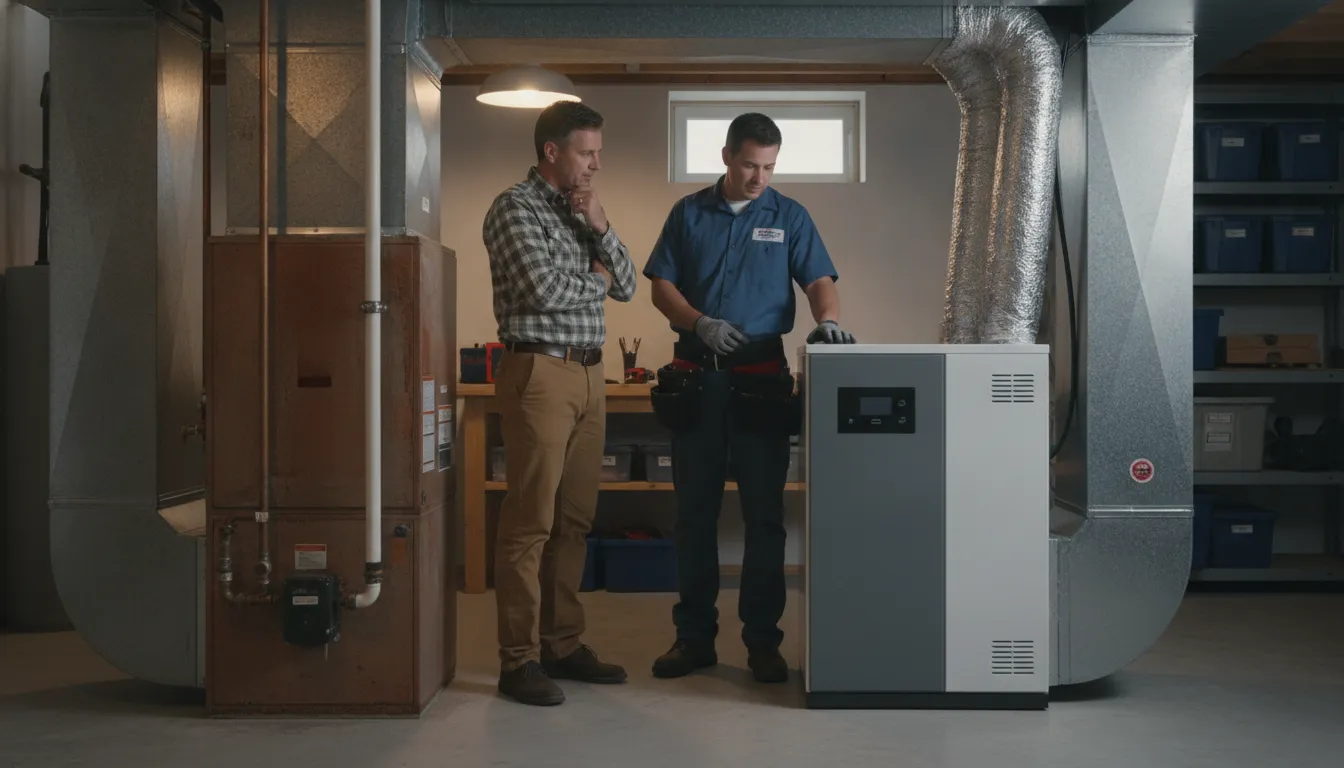
Compare the next repair with the furnace’s age, history, safety condition, comfort, efficiency, warranty, and expected reliability. For an upgrade, compare equipment sizing, installation scope, venting, ductwork, controls, permits, startup testing, removal, and ongoing maintenance. A written scope makes competing recommendations easier to evaluate.
Before approving work, write down the furnace model, approximate age, recent repairs, and the symptoms your household notices. Ask whether the repair restores safe operation or only postpones another likely failure.
| Option | When it may fit | Questions to ask |
|---|---|---|
| Repair now | One identifiable failure affects a relatively young or otherwise sound furnace. | What failed, what testing confirmed it, and what warranty applies? |
| Repair plus retrofit | The furnace is sound, but airflow, controls, ducts, or thermostat operation limit comfort. | Will the improvement address the cause, and how will performance be measured? |
| Upgrade | An older or unreliable furnace has repeated failures, safety concerns, or a major repair that does not fit its remaining life. | Was the equipment sized correctly, and does the scope include venting, ducts, controls, testing, and removal? |
If replacement is proposed, ask what caused the current comfort or reliability problem. Confirm that the estimate includes ductwork, thermostat compatibility, venting, permits, startup testing, and removal of the old equipment. Use the HVAC replacement estimate factors as a checklist, not as a substitute for an inspection.
Timing matters in Davie County. A safe repair may be the practical short-term choice when the system is dependable. An upgrade may offer more planning control before the next cold spell when an older furnace is becoming unpredictable. The recommendation should follow documented findings, not pressure or one symptom.
What is the practical next step for your Mocksville furnace?
The practical next step is a written evaluation that identifies the failed component, checks safety and connected systems, and compares repair with a properly scoped upgrade. Mocksville homeowners can then weigh immediate cost, expected reliability, comfort, efficiency, and timing without treating furnace age as the only deciding factor. Use this three-step check.
- Bring your repair history and recent utility concerns to the appointment.
- Ask for clear answers about safety, remaining service life, parts availability, repair warranty, system sizing, and the full cost of each option.
- If the furnace is unsafe, stop using it until a qualified professional evaluates the condition.
For additional context, compare the existing furnace repair cost information with the scope of a new HVAC replacement estimate. A local evaluation can connect those general questions to your home’s actual equipment and comfort needs.
QRC HVAC & Refrigeration serves residential heating needs in the Winston-Salem area and surrounding communities. Any recommendation should be based on the condition of your specific furnace and the requirements of your home.
Talk with QRC about your Mocksville furnace options: (336) 281-5144
Frequently Asked Questions
Is a 10-year-old furnace considered old?
A 10-year-old furnace is not automatically at the end of its useful life, but it is old enough to justify an upgrade discussion. Compare repair history, safety, comfort, efficiency, and likely remaining service life. ENERGY STAR says replacing equipment over 10 years old may reduce heating and cooling costs by up to 20 percent, depending on the home and system. Review the replacement guidance before treating that figure as a guarantee.
Is furnace repair worth it after 15 years?
It can be, especially when the repair is minor and the furnace is safe, reliable, and otherwise sound. A furnace over 15 years old deserves a careful repair-versus-upgrade comparison. Frequent breakdowns, declining comfort, safety concerns, or a major repair can shift the decision toward replacement.
Should I replace a furnace if repair costs more than 50 percent of a new system?
The 50 percent figure is a rule of thumb, not a universal law. A repair above half the cost of a comparable new furnace is a meaningful replacement warning, particularly when the unit is older or has a history of failures. Compare the repair warranty, remaining equipment life, operating costs, and full replacement scope.
Which furnace parts can make a repair expensive?
Costs vary by model and diagnosis. A heat exchanger, control board, inducer motor, or blower motor can make a repair materially more expensive than routine maintenance. A qualified technician should identify the failed part and explain whether it affects safety.
What is the typical furnace lifespan in North Carolina?
There is no single lifespan for every North Carolina furnace. Installation quality, maintenance, system sizing, operating hours, moisture, and repair history all matter. Treat 15 years as a practical point for closer replacement consideration, not a mandatory replacement date.
Plan Your Mocksville Furnace Decision With QRC
A clear evaluation can help you compare repair, upgrade, safety, comfort, and timing for your home. Schedule a Mocksville furnace evaluation with QRC HVAC & Refrigeration: (336) 281-5144