


A walk-in cooler drifting warm before dinner service can put thousands of dollars in food and a full shift at risk. Most failures give restaurant owners warning first, from spreading frost to longer run times. Prompt walk in cooler repair can protect inventory, food safety, and daily service before a small fault forces a shutdown.
Schedule walk in cooler repair with QRC for emergency or planned commercial refrigeration service.
Schedule walk in cooler repair when temperatures rise, frost spreads, food spoils early, water appears, or the system runs longer than normal. Move exposed food to approved cold storage, limit door openings, document temperatures and symptoms, and call a qualified refrigeration technician promptly.
The urgent question is which symptoms can wait for routine service and which ones threaten food, equipment, or tonight’s dinner rush. Walk in cooler repair warning signs that demand action comes next, so you can spot trouble early and respond with confidence. Here’s how.
Walk in cooler repair warning signs that demand action
A walk-in cooler often shows trouble before it stops cooling. Staff should note small changes during each shift, then report them before food safety or equipment damage becomes a concern. A clear record of temperatures, sounds, and visible changes can also help a technician find the fault faster.
Temperature drift and uneven cooling
Temperature drift is one of the clearest signs that walk in cooler repair may be needed. Check the display, then use a separate thermometer to confirm the reading. Also compare conditions near the door with those at the back of the cooler. Warm zones may point to poor airflow, a door issue, or a cooling fault.
Food that feels warmer than usual, wilting produce, or drinks that take longer to chill also deserve attention. The FDA Food Code uses 41 degrees Fahrenheit or below as the cold-holding limit for many foods. Follow your food safety plan when temperatures rise, and call for service if the cooler cannot hold its set point.
- Record the temperature and time instead of relying on memory.
- Keep the door closed while checking whether cooling returns.
- Move food according to your safety plan if the temperature keeps rising.
- Request urgent service when cooling does not recover or food safety is at risk.
Frost, moisture, and door problems
A thin patch of frost can grow into a heavy ice buildup around the evaporator or nearby panels. That ice may block airflow and make the cooler work harder. Do not chip it away with a sharp tool, since that can damage coils or refrigerant lines. Instead, note where the ice forms and how quickly it returns.
Puddles, dripping water, or wet ceiling panels also call for a closer look. Moisture may come from a blocked drain, damaged insulation, or warm air entering through the door. Check whether the door closes on its own and sits flush. Torn gaskets, loose hinges, and a latch that will not hold should be repaired promptly.
Condensation near the entrance may increase during busy periods, but it should not become a steady problem. Wipe up standing water to reduce slip risks. Then arrange service if moisture returns, spreads, or appears near electrical parts.
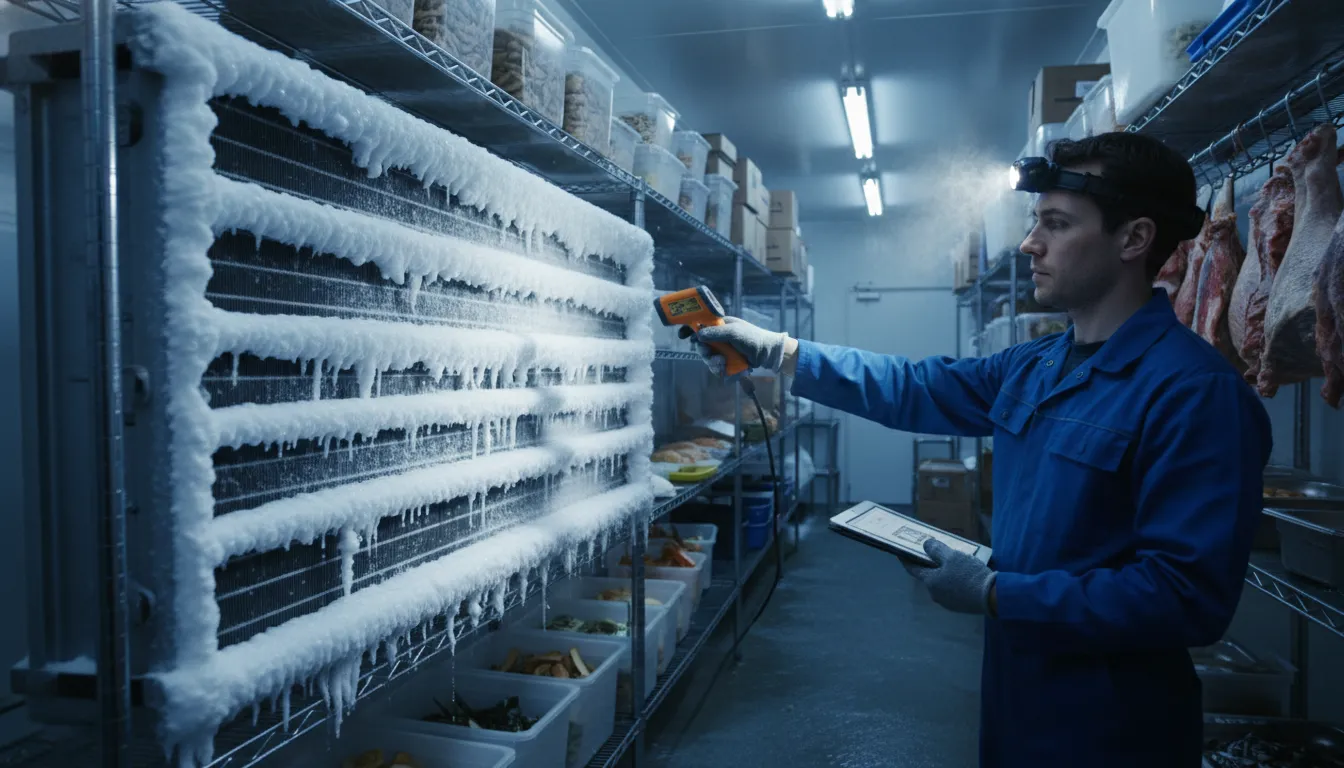
Compressor cycling, noises, and odors
Listen for changes in the cooler’s normal cycle. A compressor that starts and stops often, runs without a break, or struggles to start needs attention. These patterns can signal several faults, so avoid guessing or resetting the unit over and over. Shut it down only when your safety plan or technician directs you to do so.
New banging, grinding, buzzing, or squealing sounds should also be logged. A burning smell needs immediate action because it may point to an electrical problem. Move people away, follow site safety steps, and request urgent help. Strong musty or stale odors may instead call for cleaning, drain checks, and an equipment inspection.
- Call at once for burning odors, smoke, sparks, or exposed wiring.
- Escalate fast when rising temperatures occur with constant running or repeated cycling.
- Schedule service soon for recurring frost, leaks, noise, or door seal failures.
Restaurant operators should describe what changed, when it began, and whether temperatures are still rising. QRC provides commercial refrigeration service for equipment issues that need a trained diagnosis. Keep staff from opening panels or handling refrigerant while waiting for a technician.
What should you do when a walk-in cooler is warming?
A warming walk-in cooler is first a food safety issue, then a repair issue. Use your restaurant’s food safety plan at once. Put one trained person in charge of the response.
Do not wait for the room to feel warm before acting. Follow this sequence to protect food, record the problem, and support a faster repair.
Immediate food safety response
Your written policy should guide each choice about holding, moving, or discarding food. The FDA Food Code provides a model for food safety rules, but local requirements and your approved plan still apply.
-
Confirm and record the temperature. Check the display, then use a clean, working probe or another approved thermometer. Write down the air temperature, food temperatures, time, and employee name.
-
Limit door openings. Tell the team to keep the door closed unless food must be checked or moved. Every unnecessary opening lets more warm air enter and makes the unit work harder.
-
Protect the food. Follow your food safety plan and manager procedures. Move food to a working cooler when the plan calls for it, and label affected items for review.
-
Check obvious causes safely. Look for a door that is not fully closed, a damaged gasket, blocked airflow, or a changed control setting. Clear only simple obstructions that staff can handle without tools.
-
Call for walk in cooler repair. Share the temperature log, alarm details, and any sounds or ice you noticed. Tell the technician when the problem began and what staff already checked.
-
Keep monitoring and document the outcome. Record new readings at the intervals set by your policy. Note when food moved, when service arrived, and when a manager cleared the cooler for use.
Safe checks before service arrives
Staff can inspect the door, gasket, display, and nearby airflow without opening equipment panels. They can also listen for unusual cycling and look for visible ice or water. Record those signs instead of trying to fix them.
Do not adjust wiring, add refrigerant, chip ice from components, or remove guards. These actions can cause injury, damage parts, and hide useful clues. Keep the area clear so the technician can reach the unit.
Details to give the repair technician
A clear timeline helps the technician start with useful evidence. Provide the current reading, earlier readings, product temperatures, alarm messages, recent door activity, and any changes in sound. Mention recent cleaning or service work too.
Continue following the manager’s food safety decision until the cooler is stable and approved for use. A repair visit does not replace the restaurant’s duty to assess food. Keep every temperature and action in the same incident record.
What causes a walk-in cooler to stop cooling?
A walk-in cooler can lose cooling for several reasons, and the first symptom rarely tells the whole story. Warm product, heavy frost, water, noise, or short cycling can each point toward more than one fault. A qualified technician checks the full system before recommending walk in cooler repair.
Airflow, coils, and the cooler box
Good airflow lets the evaporator absorb heat inside the box and helps the condenser release that heat outside. Blocked airflow, dirty coils, failed fans, or ice on the evaporator can weaken cooling. A technician also checks whether stored items restrict air movement around the evaporator.
The cooler box itself can add to the load. A worn door gasket, damaged closer, misaligned door, or failed panel seam may let warm, damp air enter. That moisture can lead to frost and make temperature control harder. QRC provides commercial refrigeration support for businesses that need the cause checked before equipment is repaired.
Controls, sensors, and drainage
The controls tell each part when to run and when to stop. A bad temperature sensor, thermostat, defrost control, relay, or contactor may cause poor cooling or uneven operation. Technicians test these parts against the system’s operating condition instead of replacing parts based on one symptom.
Drain problems can also create a chain of faults. A blocked or frozen drain may leave water near the evaporator, where it can freeze and restrict airflow. A technician checks the drain, pan, heat source, and defrost cycle to find the root cause. This helps separate a drainage fault from a broader refrigeration issue.
Refrigerant, electrical, and compressor faults
The sealed refrigerant circuit can lose capacity when it has a leak, restriction, metering fault, or improper charge. These issues require trained diagnosis with system readings and a leak check. The EPA’s Section 608 guidance explains federal technician requirements for work that may release regulated refrigerants.
Electrical faults can stop a fan, control, heater, or compressor even when the failed part looks normal. Loose connections, damaged wiring, weak capacitors, and supply problems are possible causes. A technician checks power and control signals before deciding whether a major component has failed.
Compressor trouble may appear as poor cooling, repeated shutdowns, or failure to start. Yet those signs can also result from controls, electrical supply, refrigerant flow, or high system pressure. Careful testing helps avoid replacing the compressor when another fault caused the symptom. It also shows whether several related issues need attention during the repair.
Emergency repair or scheduled service?
A walk-in cooler problem can disrupt service, damage inventory, and create food safety risks. The first step is deciding whether the issue needs emergency repair or prompt scheduled service.
Signs that call for emergency repair
Call for emergency commercial refrigeration service when the cooler cannot hold a safe temperature or the temperature keeps rising. Other urgent signs include a complete shutdown, burning smells, smoke, sparking, or water near electrical parts.
Move at-risk products to working cold storage when it is safe to do so. Keep cooler doors closed, track product temperatures, and follow your food safety plan. The FDA offers practical guidance on storing food safely when cold storage conditions are in doubt.
- Protect staff first when smoke, sparks, or electrical hazards are present.
- Do not keep selling food that may have been held outside safe limits.
- Record temperatures, times, and any steps taken to protect inventory.
Issues that can be scheduled promptly
Some problems allow enough time to schedule a service visit, but they should not be ignored. Examples include new noises, small door gasket gaps, light frost, slow recovery after restocking, or a drain that has started backing up.
These signs may not stop daily operations at once. Still, a small fault can place more strain on the system and lead to a larger repair. Arrange walk in cooler repair soon, then monitor the unit until a technician arrives.
| Condition. | Emergency repair. | Scheduled service. |
|---|---|---|
| Temperature. | Rising or outside your food safety limits. | Stable, but recovery is slower than usual. |
| System operation. | Unit has stopped cooling or shut down. | Unit runs, but cycles or sounds have changed. |
| Safety signs. | Smoke, burning odor, sparks, or electrical risk. | No immediate hazard is present. |
| Water or ice. | Heavy leak near electrical parts or unsafe footing. | Minor drain backup or light frost buildup. |
| Inventory. | Products may no longer be held safely. | Products remain within required limits. |
What to do while service is on the way
Give the service company clear details about the unit, current temperature, alarms, sounds, and recent changes. This helps the technician prepare for the visit and bring likely parts.
Do not make electrical or refrigerant repairs without the right training. Keep people away from unsafe areas and preserve any service records for the technician. Continue checking temperatures and follow your written food safety process until the cooler is stable again.
What to expect from professional walk in cooler repair
Service intake and site inspection
A walk in cooler repair visit starts with a clear account of the problem. The technician will ask when symptoms began, what changed, and whether the cooler has stopped holding its set temperature. Share any unusual sounds, ice buildup, leaks, odors, or recent work.
The first inspection covers the cooler, its controls, and the space around it. The technician may check door seals, hinges, fans, coils, drains, wiring, and signs of refrigerant trouble. They will also look for blocked airflow and product placement that may affect cooling.
Temperature records and alarm history can help narrow the search. Keep them ready if your business tracks them. Before arrival, move stock away from service panels and keep staff clear of the work area.
Diagnosis and repair approval
QRC also supports complete commercial refrigeration repair and maintenance, while its refrigeration installation team can help when an aging cooler needs a planned replacement.
After the inspection, the technician tests the parts most likely tied to the symptoms. This may include checking control settings, electrical readings, airflow, pressures, and the defrost system. The goal is to find the cause, not just reset an alarm.
If refrigerant work is needed, federal rules apply to how it is handled. The EPA explains that technicians who service equipment that could release regulated refrigerants must meet Section 608 technician certification requirements.
A professional diagnosis should come with a plain explanation. You should know what failed, why the recommended repair addresses it, and what may happen if work is delayed. The technician should also explain the expected cost and ask for approval before completing work beyond the agreed scope.
Some faults can be repaired during the first visit. Others need a specific part or more time to reach the failed component. In that case, ask how to protect stored goods and whether the cooler can operate safely until the return visit.
Repair verification and next steps
Once authorized, the technician completes the repair and checks the affected system again. A sound verification process confirms that fans run, controls respond, drains flow, and doors close as intended. The technician should also watch the cooler begin moving toward its set temperature.
Cooling recovery may take time after a warm door opening or a full shutdown. Avoid adding warm stock while the system recovers. Follow the technician’s guidance on product safety, operating limits, and when normal loading can resume.
Before the visit ends, request a service record with the diagnosis, completed work, parts used, and final test results. Note any follow-up work or maintenance advice. QRC’s commercial refrigeration service supports businesses that need help with cooling equipment and related service needs.
Keep the service record near the equipment log. It gives the next technician useful history if the issue returns. It can also show repeated faults that point to a larger repair or maintenance need.
Get a professional walk-in cooler diagnosis from QRC before a small fault creates a larger interruption.
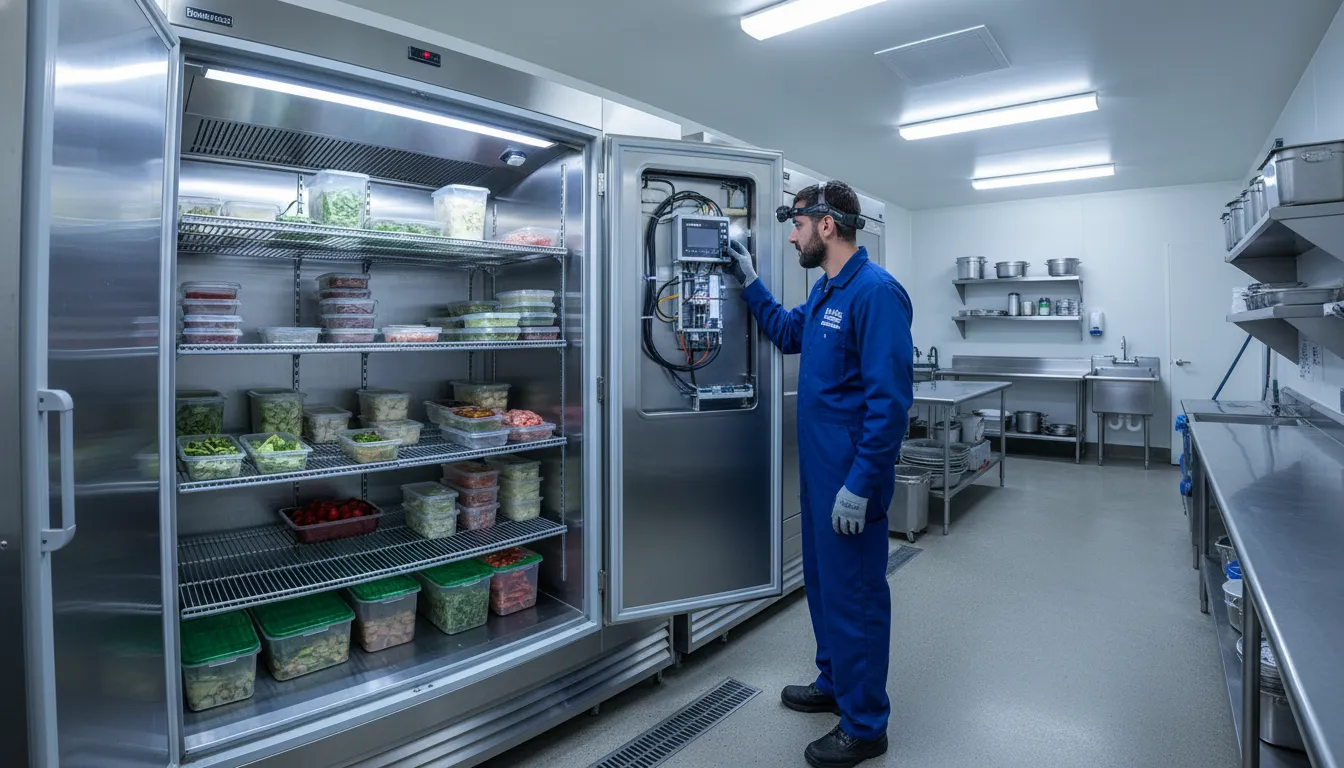
How preventive maintenance helps avoid breakdowns
Daily staff checks and temperature logs
A simple daily check can reveal a cooler problem before service stops. At opening and closing, record the displayed temperature and compare it with recent entries. A steady log makes unusual changes easier to spot. Report any change that continues instead of waiting for the cooler to warm further.
Staff should also listen for new sounds and look for water, frost, or damaged doors. Check that products do not block fans or crowd air paths. Confirm that the door closes on its own and does not stay open during deliveries. These quick checks help managers request walk in cooler repair while the unit may still hold temperature.
Cleaning and door care
Coordinate cooler cleaning with the restaurant’s regular kitchen schedule. Keep floors clear, remove debris near the unit, and clean spills before they reach seals or door hardware. Staff can wipe gaskets with the maker-approved method and check for gaps, tears, or hard sections. A closing door should form an even seal around its full edge.
Give one staff member clear ownership of each check. Use a short checklist so the same areas get reviewed on every shift. Managers can review the log each week and compare notes with cleaning records. This makes it easier to link a new issue with a recent spill, delivery, or door problem.
Do not scrape ice with sharp tools or cover a recurring issue with repeated resets. Those actions may damage parts or hide the cause. Instead, note where frost returns and when it appears. The EPA GreenChill program also stresses refrigerant leak prevention and early repair as sound refrigeration practices.
Professional maintenance and early action
A documented commercial maintenance plan can help teams schedule inspections, track recurring faults, and address wear before it interrupts restaurant operations.
Set professional commercial refrigeration maintenance around equipment needs, operating hours, and the restaurant’s busiest seasons. A technician can inspect items that staff should not service. These may include electrical parts, refrigerant lines, drains, controls, fans, and coils. Keep each visit in the same log as staff checks and past repairs.
Call for help when a pattern appears, not only after the cooler fails. Warning signs include longer run times, repeat frost, rising temperatures, weak airflow, leaks, or a door that will not seal. Sharing the temperature log and recent changes can help the technician narrow the search faster.
Early action gives the restaurant more time to protect food, adjust prep, and plan service. It can also reduce the chance of an urgent shutdown during a busy shift. For help reviewing a concern, contact QRC for commercial refrigeration support before a small fault disrupts daily operations.
When should you consider replacement instead of repair?
A failed cooler does not always need to be replaced. Many faults can be fixed with focused walk in cooler repair. Still, replacement deserves a closer look when repairs no longer support safe, steady restaurant operations.
Age and repair history
Start with the equipment’s age, condition, and service record. Age alone does not decide the issue. A well-kept older system may remain dependable, while a newer unit with repeated failures may disrupt service too often.
Review past work orders for patterns. Several calls for the same fault can point to a deeper problem. Separate issues across major parts may also show that the full system is wearing down.
- Note how often the cooler has failed during busy periods.
- List which parts were repaired or replaced.
- Record temperature swings, unusual noise, ice buildup, and door problems.
- Track any food loss or menu limits tied to downtime.
This record gives a refrigeration technician useful context. It also helps owners compare another repair with a planned replacement, without relying on one recent breakdown.
Operational needs and energy use
A cooler must fit the way the restaurant works now. Storage needs, kitchen volume, and operating hours may have changed since installation. An undersized or poorly matched system can struggle even after a sound repair.
Energy performance also belongs in the review. Worn doors, weak insulation, and aging controls can make the system work harder. The U.S. Department of Energy publishes walk-in commercial refrigeration equipment guidance that can inform an efficiency discussion.
Look at energy use as one part of the decision, not as proof by itself. Changes in weather, hours, or kitchen demand can affect utility bills. A technician can check whether the cooler itself is driving the increase.
A professional system assessment
Ask for a full system assessment before choosing replacement. The technician should inspect the refrigeration components, controls, doors, panels, drainage, and electrical connections. This wider check can separate one repairable fault from broad system decline. If replacement makes more sense, review QRC’s commercial cooler options and custom refrigeration design support.
The assessment should explain what failed, what remains in good condition, and which risks may return. It should also consider parts access and the restaurant’s tolerance for future downtime. Clear findings make the repair-or-replace choice easier to defend.
Replacement may deserve evaluation when failures keep returning, several major parts show wear, or the cooler no longer meets daily needs. Repair may remain sensible when the fault is limited and the rest of the system is sound.
Schedule walk in cooler repair with QRC before a manageable warning sign becomes an urgent shutdown.
Frequently Asked Questions
How quickly should I call for walk in cooler repair?
Call for walk in cooler repair as soon as the unit cannot hold its normal safe temperature. Move food to a working cooler, limit door openings, and record temperatures while following your food safety plan. A technician can check airflow, controls, door seals, refrigerant, and electrical components before the problem causes further spoilage or equipment damage.
Why is my walk in cooler running constantly?
A walk in cooler may run constantly because of frequent door openings, dirty condenser coils, damaged door gaskets, poor airflow, or a control problem. Ice buildup or low refrigerant can also keep the system from reaching its set temperature. Because several causes create the same symptom, a refrigeration technician should diagnose the system instead of relying on guesswork.
Is ice buildup inside a walk in cooler a warning sign?
Some frost can appear during normal operation, but thick or recurring ice is a warning sign. It can point to an air leak, failed door heater, blocked drain, defrost issue, or airflow problem. Do not chip ice with a sharp tool, since it can puncture coils or damage panels. Schedule service if ice returns after a safe defrost or affects temperature, doors, fans, or drainage.
Can a restaurant keep using a walk in cooler that is not cold enough?
A restaurant should not keep using a walk in cooler when it cannot maintain the temperature required by its food safety plan. Transfer food to approved cold storage, document readings, and follow local health rules for evaluating exposed products. Turn the unit off only if a technician, manufacturer guidance, or an immediate safety hazard calls for it. Professional diagnosis can help determine whether repair, temporary shutdown, or replacement is appropriate.
Ready to Protect Your Walk-In Cooler and Inventory?
Ignoring unusual temperatures, frost buildup, leaks, or strange noises can turn a manageable cooler problem into spoiled inventory and an urgent shutdown. Waiting also gives small mechanical issues more time to strain the system, disrupt kitchen planning, and create avoidable stress during your busiest hours. Starting now gives a technician time to inspect the equipment, identify the cause, and plan repairs before the warning signs become a larger disruption.
Ready to protect your cold storage, reduce service disruptions, and give your team a clear repair plan? Contact QRC HVAC & Refrigeration to schedule commercial walk-in cooler repair or request emergency help before the problem risks more inventory and service time.