 WIN a $25,000 HVAC System from QRC!
  Post a Pic, Get a FREE A/C Tune-Up!


Nothing stings quite like opening an electricity bill that’s double what you expected. If your usage habits haven’t changed, your HVAC system is the most likely cause. An inefficient unit can be a major drain on your wallet, and one of the most common reasons for that inefficiency is a refrigerant leak. As the coolant escapes, your system is forced to run almost constantly to maintain the temperature on your thermostat, wasting energy and money. Even worse, this strain can lead to a catastrophic failure, turning a small repair into a full system replacement. A timely refrigerant check from a professional can save you from this financial headache. Let’s look at the signs that your system is leaking money.
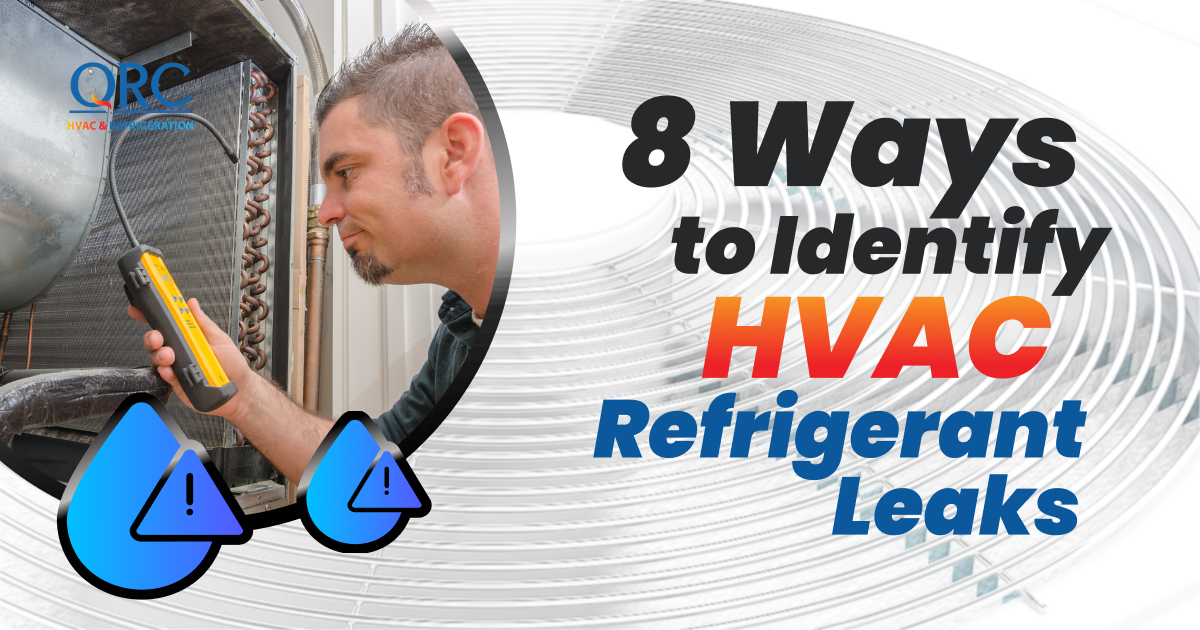 A refrigerant leak is a very serious HVAC problem. Refrigerant (“Freon” or “coolant”) is what allows your heating and cooling system to extract and release heat. A leak will prevent it from working effectively. It can also cause the compressor to overheat and fail, as well as create health and environmental hazards. Fortunately, there are easy ways to determine whether your central or mini-split heating and cooling system has a refrigerant leak. The causes of refrigerant leaks include:
- Improperly installed parts and components
- Factory defects in equipment
- Rust and corrosion of metal coils
- Worn rubber seals on valve stems
- Vibrations from AC equipment
- Damaged joints and connections
- Landscaping equipment striking underground lines
Regardless of the cause, you need to identify a leak before it leads to serious damage.
What is Refrigerant and How Does it Work?
Let’s start by demystifying refrigerant. You might have heard it called “Freon” or “coolant,” but at its core, it’s a specialized chemical compound that makes your air conditioner cool and your heat pump heat. Think of it as the lifeblood of your residential HVAC system. This fluid circulates through the coils of your unit, undergoing a constant transformation from liquid to gas and back again. It’s this unique ability to change states at specific temperatures and pressures that allows it to absorb heat from inside your home and transfer it outside. Without the right amount of refrigerant, your system simply can’t perform this essential heat exchange, leaving you with a home that’s either too hot or too cold, no matter what the thermostat says.
Refrigerant Operates in a Closed Loop
One of the most important things to understand about refrigerant is that it works in a closed-loop system. This means it isn’t a fuel that gets “used up” over time like gasoline in a car. The amount of refrigerant your system has when it’s installed is the same amount it should have for its entire lifespan. So, if your system is low on refrigerant, it’s not because it was consumed; it’s because there is a leak somewhere in the lines. When levels drop, your entire HVAC system is put under stress. It has to run longer and work harder to cool your home, which you’ll notice on your energy bills. More importantly, this extra strain can cause severe damage to the compressor—the heart of your air conditioner and one of the most expensive parts to replace. This is why proactive care through a service maintenance program is so crucial for spotting leaks early and saving you from costly breakdowns.
Signs of a Refrigerant Leak
1. Your Electric Bill Is High
If your HVAC system is low on coolant, it will work harder to control the temperature in your home. This increases the amount of electricity it uses, so your power bill may be noticeably higher than it was last year at the same time. If this is the case and you’re not using your AC or heating system more, call a professional.
2. The AC Takes Longer to Cool Your Home
You should be used to how quickly your AC takes to cool your home, or how your heater gets rooms warm and cozy during the winter. If the system is leaking refrigerant, it will work much less effectively. It will take longer to achieve the right temperature.
3. Warm Air Is Blowing from Your Air Conditioner
Feel the air coming from the vents. If the AC is running and the air blowing is not cold (or is blowing warm), and you can’t identify a simple reason, such as the thermostat being incorrectly set, call for help. Various problems can cause an AC to blow warm air. However, it’s an ominous sign of a coolant leak.
4. Humidity Levels Are Higher Than Normal
An HVAC unit is designed to dehumidify your home. This process should start in about 15 minutes once the system is on. If the air in your home feels sticky or humidity levels increase or fluctuate, there may be a refrigerant leak. The recommended indoor humidity level is between 30% to 50%.
5. Hissing Sounds from the HVAC Unit
A hissing noise from any part of your HVAC system is a good reason to call for help. It’s likely coming from a crack or hole in a coil. If the metal has eroded, refrigerant can be forced through the hole like air being squeezed through a hole in a balloon.
6. The Evaporator Coil Is Frozen
As the refrigerant circulates through the evaporator coil, it absorbs heat. The coil will be unable to pull heat if coolant levels are low. Therefore, it will freeze. A frozen evaporator coil will cause your HVAC system to break down if not fixed. Repairing this type of damage can be quite expensive.
7. Water Is Leaking from the AC
Ice that forms on the evaporator coil will start to melt when the system turns off. As a result, you’ll see water dripping and puddling on the floor near the unit. It’s safe to assume there’s a refrigerant leak, which can do substantial damage on top of the potential for water damage and mold in your home.
8. Bubbles Form on the Evaporator Coil
If you suspect refrigerant may be leaking from your HVAC unit, check the evaporator coil for tiny bubbles or beads. This happens when condensation on the coils combines with leaking coolant. When you see bubbles on the coil, call for HVAC repair.
9. Short-Cycling
If your air conditioner turns on and off more frequently than usual, it’s likely short-cycling. This is a classic sign of low refrigerant. Because the system can’t maintain the desired temperature with insufficient coolant, it’s forced to work much harder and cycle more often to compensate. This constant starting and stopping puts significant strain on the compressor, one of the most expensive components of your HVAC system. Not only does this cause premature wear and tear, but it also drives up your energy bills. If you notice your AC running in short, ineffective bursts, it’s time to have a professional inspect it. Regular preventative maintenance can often catch these issues before they lead to a major breakdown.
10. Oily Residue Around AC Components
A visual inspection of your HVAC unit can sometimes reveal the most obvious signs of a leak. If you notice a greasy or oily residue building up on or around the AC components, especially near fittings and connections on the refrigerant lines, you’ve likely found a leak. Refrigerant is mixed with oil to keep the compressor lubricated. When the refrigerant escapes through a crack or hole, it carries some of this oil with it, leaving a tell-tale residue at the site of the leak. Don’t ignore this sign, as it’s a direct indicator that your system is losing coolant. A trained technician can pinpoint the exact location of the leak and perform the necessary HVAC repairs to get your system sealed and running efficiently again.
Why You Can’t Perform a Refrigerant Check Yourself
When you suspect a refrigerant leak, your first instinct might be to look up a DIY tutorial. While that hands-on approach is great for many home projects, checking and handling refrigerant is a task that must be left to a certified professional. It’s not just a matter of having the right tools; it involves legal requirements and significant risks to your HVAC system. Attempting to service the refrigerant lines yourself can lead to more extensive damage, costly repairs, and even safety hazards. It’s one of those times when calling in an expert is the smartest, safest, and most cost-effective decision you can make for your home or business.
Legal Requirements and EPA Certification
The main reason you can’t top off your own refrigerant is that it’s regulated by the Environmental Protection Agency (EPA). It is illegal for anyone without a special EPA 608 certification to open an AC system’s refrigerant lines or purchase refrigerant. These regulations are in place because refrigerants can be harmful to the environment if released into the atmosphere, contributing to ozone depletion and global warming. Certified technicians are trained in the proper handling, recovery, and recycling of these chemicals to prevent environmental damage. This ensures that the job is done safely and in compliance with federal law, protecting both your system and the planet.
The Dangers of Overcharging Your System
It might seem like adding more refrigerant would solve the problem, but an HVAC system is a precisely balanced machine. Adding too much refrigerant, known as overcharging, is just as damaging as having too little. Excess coolant increases the pressure inside the system to dangerous levels, which can strain and ultimately destroy the compressor—the heart of your air conditioner. A damaged compressor is one of the most expensive components to replace. A professional technician uses specialized gauges to ensure the exact amount of refrigerant is added, matching the manufacturer’s specifications for optimal and safe performance.
How Professionals Check Refrigerant Levels
When a QRC technician arrives to inspect your system, they don’t just guess how much refrigerant is needed. They perform a series of diagnostic tests using specialized equipment to get a complete picture of your system’s health. This process involves measuring pressures, temperatures, and other key indicators to accurately identify the problem. It’s a scientific approach that ensures the root cause of the issue is found, whether it’s a simple leak or a more complex component failure. This detailed evaluation allows for a precise repair, restoring your system’s efficiency and preventing future breakdowns.
Using a Manifold Gauge Set
The primary tool for checking refrigerant levels is a manifold gauge set. This device connects to the service ports on your HVAC unit and provides precise pressure readings for both the high-pressure and low-pressure sides of the system. These gauges allow a technician to see what’s happening inside the closed refrigerant loop without having to release any of the chemical. By reading these pressures, a trained professional can determine if the refrigerant level is correct, too low, or too high. It’s a critical piece of equipment that gives an instant diagnostic snapshot of your system’s condition.
Measuring Key Performance Metrics
Beyond just checking the pressure, a thorough diagnostic involves looking at several performance metrics together. A technician will evaluate how the pressures and temperatures interact to understand the full story. This holistic approach helps distinguish a simple refrigerant leak from other potential issues, like a blockage in the line or a failing part. By analyzing multiple data points, our technicians can ensure they are fixing the right problem, which is why professional HVAC service is so crucial for an accurate and lasting repair.
System Pressure Readings
The readings on the manifold gauge tell a detailed story. For most residential AC systems, the low-pressure side should typically read between 30-40 PSI. If the reading is low, it’s a strong indicator that the system needs more refrigerant, likely due to a leak. Conversely, if the high-pressure side shows excessively high levels, it could point to a blockage in the system or even an overcharged unit. A technician interprets these numbers in the context of the specific type of refrigerant and the current outdoor temperature to make an accurate diagnosis.
Temperature Differential
Another key metric is the temperature differential, often called the “Delta T.” This is the difference in temperature between the air going into your indoor unit (the return air) and the air coming out of your vents (the supply air). A healthy air conditioning system should typically have a temperature differential of about 16-22 degrees Fahrenheit. If the difference is much smaller, it means the system isn’t effectively removing heat from your home, which is a classic symptom of low refrigerant levels or poor airflow.
Understanding Different Types of Refrigerant
Not all refrigerants are the same, and the type your system uses depends largely on its age. Over the years, regulations have evolved to favor more environmentally friendly options, leading to the phase-out of older chemicals. Knowing which type of refrigerant your system uses is important for proper servicing and understanding potential repair or replacement costs. Our certified technicians at QRC are trained to handle all common types of refrigerants, ensuring your commercial or residential system receives the correct and compliant service it needs to run efficiently and safely.
Common Refrigerants: R-22, R-410A, and R-32
For decades, the standard refrigerant was R-22, commonly known as Freon. However, because it was found to be damaging to the ozone layer, R-22 has been phased out of production. While it can still be serviced using recycled R-22, it is expensive and limited. Most systems manufactured after 2010 use R-410A (also known as Puron), which is more environmentally friendly. The newest generation of refrigerant, R-32, is now appearing in modern systems and offers even higher efficiency and a lower global warming potential, representing the industry’s continued shift toward sustainability.
Environmental Impact and Proper Handling
Refrigerants are potent greenhouse gases, and leaks allow these chemicals to escape into the atmosphere, where they can contribute to climate change. This is why proper handling and maintenance are so critical. A slow leak not only harms your HVAC system’s performance but also has a lasting environmental impact. Regular inspections as part of a service maintenance program can catch small leaks early, preventing both costly repairs and environmental harm. Certified technicians are required to follow strict procedures for recovering and recycling refrigerant to ensure it is disposed of responsibly.
How Are HVAC Refrigerant Leaks Fixed?
While a small leak can be patched, the evaporator coil must be replaced if it’s significantly worn or has multiple holes. If the leak is coming from the line set (the pipes that carry coolant between the coil and condenser), it must be replaced.
Is It Worth Fixing a Refrigerant Leak?
There are various factors to consider in determining whether a leak is worth fixing. If your HVAC unit is over 10 years old and inefficient, replacing it is better, especially if a repair will cost over $5,000. Also, consider the phase-out of R-22 refrigerant. Obtaining Freon is becoming increasingly difficult and expensive and many contractors won’t bother doing so.
Understanding Repair Costs
When you suspect a refrigerant leak, one of the first questions is usually, “How much will this cost?” The price can vary quite a bit. For a straightforward leak detection and repair, you might expect to pay anywhere from $150 to $500. The final cost really depends on where the leak is located and how easy it is for a technician to access and fix it. A simple patch on an accessible line will be on the lower end, while a hard-to-find leak that requires more diagnostic time will cost more. It’s also important to remember this price range is for the repair itself; if the leak has caused major damage, like to the compressor or evaporator coil, the cost will be higher. Regular check-ups through a service maintenance program can help catch these issues early, often saving you from more expensive repairs down the road.
What Your Manufacturer’s Warranty Covers
Many people assume that if their HVAC system is under warranty, a repair won’t cost them anything. Unfortunately, that’s not always the case. A manufacturer’s warranty typically covers the cost of the replacement part itself, but it usually doesn’t cover the labor required to install it. So, even if a faulty coil is covered, you’ll likely still have a bill for the technician’s time and expertise. Additionally, for larger repairs, the warranty might not include the cost of other necessary materials, like the new refrigerant needed to recharge the system or the copper fittings used during the installation. Before any work begins, a professional technician should explain exactly what your warranty covers and provide a clear estimate for any out-of-pocket expenses for your residential HVAC system.
Can HVAC Coolant Leaks Be Prevented?
Keeping the system clean can prevent damage that can lead to a refrigerant leak. Scheduling regular maintenance is also a good way to avoid this problem. During an inspection, a technician will look for issues that may cause a leak if not fixed or detect early signs of a leak before it gets worse.
The Importance of Regular Maintenance
Changing Your Air Filter
One of the easiest and most effective ways to keep your HVAC system running smoothly is by regularly changing the air filter. It might seem like a small task, but it has a huge impact. A clean filter is your first line of defense against indoor air pollutants, trapping dust, pollen, and other allergens before they circulate through your home. This is especially important here in North Carolina, where humidity can make indoor air quality a real concern. Beyond just cleaner air, a fresh filter allows your system to breathe easily. When air can flow without restriction, your HVAC unit doesn’t have to work as hard, which means better energy efficiency and lower utility bills. This simple step also helps extend the life of your equipment and prevents the kind of strain that can lead to bigger, more expensive problems down the road. To make it even easier, consider a professional service maintenance program where a technician handles this for you, ensuring your system is always in top shape.
Contact QRC for HVAC Repair in Winston-Salem
At QRC, our EPA-certified technicians provide all types of AC and heating repair. They’re timely, precise, and focused on helping you understand the issue and how we can fix it. Our team provides the right solution when you have a refrigerant leak or any other problem. We also provide AC, heating, and mini-split installation and maintenance. To request service or learn more about our special offers and financing options, schedule an appointment or call (336) 396-8712 today.
Frequently Asked Questions
Is a refrigerant leak dangerous to my family or pets? While a small, slow leak in a well-ventilated area isn’t an immediate crisis, you should take it seriously. Refrigerant is heavier than air and can displace oxygen, which can be a risk in confined spaces. Direct contact can cause skin irritation or frostbite, and inhaling the fumes can lead to dizziness or other health issues. If you hear a loud hissing sound or suspect a major leak, it’s wise to open windows and call a professional right away.
My old HVAC technician used to just “top off” my refrigerant every year. Is that normal? This is a common practice, but it’s not a real solution. Your HVAC system operates on a closed loop, meaning it shouldn’t ever “use up” refrigerant. If your system is low, there is a leak somewhere. Simply adding more coolant without finding and fixing the source of the leak is like continuously putting air in a tire with a nail in it. It’s a temporary fix that ignores the root problem, wastes money, and releases harmful chemicals into the environment.
Does a refrigerant leak have a distinct smell? Most modern refrigerants are odorless, but some older types, like R-22 (Freon), can have a faintly sweet, chloroform-like scent. However, you are more likely to notice other signs—like hissing sounds, warm air from your vents, or a frozen coil—long before you would ever smell anything. Relying on your nose isn’t a reliable way to detect a leak, so it’s best to pay attention to how your system is performing.
If I suspect a leak, how quickly do I need to call for a repair? You should call for a professional inspection as soon as you notice a problem. While it’s not typically a situation that requires an emergency middle-of-the-night call, you shouldn’t put it off. The longer your system runs with low refrigerant, the more strain it puts on the compressor. This leads to sky-high energy bills and can turn a simple repair into a catastrophic failure that requires a full system replacement.
How exactly does regular maintenance help prevent refrigerant leaks? During a maintenance visit, a technician does more than just change a filter. They clean the coils, check electrical connections, and inspect the refrigerant lines for vibrations or corrosion that can cause weak spots over time. By catching these potential issues early, they can tighten fittings and address wear and tear before a tiny crack becomes a full-blown leak, saving you from the cost and hassle of a major repair.
Key Takeaways
- Connect Performance Issues to a Potential Leak: If your energy bills are suddenly higher or your AC struggles to cool your home, don’t ignore it. These are classic signs that your system is low on refrigerant and working overtime, which can lead to expensive compressor failure.
- Understand That Refrigerant Service Isn’t a DIY Job: Your HVAC system’s refrigerant is in a closed loop and can only be handled by an EPA-certified professional. Attempting to fix it yourself is illegal and risks causing more severe damage by overcharging the system.
- Use Preventative Maintenance to Avoid Leaks: The most effective way to deal with a refrigerant leak is to prevent it from happening in the first place. Scheduling regular professional maintenance helps catch potential issues early, ensuring your system’s components are clean and secure.