


Two HVAC replacement quotes for the same Piedmont Triad home can look dramatically different, even when both contractors appear to be offering the same type of system. The difference is often in what happens before installation and what the written estimate actually includes.
Why do HVAC replacement costs vary so widely between contractors? The price can change with equipment efficiency, system size, installation scope, labor, permits, ductwork, and the safeguards included in the final job. A lower bid may leave out work needed for reliable performance, while a higher bid may account for proper sizing, commissioning, disposal, and code-compliant details.
For homeowners in Winston-Salem and nearby Triad communities, the right comparison is not simply the bottom-line number. It is whether each proposal matches the home, the climate, and the level of installation care required. Start by separating the major cost drivers so you can compare estimates on equal terms.
Explore QRC’s residential heating and cooling services to get a straight, load-based replacement quote for your Piedmont Triad home. To talk it through with a licensed, EPA-certified technician, call (336) 281-5144.
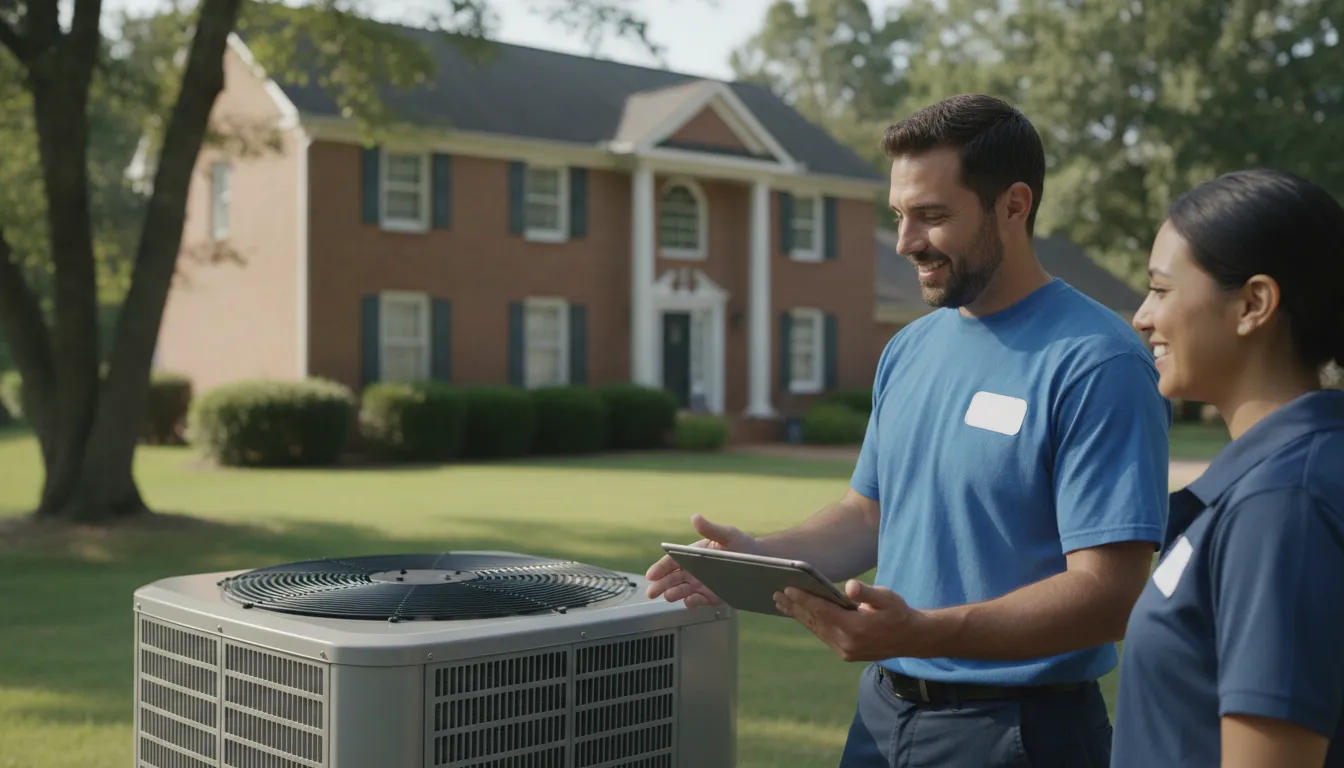
Why Do HVAC Replacement Costs Vary So Widely Between Contractors?
Two HVAC replacement quotes can look dramatically different even when both contractors are recommending a system for the same house. That does not always mean one company is overcharging or that the other has found a special deal. HVAC estimates reflect more than the equipment sitting in a box. They also account for system design, installation conditions, labor, permits, testing, and the details included in the scope of work. A cost comparison published by Titan Heating identifies brand, efficiency, contractor experience, and installation scope as common reasons estimates differ.
For homeowners in Winston-Salem and the Piedmont Triad, four questions help explain most of the variation.
Equipment efficiency and brand
Not every replacement system offers the same efficiency, controls, warranty structure, or operating features. A basic single-stage system generally has a different upfront price than a higher-efficiency, variable-speed system. Brand availability, matched indoor and outdoor components, compatible thermostats, and required refrigerant or control changes can also affect the quote. The higher-priced option may be designed to reduce operating costs or improve comfort, while the lower-priced option may focus primarily on replacing failed equipment.
Correct load calculation and system sizing
A professional replacement should be sized for the home’s actual heating and cooling needs, not selected solely because the old unit had a certain capacity. A load calculation evaluates factors such as the home’s size, insulation, windows, orientation, and other heat gains and losses. The U.S. Department of Energy explains that equipment must be matched correctly to the home’s cooling load for efficient performance: HVAC sizing and diagnostic guidance. In the humid Piedmont climate, correct sizing also affects dehumidification and comfort. A quote that includes more design work may cost more initially, but it can prevent comfort problems caused by an oversized or undersized system.
Labor, licensing, and permits
Installation is skilled work involving airflow, refrigerant charge, electrical connections, drainage, controls, startup, and commissioning. Contractors may differ in training, supervision, warranty support, and whether the estimate includes permit handling and required inspections. A thorough installation follows recognized design and performance criteria, rather than treating the job as a simple equipment swap. Those labor and compliance costs are part of what you are buying, even though they are less visible than the model number.
Hidden installation scope
Existing conditions can change the job after the equipment is selected. Duct repairs, platform modifications, line-set work, condensate protection, electrical updates, disposal of the old system. And site-specific access challenges may be included in one quote and excluded from another. A low bid can look attractive if essential safeguards or preparation are omitted. Ask each contractor to identify what is included, what is excluded, and how unexpected conditions will be handled. Comparing scope line by line gives you a more reliable picture of value than comparing totals alone.
How Equipment Efficiency Tiers Affect Your Quote
Efficiency ratings are one of the clearest reasons two replacement quotes can look different even when both contractors propose equipment with a similar capacity. For central air conditioners, SEER2 describes seasonal cooling efficiency. For heat pumps, SEER2 applies to cooling performance, while HSPF2 describes seasonal heating efficiency.
A higher rating generally reflects more advanced components, such as variable-speed technology, improved coils, controls, and a properly matched indoor and outdoor unit. The rating belongs to the complete matched system, not simply to the equipment name on the front of the proposal. ENERGY STAR’s Version 6.2 specification recognizes that higher-efficiency equipment can carry a higher initial price while reducing utility costs over its service life: ENERGY STAR Version 6.2 specification.
| Efficiency tier | What it typically indicates | Quote and operating-cost effect |
|---|---|---|
| Standard | Basic matched equipment and conventional controls | Lower initial price, with less opportunity for seasonal utility savings |
| Higher efficiency | Improved components, controls, and part-load performance | Higher initial investment, with potential for lower operating costs |
| Premium variable-speed | More precise capacity adjustment and advanced system matching | Highest equipment cost, with added comfort and savings potential when correctly installed |
That tradeoff matters in the Piedmont Triad. Winston-Salem-area homes work through hot, humid summers, when the cooling side runs often, and a separate heating season that can make heat-pump performance important. A higher SEER2 rating may be more valuable for a homeowner who expects heavy summer use. While HSPF2 deserves closer attention when a heat pump will provide much of the home’s winter heat.
The best choice depends on the home’s load, current utility use, comfort priorities, and budget. Buying the highest rating available is not automatically the best financial decision if the home will be sold soon or the expected runtime is modest.
Home ownership length helps put the premium in perspective. A homeowner planning to stay for many years has more time for lower energy use to offset a higher purchase price. Someone preparing to move may reasonably prioritize a balanced system and strong installation over paying for a premium tier whose savings will accrue slowly. Ask each contractor to separate equipment cost from installation scope and to explain the expected efficiency of the proposed matched system, rather than comparing model names alone.
Finally, the rating on the proposal is not a guarantee of field performance. Airflow, refrigerant charge, duct condition, controls, and commissioning all affect whether the system reaches its rated efficiency. ENERGY STAR’s National HVAC Design Supplement to Standard 310 sets design criteria that emphasize proper equipment selection and system sizing. Installation quality is therefore part of the efficiency purchase. A lower quote that skips matching, testing, or startup verification may not deliver the savings promised by its equipment tier.
Why the Load Calculation Drives Replacement Cost
A replacement system should be selected for the home it will serve, not simply matched to the size of the old equipment. A Manual J load calculation evaluates the home’s cooling and heating demand using factors such as floor area, insulation, windows, orientation, air leakage, and local weather conditions. That calculation determines the capacity the system actually needs. The U.S. Department of Energy notes that correctly matching equipment to a home’s cooling load is necessary for efficient performance and comfort: proper sizing determines the required capacity.
This is one reason a professional quote is not just a price for a box. The contractor must translate the home’s conditions into equipment capacity, airflow requirements, ductwork needs, and installation details. Two houses with the same square footage may need different systems if one has older windows, more sun exposure, a finished attic, or different insulation. A quote based only on the existing unit’s tonnage may look simple, but it can repeat an old sizing mistake.
- A technician measures the home and records floor area, insulation, windows, orientation, and air leakage.
- A Manual J load calculation converts those inputs into the exact heating and cooling capacity the home needs.
- The contractor selects matched equipment, ductwork, and controls sized to that calculated load.
- During startup, the installer verifies airflow and refrigerant charge so the system reaches its rated performance.
Why sizing matters in Piedmont Triad summers
Winston-Salem and the surrounding Piedmont Triad experience hot, humid summers. Correct sizing matters here because the air conditioner must remove both heat and moisture. The DOE identifies proper sizing as especially important in humid climates for dehumidification, comfort, and indoor air quality. A system that is too large may reach the thermostat setting quickly and shut off before it runs long enough to pull adequate moisture from the air. The result can be a cool-feeling thermostat with rooms that still feel clammy.
An undersized system creates a different problem. It may run for long periods during peak summer weather and still struggle to reach the set temperature. Longer runtimes can increase wear and energy use, while hot rooms and uneven comfort remain unresolved. A correctly sized system is designed to meet the home’s calculated demand without routinely operating at either extreme.
Capacity is only part of the installation
Load calculations also help a contractor identify whether the existing distribution system can support the proposed equipment. Duct restrictions, return-air limitations, and poor airflow can prevent a properly selected unit from performing as rated. During startup and commissioning, airflow and refrigerant charge must be checked and adjusted because both directly affect capacity and efficiency. The same DOE guide identifies refrigerant charge and airflow management as vital installation controls.
That added design and verification work can make one estimate higher than another, but it represents a different scope of work, not necessarily an inflated equipment price. When comparing proposals, ask whether the contractor performed a Manual J calculation, documented the recommended capacity, and included airflow and refrigerant-charge verification. Those details help explain why HVAC replacement costs vary so widely between contractors and give you a better basis for comparing comfort, reliability, and long-term value.
What Labor, Licensing, and Permits Add to the Price in the Piedmont Triad
Equipment is only one part of an HVAC replacement quote. In Winston-Salem and throughout the Piedmont Triad, the price also reflects the people who evaluate the home. Remove the existing system, install the new equipment, complete required checks, and stand behind the work. That is one reason two bids for what appears to be the same replacement can differ substantially.
Licensed work and local permits
North Carolina homeowners should confirm that the contractor handling the replacement has the appropriate state license for the scope of work. A responsible quote should also explain whether local permits and inspection fees are included. Requirements and charges can vary by jurisdiction, so a project in Winston-Salem may not be priced exactly like one in Clemmons, Kernersville, Greensboro, or another nearby community. Permit costs are usually a modest part of the total, but the administrative work, scheduling, and inspection coordination still take time.
A permit is not simply a line-item surcharge. It creates an opportunity for the installation to be reviewed against applicable safety and building requirements. Be cautious when a quote is dramatically lower because it excludes permitting or leaves responsibility unclear. A low initial number may become more expensive if corrections, delays, or unplanned fees appear later.
Why certification and training affect labor rates
EPA-certified technicians are essential when a replacement involves refrigerants. Their training supports safe, environmentally responsible refrigerant handling, rather than treating recovery, charging, and disposal as shortcuts. QRC identifies EPA-certified technicians as part of its professional standard. Learn more about QRC’s HVAC expertise.
Modern HVAC installation also requires more than connecting a box and turning it on. Technicians must balance airflow, electrical connections, controls, refrigerant charge, and thermodynamic performance. That specialized work requires training and careful commissioning. The U.S. Department of Energy describes correct airflow and refrigerant-charge adjustments as important to capacity and efficiency. Review the installation and diagnostic guidance.
National installation standards likewise emphasize proper equipment selection, system sizing, and design criteria, not just the model number on the condenser. See ENERGY STAR’s national HVAC design supplement. A contractor investing in skilled labor, training, documentation, and quality checks may charge more than a crew focused only on speed.
Comparing labor honestly
Labor rates also reflect crew experience, project access, removal of the old equipment, travel, insurance, materials, and rising operating costs. Ask each contractor to identify labor, permits, disposal, startup, and commissioning in the written scope. Comparing those details gives you a more useful answer to why HVAC replacement costs vary so widely between contractors than comparing equipment prices alone.
Hidden Costs That Quietly Change Your Quote
A replacement quote covers more than the outdoor unit, indoor equipment, and labor to connect them. The condition of the existing system and the work needed to make the new equipment perform correctly can change the final price. That is why two contractors can inspect the same Winston-Salem home and recommend different scopes of work.
Ductwork and airflow corrections
Ducts that leak, lack insulation, or are poorly sized can waste the capacity of a new system. A professional replacement should include an inspection of accessible ductwork and a discussion of sealing, insulation, or modifications where needed. The EPA notes that ductwork must be properly sized, sealed, and insulated for a new HVAC system to perform as intended. Review the EPA retrofit protocols for the role of ductwork in system performance.
This work may not appear in the lowest initial bid, but leaving major duct problems in place can produce uneven temperatures, longer runtimes, and disappointing efficiency. A complete site evaluation can also identify improvements that are easier to make while the equipment is already being replaced. The EPA identifies replacement as an opportunity to address indoor air quality concerns and other efficiency upgrades. That may include an upgraded filter rack, improved return-air routing, or other practical changes suited to the home.
Condensate, electrical, and removal details
Condensate drainage is another easily overlooked line item. A clogged or overflowing drain can damage ceilings, walls, and flooring, so a careful installation may include new drain piping, a pan, or condensate safety switches. These safeguards add a modest installation cost, but they help prevent a much larger water-damage repair. Electrical compatibility also needs to be checked. The new equipment may require updated disconnects, wiring, breakers, or other site adjustments rather than a simple connection to the existing service.
Ask whether the estimate includes removal and responsible disposal of the old equipment. Taking out heavy indoor and outdoor components, recovering refrigerant, and recycling or disposing of parts requires time and proper handling. If those steps are excluded, the price difference may appear attractive until another charge is added later.
Refrigerant changes and omitted safeguards
The transition from R-410A equipment toward newer A2L refrigerants is also affecting replacement planning. A2L systems can require compatible components, updated installation procedures, and technician training. Those material and labor requirements can make a newer system cost more than a like-for-like comparison suggests.
Be cautious when a bid is dramatically cheaper than the others. Low-bid estimates may omit surge protection, condensate safety switches, upgraded filter racks, permits, commissioning, or other essentials. The result can be higher repair costs and weaker comfort over the life of the system. A useful quote should clearly list equipment, duct and electrical work, disposal, safety controls, refrigerant-related requirements, and startup testing. Comparing that scope, not just the bottom-line number, is the clearest answer to why HVAC replacement costs vary so widely between contractors.
How Much Should You Budget for HVAC Replacement in North Carolina?
For a homeowner in Winston-Salem or the surrounding Piedmont Triad, a useful planning budget starts with the size and layout of the home, not a generic statewide average. QRC’s local cost anchors are approximately $1,800 for a small ranch-style home. About $2,500 for a mid-size replacement, and $3,500 or more for larger homes that may need multiple systems. These figures are guidance for early planning, not guaranteed project prices.
A roughly 1,800-square-foot ranch may have a relatively straightforward equipment and installation scope. A 2,500-square-foot home can require more capacity, longer duct runs, zoning considerations, or different equipment combinations. At 3,500 square feet and above, one system may not provide the right comfort balance throughout the home. Multiple systems or zones can increase equipment, controls, labor, and commissioning costs. The home’s construction, insulation, windows, existing ductwork, electrical service, and access to the equipment also affect the final scope.
Efficiency is another major variable. A basic system generally has a lower purchase price, while higher-efficiency equipment can cost more initially. That premium may make sense when it fits the home’s cooling load, expected use, and long-term energy goals. In North Carolina, the right choice should also account for summer humidity and the need to maintain consistent indoor comfort. The most expensive option is not automatically the best option, and the lowest bid may leave out work needed for reliable performance.
Why a load calculation matters before you commit
A real replacement quote should follow an in-home evaluation and load calculation. This process determines the capacity the house actually needs instead of simply matching the size of the old unit. The U.S. Department of Energy notes that equipment must be correctly matched to the home’s cooling load to perform efficiently. See the Department of Energy guidance on HVAC sizing and diagnostics for the technical basis. A quote based only on square footage or a phone conversation may miss important conditions.
After installation, ongoing maintenance helps protect the value of the investment. QRC’s Comfort Club is listed at $50 per year and includes two tune-ups. Regular service can help identify developing problems early and keep the system operating as intended. For a broader look at why HVAC estimates vary, review the related cost guide before comparing proposals.
Review QRC’s air conditioning replacement cost guide for a detailed, home-by-home cost breakdown. For a personal estimate tailored to your home’s size and cooling load, call (336) 281-5144.
Frequently Asked Questions
Why do HVAC replacement estimates vary so much?
Contractors may be pricing different equipment, efficiency levels, installation scopes, and labor requirements. One estimate may include a load calculation, ductwork corrections, permits, startup testing, and disposal, while another may cover only equipment and basic installation. Compare the written scope, not just the bottom-line number.
What factors influence HVAC replacement pricing?
Equipment brand, SEER2 or HSPF2 efficiency, system capacity, home size, ductwork condition, refrigerant compatibility, permits, and labor rates can all affect the price. In the Piedmont Triad, a qualified contractor should also consider the home’s insulation, airflow, and humidity needs before recommending a system size.
Does it cost more to upgrade an older air conditioning unit?
It can. A replacement may require changes to improve airflow, correct sizing, update refrigerant-related components, or adapt the existing ductwork. The contractor should explain which changes are necessary and separate required work from optional upgrades so you can make an informed decision.
How can I tell whether a low HVAC replacement bid is complete?
Ask whether the proposal identifies the exact equipment model, efficiency rating, warranty coverage, permits, labor, removal of the old system, ductwork adjustments, refrigerant work, commissioning, and follow-up service. If important details are missing, the lower price may reflect a smaller scope rather than a better value.
Ready to Get a Clear HVAC Replacement Quote?
A replacement quote is easier to evaluate when it explains the equipment, sizing, installation work, and included details in plain language. For a load-based quote tailored to your Piedmont Triad home, contact QRC HVAC & Refrigeration through its residential heating and cooling team. You can also call QRC at (336) 281-5144 to discuss what your quote covers and why.