


24 Hour Commercial Refrigeration Repair: What To Do Before Product Loss
A walk-in cooler that will not hold temperature can turn into lost inventory and interrupted operations quickly. If you need 24 hour commercial refrigeration repair, call a qualified commercial refrigeration technician first. Then protect the product, record what is happening, and avoid actions that could make the failure worse. The checklist below gives restaurant owners, retail managers, and facility teams a calm, practical response plan while help is on the way.
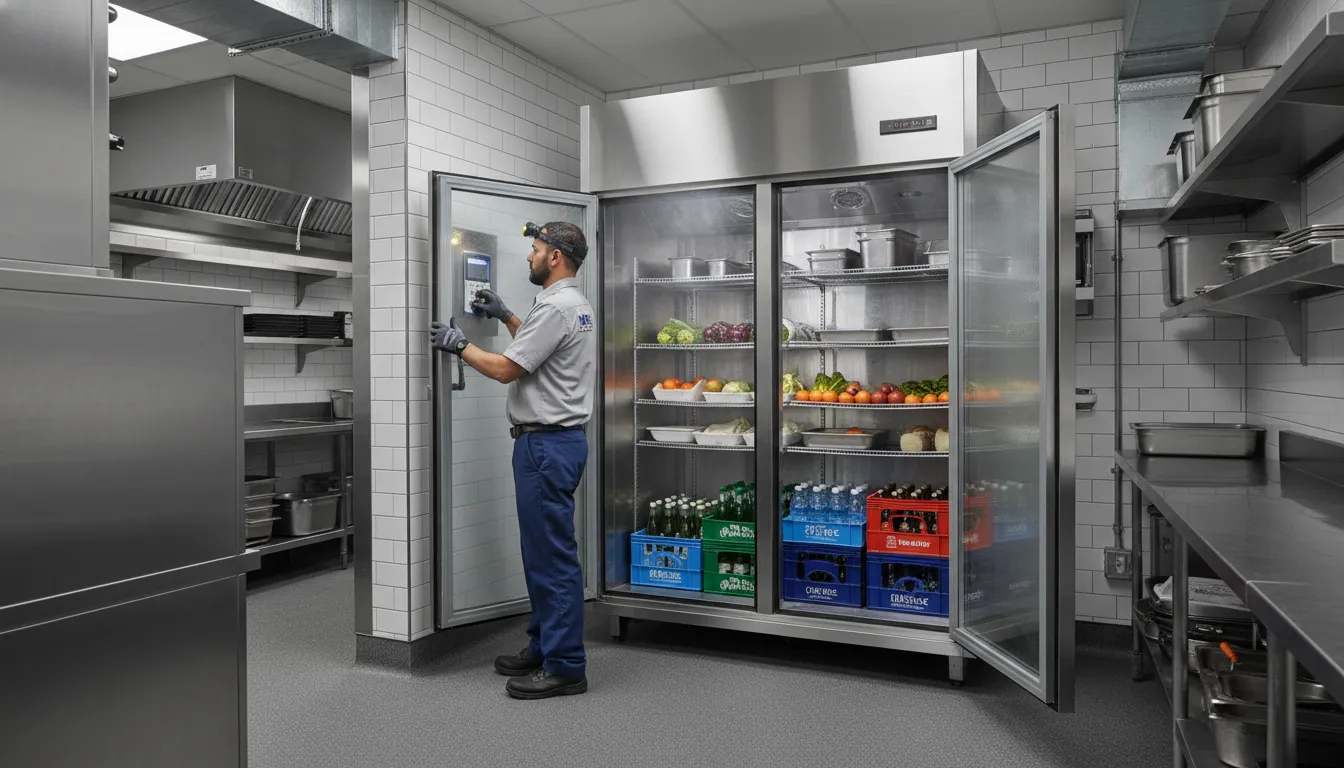
Commercial refrigeration emergency checklist
First, call for emergency service and keep cooler or freezer doors closed. Assign one person to manage the response, another to record temperatures and inventory, and a third to prepare an approved backup storage location if one is available. Do not wait for the cabinet to become warm before calling. A rising temperature, active alarm, unusual sound, or visible leak can justify an immediate assessment.
- Contact a 24-hour commercial refrigeration repair provider. Share the equipment type, current temperature, alarm code, when the problem began, and your site address.
- Keep doors shut. Every unnecessary opening lets cold air escape and adds heat and moisture.
- Check and record temperatures. Use a calibrated food thermometer when appropriate, note the time, and continue logging readings.
- Protect inventory. Move product only to verified cold storage that can maintain the required temperature.
- Preserve evidence. Photograph the display, alarm code, affected product, and any water or frost before cleanup.
- Clear safe access. Give the technician a clear route to the equipment, electrical panel, condenser, and controls.
If you are seeing warning signs but have not yet experienced a full shutdown, review these seven signs you need commercial refrigeration repair. Early intervention is usually easier than managing a complete failure.
Step 1: Call for emergency refrigeration service immediately
Do not spend valuable time trying a long list of online fixes before making the service call. Commercial refrigeration systems involve pressurized refrigerant, moving components, and electrical hazards. Diagnosis and repair belong with trained technicians.
When you call, provide concise answers to these questions:
- Is the affected equipment a walk-in cooler, walk-in freezer, reach-in, refrigerated case, prep table, ice machine, or another system?
- What temperature does the display show, and what does an independent thermometer show?
- Is the equipment running continuously, cycling unusually, making a new sound, or completely silent?
- Are there alarm codes, visible frost, standing water, unusual odors, or signs of physical damage?
- When did staff first notice the issue, and has anyone reset or adjusted the system?
- What product is inside, and is verified backup refrigeration available?
Good information helps the service team prepare before arrival. QRC provides commercial refrigeration services across North Carolina, including repair and maintenance support for commercial operations.
Step 2: Keep cold air in and unnecessary heat out
Close the affected unit and place a clear sign on the door so employees do not open it out of habit. Pause restocking, order picking, and cleaning around the affected equipment. If staff must access the unit for a safety check or approved product transfer, plan the move first and complete it efficiently.
Check whether a door was left open or is not sealing, but do not disassemble the latch or gasket during an emergency. Also keep hot equipment, carts, and other obstacles away from the refrigeration unit’s airflow paths. A blocked condenser area can make an already stressed system work harder.
Step 3: Start a temperature and incident log
A written log supports food-safety decisions, insurance documentation, and faster diagnosis. Record the current time, displayed temperature, independent thermometer reading, product condition, alarm code, and every action taken. Continue recording at intervals based on your food-safety plan and local requirements.
For food operations, follow your written food-safety procedures and the direction of the person responsible for food safety. The U.S. Food and Drug Administration’s food-safety guidance for power outages explains that refrigerated food generally should be kept at 40°F or below and frozen food at 0°F. Product disposition depends on more than the air-temperature display, so do not guess. When safety is uncertain, consult the appropriate food-safety authority and follow your established plan.
What to include in the incident log
- Date, time, location, and equipment identification
- Displayed and independently measured temperatures
- Alarm messages and unusual operating conditions
- Approximate time the issue began, if known
- Product moved, its destination, and temperatures before and after transfer
- Names of service providers contacted and call times
- Photos of readings, alarms, and affected inventory
Step 4: Move product only to verified cold storage
If you have another cooler or freezer with adequate capacity and a verified safe temperature, prepare an organized transfer. Label the affected inventory, prioritize the most temperature-sensitive products according to your safety plan, and document the move. Avoid crowding a backup unit so tightly that air cannot circulate.
Do not move product into an unverified space simply because it feels cold. An overcrowded or struggling backup unit can create a second emergency. If no approved storage is available, ask your refrigeration service provider and food-safety lead about the safest next step.
Step 5: Perform safe observations, not risky repairs
There are useful observations your team can make without opening panels or handling electrical components. Confirm that the door is closed, note whether the interior light is on, read the control display, and look for obvious blocked airflow around accessible exterior areas. Record what you find for the technician.
Do not remove panels, touch exposed wiring, add refrigerant, chip ice with a tool, or repeatedly reset breakers. If you see smoke, sparking, damaged wiring, or another immediate hazard, keep people away and follow your site emergency procedures. Report the condition when you call for service.
Step 6: Prepare the site for the repair technician
A few minutes of preparation can reduce delays after the technician arrives. Make sure the service contact can enter the building after hours. Clear boxes and carts from the equipment area without disturbing evidence or entering an unsafe space. Locate maintenance records, model and serial numbers, recent invoices, alarm history, and the incident log.
Assign a knowledgeable employee to meet the technician. That person should explain what staff observed, which actions were taken, and where affected inventory was moved. If the issue involves more than one unit, identify each one clearly.
What not to do during a refrigeration failure
- Do not keep opening the door to check. Use logged readings and open the unit only when the response plan requires it.
- Do not rely on smell or appearance to judge food safety. Follow applicable food-safety procedures and professional guidance.
- Do not make unauthorized electrical or refrigerant repairs. They can be dangerous and may complicate diagnosis.
- Do not repeatedly power-cycle the equipment. Tell the technician about any reset already attempted.
- Do not discard records. Keep temperature logs, photographs, service notes, and inventory documentation.
Common signs that require 24-hour commercial refrigeration repair
A total shutdown is not the only reason to call. Emergency support may be appropriate when a cooler or freezer cannot maintain its required temperature. An alarm will not clear, product temperature is rising, or the system shows signs of an electrical or mechanical failure. Other warning signs include excessive frost, water where it should not be, continuous running, short cycling, and sudden new noises.
QRC’s commercial refrigeration repair service supports businesses that need help with equipment problems and emergency situations. For broader facility needs, explore QRC’s commercial services.
After the immediate repair: reduce the chance of another emergency
Once operation is restored, ask for the cause, the work performed, and any follow-up recommendation in writing. Review the temperature log with the appropriate food-safety lead before returning affected inventory to service. Then schedule corrective work or preventive maintenance rather than treating the emergency call as the end of the process.
A useful post-incident review should answer:
- What was the earliest warning sign, and was it reported promptly?
- Were alarms, contact lists, and after-hours access procedures effective?
- Did backup storage have enough verified capacity?
- Were temperature records complete enough to support decisions?
- Which maintenance or equipment recommendations should be prioritized?
Planned maintenance cannot prevent every failure, but it can reveal developing problems and give your team a clearer equipment history. QRC has served North Carolina businesses since 1999 with EPA-certified technicians, commercial refrigeration expertise, and maintenance support.
Frequently asked questions
What should I do if my walk-in cooler is not holding temperature?
Call a commercial refrigeration professional, keep the door closed, and begin a temperature log. Move product only to verified cold storage and follow your food-safety plan. Record alarms and observations, but do not remove panels or attempt electrical or refrigerant repairs.
How quickly can a 24-hour commercial refrigeration repair service respond?
Response time depends on location, demand, weather, site access, and the nature of the emergency. Call immediately and provide the equipment type, readings, alarms, site address, and access details so the service team can assess priority and prepare.
What temperatures should commercial coolers and freezers maintain?
Food operations commonly use 40°F or below for refrigerated food and 0°F for frozen food, consistent with FDA guidance. Your business must follow its food-safety plan and all applicable regulations. Use a calibrated thermometer and document readings when a failure occurs.
Should I reset a breaker when commercial refrigeration stops working?
Do not repeatedly reset a breaker or touch electrical components. A tripped breaker can indicate a condition that needs professional assessment. Report the issue to the emergency service provider and follow your facility’s safety procedures.
Get emergency commercial refrigeration help in North Carolina
When refrigeration performance changes, a fast and organized response can help protect inventory and shorten the path to a professional diagnosis. Keep doors closed, document temperatures, protect product using approved storage, and leave hazardous repair work to trained technicians.
Need emergency help? Contact QRC HVAC & Refrigeration for 24-hour commercial refrigeration repair in North Carolina. Share your equipment type, current readings, alarm code, and location so the team can help determine the next step.