If you searched for cream machine ice, you may be wondering whether an ice cream maker needs loose ice to freeze its mix. The answer depends on the machine: some home-style bucket models use ice and salt around a sealed canister, while electric countertop and commercial machines generally cool the mix with a pre-frozen bowl or built-in refrigeration. Ice should not be added to the mix unless the manufacturer specifically directs you to do so.
Ask our team about commercial cooling needs — (336) 281-5144
What does “cream machine ice” mean?
The phrase can describe two different questions. One is whether a machine needs ice around its canister to make ice cream. The other is whether ice belongs in the recipe itself. For most electric ice cream makers, the mix freezes through a chilled bowl or a refrigeration system, not by adding beverage ice to the ingredients.
That distinction matters because water from melting ice can dilute a recipe, change its texture, and interfere with the machine. Follow the instructions for the exact model, including preparation time, fill limits, and cleaning steps. If you are buying equipment for a food business, confirm the machine type and its cooling requirements before planning your prep area.
Which ice cream makers use ice?
There are three common ways a machine chills a frozen dessert mix. The equipment may use a removable bowl that must be frozen ahead of time, a built-in refrigeration system, or an outer ice-and-salt bath. The last method is the one where loose ice is part of the process, but it stays outside the sealed canister.
| Machine type | Where the cooling comes from | Does it need loose ice? | What to check |
|---|---|---|---|
| Freezer-bowl countertop model | A removable bowl chilled in a freezer before use | No, unless the manual says otherwise | Required freezer time, bowl storage, and batch size |
| Self-refrigerating countertop model | A built-in refrigeration system | No | Clearance, ventilation, power requirements, and operating instructions |
| Traditional bucket-style model | An ice-and-salt bath around a closed canister | Yes, in the outer bucket only | Ice quantity and salt type specified by the maker |
| Commercial batch freezer | Refrigeration built into the production equipment | Usually no | Capacity, installation needs, ventilation, and manufacturer support |
This is a general comparison, not a substitute for the model’s manual. Manufacturers may set different requirements, and equipment configurations vary. If a commercial machine uses a separate cooling system or depends on a particular room setup, get those details from its manufacturer or installer before scheduling work.
How does an ice-and-salt machine work?
In a traditional bucket-style machine, the ice and salt sit outside a closed metal canister that holds the mix. The canister turns or is agitated while the cold mixture surrounding it draws heat away. Salt changes the behavior of the ice bath so it can become colder than a plain ice-and-water mixture. The exact amount of ice, salt, and time depends on the machine’s directions.
Keep the ingredients inside the canister and the cooling materials outside it. Do not pour ice or salt into the mix. Before starting, check that the canister is properly seated, the outer bucket is assembled as instructed, and the dasher or paddle can move freely. Stop and consult the manual if the machine makes an unusual sound, the canister shifts, or the motor strains.
After a batch, clean and dry the parts as directed. Meltwater and salt residue can make a mess and may affect nearby surfaces, so plan a stable work area where spills can be managed. For a food business, use the cleaning and sanitation process required for the specific equipment and local food-safety rules.
What if the machine uses a freezer bowl?
A freezer-bowl model needs the bowl itself to be thoroughly chilled before the mix is added. A bowl that has not had the specified freezing time may soften the mix without freezing it properly. Keep it level in the freezer if the manual calls for that, and avoid letting it warm while you prepare ingredients.
- Read the model’s instructions for how long to freeze the bowl.
- Check that the freezer is operating as expected and that the bowl has room for air to circulate if the manual recommends it.
- Chill the mix first when the manufacturer advises it, and do not exceed the stated fill line.
- Begin churning promptly after removing the bowl from the freezer.
- Allow for the machine’s recommended finishing or firming time; churning may produce a soft texture rather than a fully firm dessert.
If the bowl was prepared correctly but the mix still will not firm, review the recipe, batch size, room conditions, and machine instructions before assuming the unit has failed. An overfilled bowl or warm ingredients can affect results. Do not dismantle a machine or bypass a safety feature to troubleshoot it.
What should a commercial kitchen check before buying?
For a restaurant, caterer, or dessert counter in Winston-Salem, Greensboro, High Point, or elsewhere in the Triad, the right question is not simply “How much ice does it take?” First identify how the machine creates cold and what the manufacturer requires for installation and daily use.
- Confirm the machine style. Ask whether it is a freezer-bowl unit, a self-refrigerating countertop model, a batch freezer, or a bucket-style machine. Do not assume the word “ice cream maker” describes one standard setup.
- Estimate the actual production need. Consider the serving schedule, batch size, menu, and peak periods. Compare those needs with the manufacturer’s stated capacity rather than relying on a general rule.
- Review the installation space. Check dimensions, doorways, counter or floor space, ventilation clearances, drainage if applicable, and the environmental conditions specified for the unit.
- Plan the workflow. Leave space for ingredient preparation, safe handling, cleaning, and storing finished product. Make sure staff can reach controls and removable parts without moving other equipment.
- Ask who supports each part. The machine maker may handle the frozen-dessert equipment itself, while a commercial refrigeration contractor can discuss relevant building cooling or refrigeration needs. Confirm the scope before arranging a visit.
Our work includes commercial HVAC services and commercial refrigeration services. That does not mean every frozen-dessert machine is within the scope of a refrigeration service call. Tell us the make and model, the symptoms, and what cooling equipment is involved so we can clarify whether the issue matches our service offering.
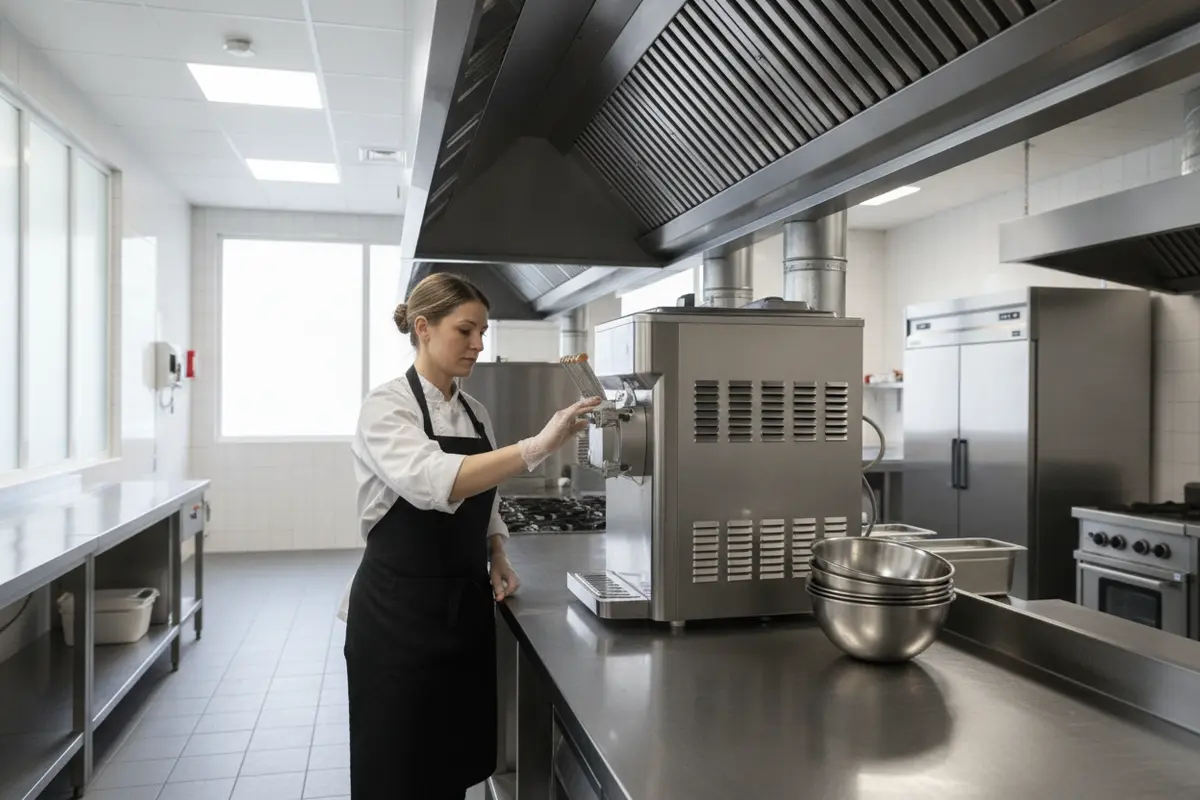
Why might an ice cream maker fail to freeze?
When a batch stays soft or the machine stops producing the expected texture, look first for simple setup issues that the manual allows you to check. The cause may be preparation, operating conditions, a setting, or a fault that needs qualified service. Avoid repeatedly restarting a unit that is making a harsh noise, overheating, or showing a warning that the manufacturer says requires service.
- The bowl was not cold enough. A removable bowl may need more time in the freezer or may have warmed while ingredients were prepared.
- The mix or room is too warm. Warm starting ingredients and a hot or poorly ventilated prep area can make cooling harder.
- The batch is too large. Going beyond the fill or capacity instructions can prevent proper churning and cooling.
- The paddle or canister is not assembled correctly. Turn the unit off before checking assembly, and follow the maker’s instructions.
- Airflow is blocked. Self-refrigerating equipment may need specified clearance around vents. Keep vents clear, but do not remove panels or reach into the machinery.
- The surrounding room or cooling system is struggling. A hot kitchen can place added demand on refrigeration equipment. Note other symptoms and have the appropriate equipment checked rather than attributing every issue to the dessert machine.
Write down what happened and when: whether the unit started, how long it ran, whether the mix chilled at all, and whether nearby cooling equipment showed a change. Note any display message without trying to interpret it beyond the manual. This gives the manufacturer or service professional useful information and helps avoid guesswork.
When should you contact a commercial refrigeration professional?
Contact the equipment manufacturer or a qualified service provider when the manual calls for service, the machine repeatedly fails despite correct setup, or there are signs of a mechanical or refrigeration problem. If the concern involves the kitchen’s broader cooling system, describe that system separately from the ice cream maker. A fault in one piece of equipment does not prove that another system is the cause.
For context on commercial equipment and service planning, see our commercial service information. If you operate a walk-in cooler or freezer in the same kitchen, our guide to walk-in and reach-in units can help you understand the distinction between storage equipment and a frozen-dessert machine. For general preparation and upkeep considerations, read our equipment maintenance guide.
Before requesting help, gather the machine make and model, the symptom, when it began, and any relevant installation information. For a separate refrigeration system, identify which unit is affected and whether other areas are warm. This helps us understand the question and determine whether it fits our commercial HVAC or refrigeration work. You can also contact our team to describe the situation.
How should a food business handle mix and finished product?
Temperature control is part of food safety as well as equipment performance. Follow the food-safety procedures that apply to your business, the equipment maker’s instructions, and local requirements for receiving, preparing, storing, and serving ingredients. The U.S. Food and Drug Administration’s official website is a starting point for federal food-safety information; check the applicable guidance and local rules for your operation.
Keep ingredients protected and use clean utensils and containers. Do not treat an ice bath around a machine as a substitute for a proper storage plan, and do not assume that a batch is safe merely because it feels cold. Staff should follow the written procedures established for the business and ask the local health authority when they need direction on requirements.
For a larger equipment purchase or repair, compare the machine’s documented requirements with the kitchen’s available space and cooling setup. If you are weighing investment options, QRC provides information about financing options; availability and terms depend on the arrangement and customer qualifications. We can discuss the commercial HVAC or refrigeration scope that applies to the building, then clarify any questions that belong with the machine manufacturer.
How can you prepare for dependable day-to-day use?
A simple opening and closing routine can help staff use a frozen-dessert machine consistently and spot a change before it disrupts service. Keep the routine specific to the model: a freezer-bowl unit needs a cold bowl ready in advance, while a self-refrigerating model needs its required clearance and a suitable location. A traditional bucket machine needs the correct ice-and-salt setup each time. One checklist cannot replace the manufacturer’s directions, but it can make the important steps visible to every shift.
- Before service: Confirm that the machine is clean, assembled correctly, and ready according to its manual. Check the planned batch size and make sure any removable bowl or cooling materials have been prepared.
- During use: Keep vents and working space clear, avoid exceeding the stated capacity, and pay attention to changes in sound, movement, or cooling performance. Follow the maker’s directions for pausing or stopping the machine.
- After use: Turn off and clean the equipment as instructed. Remove residue from the approved parts, dry components where directed, and store removable pieces as the manufacturer recommends.
- Between shifts: Record recurring issues rather than relying on memory. Note the date, batch conditions, machine behavior, and any action taken, without attempting repairs beyond routine care allowed by the manual.
For a commercial kitchen, assign responsibility for those checks and keep the machine’s manual and service information accessible to the people who use it. If several operators report the same change, a brief record can help separate a one-time preparation issue from a repeated equipment problem. It can also help the manufacturer or qualified service provider understand the operating conditions when you ask for guidance.
What information should you have ready when asking for help?
A clear description can save time and prevent confusion between the dessert machine and the building’s other cooling equipment. Before contacting a service provider, write down the manufacturer, model, approximate age if known, and whether the machine uses a freezer bowl, built-in refrigeration, or an ice bath. Include the symptom in plain terms: for example, whether the machine starts, whether the mix becomes cooler, and whether the problem happens every time or only under certain conditions.
For a problem that may involve the kitchen’s broader refrigeration, identify that equipment separately. Explain whether a storage area is also warming, whether the issue began after a change in room conditions, or whether you noticed any visible warning on the unit. Do not assume one machine caused another machine’s issue. Keep staff away from exposed components and leave technical diagnosis to the appropriate professional.
If you are not sure which specialist to call, begin with the equipment manufacturer’s support instructions and explain what you have observed. If you contact QRC about building HVAC or commercial refrigeration, share the location of the affected system and the symptoms you noticed. We can use those details to clarify whether the request is within our service scope or whether the frozen-dessert machine’s manufacturer is the right first contact.
What should you know about the ice in a bucket-style model?
When a traditional machine calls for an ice bath, follow the manufacturer’s directions for the type and amount of ice and the position of the canister. Avoid improvising with a different cooling material or changing the salt quantity based on guesswork. The machine’s instructions are the source for its setup, and the mix should remain separate from the outer bath throughout churning.
Plan where the ice will be stored and how staff will move it to the machine without contaminating ingredients or creating a slippery work area. Use clean tools and containers for handling food and keep them separate from items used for the outer cooling bath. If the machine’s instructions are unclear, ask its manufacturer for clarification before service rather than testing an uncertain setup during a busy period.
For a business that produces several batches, factor in preparation time between batches and the space needed to handle the machine safely. A bucket-style process may have different labor and cleanup needs from a self-refrigerating unit, even if both produce a similar finished dessert. Think about the full workflow, not just whether ice is available: staff time, counter space, cleaning, and reliable storage all affect whether the equipment suits the menu.
Talk with QRC about your commercial cooling question — (336) 281-5144
Frequently Asked Questions
Can I put ice directly into an ice cream maker’s mix?
Usually, no. Most electric machines use a chilled bowl or built-in refrigeration, and traditional bucket models keep ice in an outer bath. Only add ingredients or cooling materials as the specific manufacturer’s instructions direct.
Does an ice-and-salt machine put salt in the ice cream?
No. In a traditional bucket-style machine, ice and salt go around the closed canister, not into the mix. Keep the parts assembled as directed and stop if the canister is not secure.
Why is my freezer-bowl machine making soft ice cream?
The bowl may not have been fully chilled, the mix may have been warm, or the batch may exceed the machine’s capacity. Check the manual and preparation steps before deciding that the equipment needs service.
Can QRC service my commercial ice cream maker?
Our listed services include commercial HVAC and refrigeration, but coverage depends on the specific equipment and problem. Share the make, model, and symptoms so we can clarify whether the work fits our service scope or should go to the equipment manufacturer.
Ready to Discuss Your Commercial Cooling Needs?
Contact QRC to describe your commercial HVAC or refrigeration question. You can also call (336) 281-5144; we will clarify whether the equipment and issue fit our service scope.
When you know whether your machine uses a freezer bowl, built-in refrigeration, or an ice-and-salt bath, you can prepare it correctly and ask the right person for help if something goes wrong.