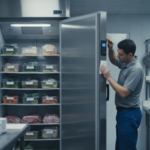
How do predictive service models improve uptime for food distributors in Mocksville? They help teams organize equipment condition, operating patterns, alarms, and service history so changes can be reviewed before they become more disruptive. A model does not guarantee that equipment will avoid failure or diagnose every cause. Its practical value is helping people decide what to verify, when to investigate, and how to coordinate qualified service while continuing scheduled maintenance and facility procedures.
Discuss commercial refrigeration service with QRC — (336) 281-5144
What does a predictive service model do?
A predictive service model interprets information about equipment condition and operation to help estimate when attention may be needed. Depending on the monitoring arrangement, inputs may include temperature trends, run time, alarms, maintenance history, and staff observations. The model does not replace the people who know the facility. It provides another organized view of available information, which staff can compare with actual conditions and equipment guidance.
This differs from a calendar reminder. Preventive maintenance schedules inspections or service at set intervals. Predictive review uses condition information to help prioritize attention between planned visits. These methods can complement one another: scheduled care remains the foundation, while a persistent change in condition may justify an earlier look at one specific asset.
It also differs from a repair call after a problem is already obvious. In a reactive situation, an equipment failure or visible performance issue prompts action. Predictive review may provide more time to investigate, but only if the signal is useful, someone receives it, and the facility follows through. If no one owns the alert, a dashboard alone does not improve operations.
How can predictive service support uptime in Mocksville?
The potential benefit is a better-timed decision, not a promise of uninterrupted operation. For a Mocksville distribution facility, a repeated alarm or changing temperature pattern might prompt staff to verify a reading, document a symptom, review recent operating conditions, or arrange qualified service before the concern becomes harder to manage. Early information may also help managers coordinate work with receiving, picking, and dispatch.
- Earlier investigation: A repeated alarm or developing trend can prompt a check before equipment stops meeting expected operating conditions.
- More informed prioritization: A persistent pattern may deserve a different response from a single reading recorded during an unusual event.
- Better coordination: When a concern is identified earlier, managers may be able to plan evaluation around facility activity rather than discovering it during a peak period.
- More useful service records: Notes about symptoms, service work, and follow-up readings give staff and technicians context if a concern returns.
- Clearer handoffs: A consistent log can help a shift lead explain what was observed and what remains unresolved when another person takes responsibility.
These are possible advantages, not guaranteed outcomes. An alert is not a diagnosis. Follow the facility’s food-handling and temperature-control procedures. Do not wait for a model to confirm an urgent condition that staff can already observe. Product decisions should remain with the people and processes designated by the facility.
Which assets and signals should a distributor consider?
Begin with assets whose interruption would matter most to the operation. Depending on the site, that list may include walk-in coolers, freezers, and refrigeration systems serving important storage areas. Record each asset’s equipment label, location, and the room or process it supports. This context helps staff understand why a warning matters instead of treating every notification as equally urgent.
Signals vary by equipment and monitoring setup. Teams may review temperature trends, recurring alarms, operating cycles, maintenance records, and staff notes about noise or performance changes. No single reading tells the full story. A door left open, a busy loading period, a sensor issue, or a genuine equipment concern can produce signals that require different responses. Compare readings over time and record the operating context before drawing conclusions.
It can help to make a simple asset register. Include an equipment identifier that matches the label on the unit, its location, the area it serves, known monitoring points, the last available service record, and the person assigned to review notifications. If a sensor is moved or replaced, note the date and change. That small record reduces the risk of comparing readings that do not represent the same conditions.

We provide commercial HVAC and refrigeration services. Before choosing a monitoring approach, define which assets matter, what information is available, and who will act on it. For a broader look at our work, see our refrigeration service information.
How should you turn an alert into a useful response?
A short written process should explain who receives an alert, what they can verify safely, and when to escalate. Keep the instructions practical enough to use during a busy shift. Set them around facility procedures and equipment guidance rather than assuming one generic threshold applies to every asset.
- Identify the asset. Record its label, location, the area it serves, and the person responsible for follow-up. Check that the alert refers to the intended unit.
- Capture the signal and context. Note the time, alert, recent readings, operating conditions, and relevant activity such as loading, cleaning, or a planned shutdown.
- Verify what staff can safely check. Compare the signal with current conditions and direct observations under site procedures. Do not ask unqualified staff to perform technical work.
- Choose the right escalation. Follow facility procedures if product conditions may be affected or equipment is not performing properly. Arrange qualified service when the concern calls for it.
- Record the outcome. Document what was found, action taken, who owns the next step, and whether later checks show that the concern cleared or returned.
For example, suppose one unusual reading appears during a busy receiving period. Staff can record the time, verify current conditions according to site procedures, and see whether the signal repeats. If the reading returns to its usual pattern and no other concern is observed, the record still helps explain the event. If readings continue to drift or performance changes, staff should escalate rather than dismiss it as a one-off. The service discussion then has a timeline and context, not just a vague report that the cooler seemed different.
Consider a second case: a recurring alarm appears on several shifts, but only one employee has been tracking it. A shared log can show whether it happens at similar times, whether loading or another operating event coincides with it, and what checks were completed. That does not prove the cause. It helps the responsible manager decide whether to monitor under the facility’s process, correct a confirmed operational issue, or request qualified assessment.
Urgent operating concerns require timely action through established facility procedures. Do not wait for a dashboard or model to validate an obvious problem. A predictive tool supports judgment; it does not replace it.
Predictive, preventive, or reactive service: how do they compare?
Each approach has a role. Comparing them helps a distributor build a sensible program without assuming condition monitoring replaces routine care or response to unexpected problems.
| Approach | What prompts action | Useful role | Limit to plan for |
|---|---|---|---|
| Preventive | A scheduled interval or maintenance plan | Creates regular opportunities to inspect and maintain equipment | Conditions may change between planned visits |
| Predictive | Readings, recurring patterns, alarms, and service history | Helps prioritize investigation and timing based on observed condition | Requires usable data and an assigned human response |
| Reactive | A failure or noticeable performance issue | Addresses a known problem after it occurs | Can create unplanned interruption and urgent work |
A practical program often combines scheduled maintenance, condition-based review, and a clear route for unexpected problems. The balance depends on the facility’s equipment, operating priorities, records, and service needs. Do not abandon scheduled work simply because a monitoring system is installed. Predictive information is most useful as an additional input to a maintenance plan, not as a replacement for it.
How can you evaluate a predictive service plan?
Before adopting a model or monitoring program, ask how it fits day-to-day operations. Which equipment and data are covered? How often are readings available? Who reviews alerts, and when? Can staff see the history behind a warning? What happens outside normal working hours? How should the team recognize missing information, a sensor fault, or a temporary operating event?
Clarify what the service arrangement includes. A plan might involve data review, inspection, maintenance documentation, or a separate commercial refrigeration service visit. Do not assume an alert automatically schedules a technician or resolves an underlying problem. Agree on responsibility among facility staff, any monitoring provider, and the service contractor before relying on the process.
Ask what happens when data is incomplete. A gap in records can make a trend difficult to interpret. If a sensor is replaced or moved, note the change so staff do not compare unlike readings without context. Keep equipment identification consistent across notifications, service records, and facility logs. Clear labels prevent time being lost matching an alert to the asset it concerns.
It is also useful to ask how the program avoids alert fatigue. If every small fluctuation generates a notification, staff may start ignoring them. Review which alerts led to a meaningful check, which were explained by known operating events, and which need follow-up. Adjust notification rules only with appropriate technical input and the facility’s procedures in mind. The goal is not to suppress inconvenient warnings; it is to make responsibilities and signal meaning clear.
For food handling and temperature-control responsibilities, consult the FDA’s food safety resources and follow requirements that apply to your operation. A predictive service model does not replace applicable rules or facility procedures.
How should a Mocksville facility start small and learn?
A measured start can show whether information leads to action before a site expands monitoring. Choose a limited group of high-priority assets, identify a responsible reviewer, and decide what records to keep. Avoid enabling every available alert before staff understand which ones matter. Too many low-value notifications can make important changes easier to overlook.
- Select a manageable asset group. Choose equipment with clear operational importance and available information. Record why each asset was included.
- Establish a baseline. Gather existing maintenance records, known operating patterns, and relevant staff observations. Note gaps instead of treating incomplete history as complete.
- Write a response guide. Define who reviews a signal, what basic checks are appropriate, and when a concern must be escalated.
- Review actual cases. Record whether alerts were verified, what staff found, and whether information changed a decision.
- Adjust deliberately. After a suitable review period, refine responsibilities or alert criteria based on observed cases, equipment guidance, and service input.
Imagine a facility beginning with one walk-in cooler and one freezer. The manager records each unit’s location, available history, and operational role, then assigns a reviewer for each shift. The team continues scheduled maintenance while logging repeated alarms and notable readings. If the cooler produces alerts mainly during receiving, staff can compare the timestamps with loading activity and verify conditions under site procedures. If a pattern persists outside those periods, that history gives a stronger basis for requesting an assessment.
Now imagine the pilot produces many notifications but few documented follow-ups. Adding more sensors is unlikely to solve the immediate problem. The manager can first check whether the alerts reach the right person, whether the asset labels are clear, and whether staff know the safe checks and escalation route. If the information is too inconsistent to interpret, improve records or ask for appropriate technical review before expanding the project.
To judge whether a pilot is useful, look beyond alert counts. Did staff understand the notices? Were important concerns escalated? Did the information improve the timing or specificity of a service request? Were records complete enough to support follow-up? Did the process fit shift handoffs? If not, the next step may be clarifying ownership or improving data quality, rather than adding more sensors.
What information helps during a refrigeration service discussion?
Useful preparation does not require a complicated report. Gather the equipment type and location, a plain description of the concern, when it began, and whether it recurs. If monitoring is in place, share the relevant trend or alert history, including gaps or sensor changes. Add context about operating conditions and actions already taken under facility procedures.
Explain the operational impact without overstating what the data proves. For example, say that an alarm has repeated during a certain shift rather than claiming that a model diagnosed a component failure. Note whether staff observed a performance change and what follow-up is pending. That distinction helps a technician assess the information without mistaking an alert for a confirmed diagnosis.
A concise handoff can include five items: the asset label, the first date or shift when the concern appeared, the pattern since then, safe checks already completed, and the facility contact who can explain operating context. If there are multiple alerts, select a representative timeline rather than sending an unexplained mass of screenshots. Preserve original records in case further review is needed.
Our commercial HVAC service information explains our commercial service focus. If the facility is planning a new storage area rather than addressing an existing system, see our information about custom walk-in cooler design or walk-in freezer installation. Project requirements depend on the site.
What can QRC help with?
We provide commercial HVAC and refrigeration services. A discussion about a distribution facility can begin with the equipment involved, symptoms or data trends observed, and the operating impact of an interruption. We can discuss service needs relevant to the site and a practical next step. A trend is useful context, but it is not a substitute for assessment of the equipment.
For a Mocksville operator, a clear starting point is often a concise description: which asset is involved, what changed, how often it happens, and what the team has already checked. Sharing service history and readings can help frame the conversation. Our commercial services page provides more information about our work; commercial service is available statewide in North Carolina.
Talk with QRC about commercial refrigeration needs — (336) 281-5144
Frequently Asked Questions
Can predictive service prevent every refrigeration failure?
No. A model may help identify some developing concerns, but sudden failures, incomplete data, and issues outside its coverage can still occur. Keep scheduled maintenance and a response process in place.
Does predictive service replace preventive maintenance?
No. Scheduled inspection and maintenance provide a baseline. Condition information may help a team decide whether a specific asset needs additional attention between planned visits.
What should staff record when an alert occurs?
Record the asset, alert or symptom, time, relevant operating conditions, checks performed, and service response. Include follow-up readings when available so the team can tell whether the concern cleared or recurred.
Is predictive service relevant to a small food distributor in Mocksville?
It may be useful if the operation has important refrigeration assets and can use condition information to guide action. The right approach depends on the equipment, available data, staff responsibilities, and the impact of interruption.
Plan for dependable refrigeration uptime
Predictive service is most useful when dependable equipment information leads to timely human decisions. For a Mocksville distributor, a clear asset list, workable alert process, scheduled maintenance, and appropriate service response can support better-informed operations without promising that failures will never happen.