If your mini split is not heating in Winston-Salem, start with its operating mode, setpoint, airflow, and display. A controller setting or blocked filter can sometimes explain a comfort problem, while repeated shutdowns, persistent ice, or an error code may call for professional diagnosis. The checks below help you observe the system safely; they do not require opening equipment or working on its wiring or refrigerant circuit.

Request help with your mini split — call (336) 281-5144
What should you check first when the mini split will not heat?
Begin with the things you can see at the controller. Make one change at a time, then wait several minutes before deciding whether it helped. Heat pumps may take a little time to begin delivering warmer air, and the indoor fan may not behave like a furnace blower at startup. The exact sequence varies by make and model, so use the owner’s manual for equipment-specific instructions.
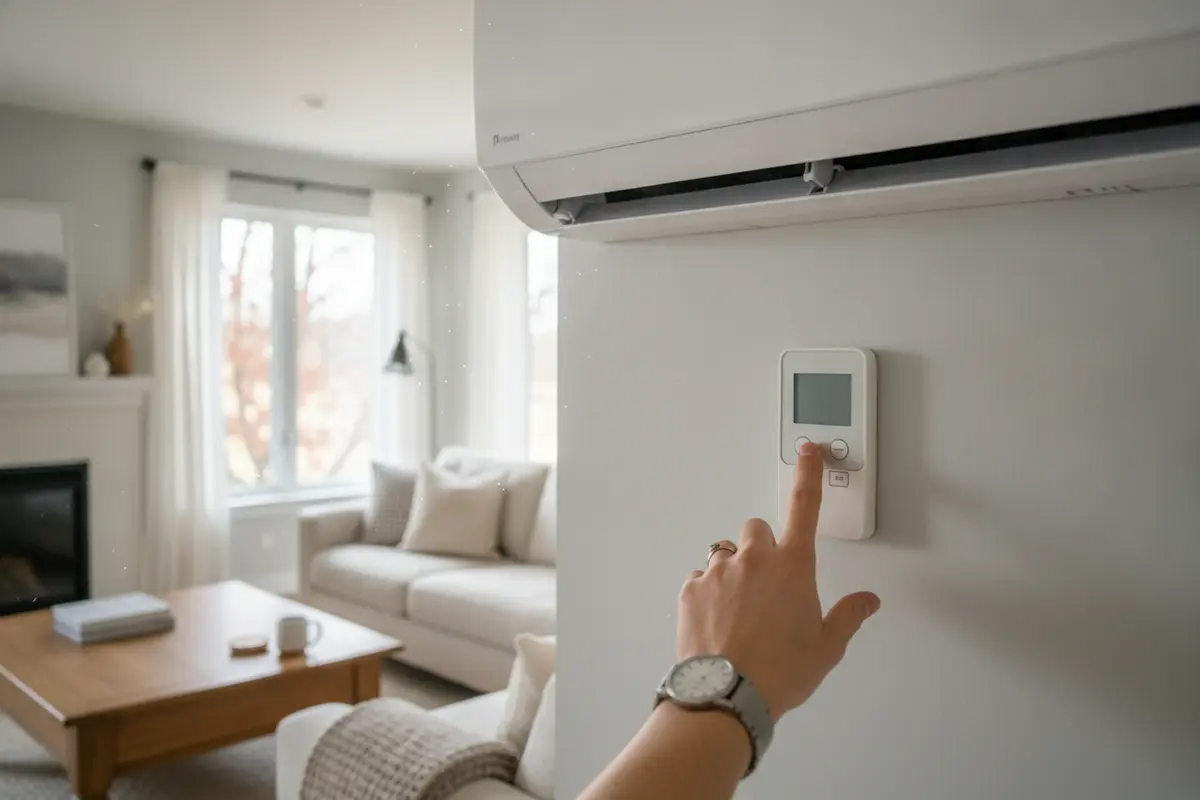
- Confirm Heat mode. Check that the controller says Heat rather than Cool, Fan, or Auto. If the home has more than one indoor unit, verify the setting on the controller for the room that feels cold.
- Set a clear heating target. Raise the setpoint a few degrees above the room temperature. A unit may stay idle if the room has already reached its target. Avoid rapidly moving the setpoint up and down; make one adjustment and observe what happens.
- Check the fan and vane settings. Fan-only operation moves room air but does not request heat. Start with the manufacturer’s normal or Auto fan setting and make sure the outlet vanes are not aimed into an obstruction.
- Review timers and schedules. A sleep setting, weekly schedule, timer, or energy-saving mode can lower the requested temperature or turn the unit off. Look for a clock or schedule symbol on the screen, and check each zone’s schedule if the system is multi-zone.
- Look at the controller display. Write down any letters, numbers, flashing lights, or warning symbols exactly as shown. Do not guess what an unfamiliar code means; code definitions differ by manufacturer and model.
- Check controller power in the user manual. If a handheld remote is blank, its batteries may need attention. Follow the remote’s instructions, and do not remove panels from the indoor or outdoor equipment.
Some systems also prevent simultaneous heating and cooling requests across different zones. If one room is set to Heat while another is calling for Cool, the equipment may not respond as expected. When there are multiple heads, compare the displayed modes and settings on the affected and unaffected zones. Do not assume a control conflict is the cause; treat it as one useful observation to report.
Could restricted airflow be the reason the room feels cold?
Airflow is a practical next check because curtains, furniture, dust, or a dirty filter can impede circulation. Stand where you can safely see the indoor unit. Check that the air intake and outlet are not covered by drapes, shelving, decorations, or stored items. Move nearby obstructions rather than reaching into the unit.
Check the filter only as the owner’s manual allows. Some filters are designed for routine homeowner cleaning; other components are not. If your manual identifies the filter as washable, remove it as directed, clean it using the specified method, and let it dry completely before reinstalling. Do not run the system with a wet or missing filter. If a filter is stuck, damaged, or difficult to access, stop instead of forcing it.
After clearing an obstruction or cleaning a user-serviceable filter, restore Heat mode and the intended setpoint, then give the equipment time to respond. Note whether airflow becomes stronger, whether it remains weak, and whether other indoor units behave differently. If you still have poor airflow or the unit shuts itself down, that is more useful information for a technician than repeatedly changing several settings at once.
Which troubleshooting mistakes can make the problem harder to understand?
Changing several settings at once makes it difficult to tell what changed the system’s behavior. For example, switching from Auto to Heat, raising the setpoint substantially, changing fan speed, and power-cycling the equipment in quick succession can leave you unsure which setting was active when the symptom occurred. Instead, make one ordinary controller adjustment at a time and record the result. If the symptom persists, stop experimenting and share the sequence with a professional.
Do not treat every brief pause as proof that the mini split has failed, but do not dismiss a repeated shutdown as normal either. Watch for a clear pattern and note how often it occurs. Avoid pressing reset controls repeatedly, disabling schedules without recording their prior settings, or trying instructions intended for another model. Manuals and code meanings are model-specific, and a procedure that is appropriate for one system may not apply to yours.
Also avoid attempting to speed up heating by covering an indoor sensor, blocking the unit’s intake, placing objects against the outdoor cabinet, or using tools on frost or ice. These actions can obstruct operation or damage equipment. Keep the area around each unit open, use only controls described in your own manual, and leave internal cleaning and repair work to a qualified technician.
What can you safely observe outside?
From a safe distance, look at the outdoor unit. Leaves, packed snow, or other material can block the space around it. Keep the area clear according to the manufacturer’s required clearance, but do not reach into the cabinet, remove a grille, bend coil fins, or attempt to clean internal parts. If snow is present, clear only loose material that can be moved without touching or damaging the unit.
A heat pump may develop temporary frost in cold, damp weather. It can periodically change its operation to clear that frost, so a short-lived change in sound, airflow, or the outdoor coil’s appearance is not automatically proof of a failure. Observe whether the system resumes heating afterward. Avoid repeatedly switching modes to force a cycle.
Thick ice that remains, repeated icing, or a unit that stops and does not resume is different from a brief frost cycle. Do not chip ice away, pour hot water on the equipment, or cover the outdoor unit. Take a photo from a safe distance and arrange a professional assessment. These observations can help a technician understand how long the condition has been present.
How can you tell a normal delay from a warning sign?
A single moment of cool-feeling air can be hard to interpret. The useful distinction is the pattern: does the unit return to steady operation, or does the same symptom continue or recur? Use the table as a triage guide, not as a diagnosis. Equipment designs and operating conditions differ.
| What you notice | What it may indicate | Safe next step |
|---|---|---|
| Brief pause or change in airflow after startup | The system may be starting or changing its operating cycle | Wait several minutes and observe whether heating resumes |
| Weak airflow at one indoor head | A filter, obstruction, or zone-specific issue may be involved | Check accessible filter instructions and clear nearby objects |
| Temporary frost outside in damp, cold weather | A defrost cycle may be part of normal operation | Observe from a distance; do not interfere with the unit |
| Heavy ice that persists or returns often | The equipment may need an assessment | Do not scrape or dismantle; arrange professional diagnosis |
| Error code, recurring shutdown, or unusual sound | A control or equipment fault may be interrupting operation | Record the display and symptom; avoid repeated resets |
| No heat after basic controller and airflow checks | The cause may require measurements beyond homeowner checks | Request a qualified service evaluation |
Why might a mini split still fail to heat after basic checks?
When the mode, setpoint, filter, and visible clearances look right, the cause may be inside the equipment or its controls. A sensor reading, control-board issue, fan problem, refrigerant-side condition, or another component concern can affect heating. Those are possibilities, not conclusions that can be made from a symptom alone. A technician needs to inspect and test the actual system before identifying a fault.
Do not remove access covers, test wires, attach gauges, release refrigerant, or try to repair a sealed system. Refrigerant handling is subject to U.S. environmental requirements; the U.S. Environmental Protection Agency provides information about federal environmental programs. Keep your troubleshooting to controls, visible obstructions, and maintenance steps the equipment manual identifies for homeowners.
For background on the kind of symptoms that can affect heat pumps, see our guide to common heat pump repair issues. A symptom guide can help you describe what you observe, but it cannot confirm what is wrong with your particular mini split.
What if only one room is affected?
In a multi-zone system, compare the affected room with the others. If one indoor head does not heat while the rest do, record which zone is involved and whether its display, airflow, and sounds differ. If every room has lost heat at once, note that too. The difference helps frame the problem, but it does not prove that the issue is located in a particular indoor unit.
Check for a simple zone-level difference: a lower setpoint, a timer, Fan mode, or an obstructed intake in the problem room. Do not assume that a warm room proves the shared outdoor equipment is fully healthy, or that one cold room means its head needs replacement. Several system and control conditions can produce similar comfort patterns.
If the home has more than one heating system, note which areas are served by the mini split and whether another system is running. This makes it easier to describe the actual comfort gap. Keep the report specific: “the bedroom head starts, blows weakly, then stops” is more useful than “the mini split is broken.”
What should you record before asking for professional help?
A short, accurate symptom history can make the next conversation more productive. You do not need to diagnose the system. Capture what it does, when it does it, and which parts of the home are affected.
- Equipment information: make and model if visible without moving equipment or removing a cover.
- Controller details: current mode, setpoint, any displayed code, and whether a timer or schedule is active.
- Zones affected: one indoor head, several heads, or all areas served by the system.
- Sequence: whether the unit starts, how long it runs before the symptom appears, and whether it resumes on its own.
- Outdoor observations: visible frost or persistent ice, nearby blockage, and approximate outdoor conditions.
- Checks already made: settings reviewed, accessible filter steps completed, and objects moved away from the unit.
- Recent context: when the issue began and any schedule or controller changes shortly beforehand.
A photo of the display or outdoor unit can preserve details that are easy to forget. Take pictures only from a safe position, without climbing, opening panels, or touching components. If a code disappears, write down what you saw and when it appeared. This information helps explain the timeline without asking you to interpret the code.
What may a technician need to evaluate?
A service visit usually begins with the complaint you report: which zone is cold, what the controller displays, and what the unit does after a call for heat. The technician can compare those observations with the system’s operation, inspect accessible equipment components, and use appropriate diagnostic tests. The sequence depends on the model and symptoms, so there is no single homeowner checklist that identifies every fault.
For example, imagine the living-room head heats normally while a bedroom head runs briefly and then stops. You have already confirmed that the bedroom controller is set to Heat, raised its target above room temperature, cleared the intake, and checked the permitted filter. A useful service note would include those details, the time the head stops, and any code shown. The pattern helps direct attention toward the affected zone and its controls, but it does not prove that the indoor head itself has failed. Testing is still needed to identify the cause.
In a different case, every indoor unit may stop heating at once, with the outdoor unit showing persistent ice. That observation calls for a different investigation than a single weak-airflow room. Record when the change began and take a safe-distance photo. Do not try to defrost or restart the system by repeatedly changing settings. Clear, factual observations help prevent guesswork and make it easier to explain why a repair or other next step is being recommended.
When you discuss findings, ask the technician to explain the relationship between the test result and the symptom. You can also ask whether the system is safe to operate while waiting for a repair and whether any simple operating instructions should change in the meantime. Keep the answers with the model information and service notes for future reference.
When should you stop troubleshooting and request service?
Request an assessment if the system still will not heat after you confirm the mode and setpoint and check the user-serviceable filter and visible airflow path. It is also time to stop if an error returns, the unit repeatedly shuts off, ice remains or recurs, or an unusual sound accompanies poor performance. Do not keep cycling power or changing settings in an effort to make the symptom disappear.
If you notice smoke, a burning smell, or another immediate safety concern, move away from the equipment and contact appropriate emergency help. If a breaker trips, do not repeatedly reset it. Leave equipment covers closed and describe the event when you request help.
For a system that needs further testing, our heat pump repair and service guide explains why diagnosis matters. If the issue is urgent because the home has lost heat, our guide to emergency HVAC service can help you think through the information to share. We also answer common homeowner questions in our HVAC repair FAQ.
How can you describe the comfort problem clearly?
Instead of reporting only that a room is cold, describe when and where you notice it. Does the room feel cool all day, only after the system has run for a while, or at a particular time on the schedule? Does the indoor head start moving air? Does the display show the same setpoint as the other zones? A short timeline can distinguish a steady comfort complaint from an intermittent shutdown.
Keep observations separate from conclusions. “The bedroom remains cooler than the hallway, and the head stops after about ten minutes” is an observation. “The bedroom unit needs more refrigerant” is a diagnosis that cannot be confirmed from that observation alone. If doors are usually closed or the room is used on a different schedule, mention that context as well. It may help explain when the comfort difference is most noticeable, without assuming that it identifies a mechanical cause.
For a simple log, write down the date and time, controller mode and target, which zones were operating, and what changed. Note whether the symptom improved after an allowed filter cleaning or clearing an obstruction. A few concise entries are usually more useful than a long list of guesses. Do not delay requesting help to build a log if the system has persistent ice, repeated shutdowns, or another warning sign.
How does diagnosis differ from a repair or replacement decision?
A symptom is not enough to decide whether a system needs repair, adjustment, or replacement. A professional evaluation should start by confirming the complaint, checking the equipment and controls, and identifying the condition that affects operation. Ask what was observed, which tests support the finding, and what options address it. If a recommendation involves replacement, ask how the proposed system fits the home and your priorities rather than relying on a guess based on one cold room.
Mini splits are heat pumps, but they are not the only heating arrangement in local homes. If you are considering how ductless equipment compares with another system, our overview of ductless and central HVAC covers the broader differences. That comparison is not a substitute for diagnosing a unit that has stopped heating; address the current fault first, then consider long-term choices with complete information.
Routine care may also help identify changing conditions before the next cold spell, though maintenance cannot guarantee that a component will never fail. Read our overview of annual heat pump service for a general look at planned equipment care. Follow the manufacturer’s maintenance schedule for your specific model.
Arrange a mini split assessment — call (336) 281-5144
Frequently Asked Questions
How long should I wait after switching to Heat?
Give the equipment several minutes to start and settle into operation. Timing varies by system and outdoor conditions. If it continues to blow cool air, stops, or displays a code, note the details rather than repeatedly switching modes.
Is frost on the outdoor unit always a problem?
No. Temporary frost can occur in cold, damp conditions, and a heat pump may run a defrost cycle. Persistent thick ice, repeated icing, or a unit that does not resume heating should be assessed. Do not scrape the ice or pour water on the equipment.
Should I reset the breaker if the mini split stops?
Do not repeatedly reset a breaker that trips. Repeated trips are a reason to stop troubleshooting and arrange qualified help. If the system stops without a breaker event, record what the controller shows and whether the other zones are operating.
Can I fix a refrigerant or control problem myself?
No. Keep homeowner checks to controller settings, visible obstructions, and filter care that the manual permits. Leave diagnosis and work inside the equipment to qualified professionals.
What if one indoor head heats and another does not?
Record which head is affected and compare its mode, setpoint, schedule, and airflow with a working zone. If a simple setting difference does not explain the symptom, share the zone-by-zone observations when you request an assessment.
Ready to get your mini split heating again?
We can help you determine a sensible next step based on the equipment and symptoms you describe. When you reach out, tell us which rooms are affected, what the display shows, and what safe checks you have already completed. Call (336) 281-5144 or request an appointment to discuss the mini split in your Winston-Salem home.