When a furnace is not keeping your home comfortable, start with a few safe checks before assuming the equipment has failed. Confirm the thermostat settings, look at the air filter, and note what the system is doing. If it still will not heat, or you notice a gas odor, smoke, a carbon monoxide alarm, or a repeated shutdown, stop troubleshooting and prioritize safety.
Call (336) 281-5144 to discuss furnace service
What should you check first when the furnace is not heating?
Begin with observations that do not require opening equipment panels or handling wiring. Set the thermostat to Heat and make sure the temperature setting is above the room temperature. If it uses batteries, check whether its display is active. Confirm that the furnace switch has not been turned off accidentally and that the system’s access panel appears properly closed. Do not remove a panel to reach internal controls.
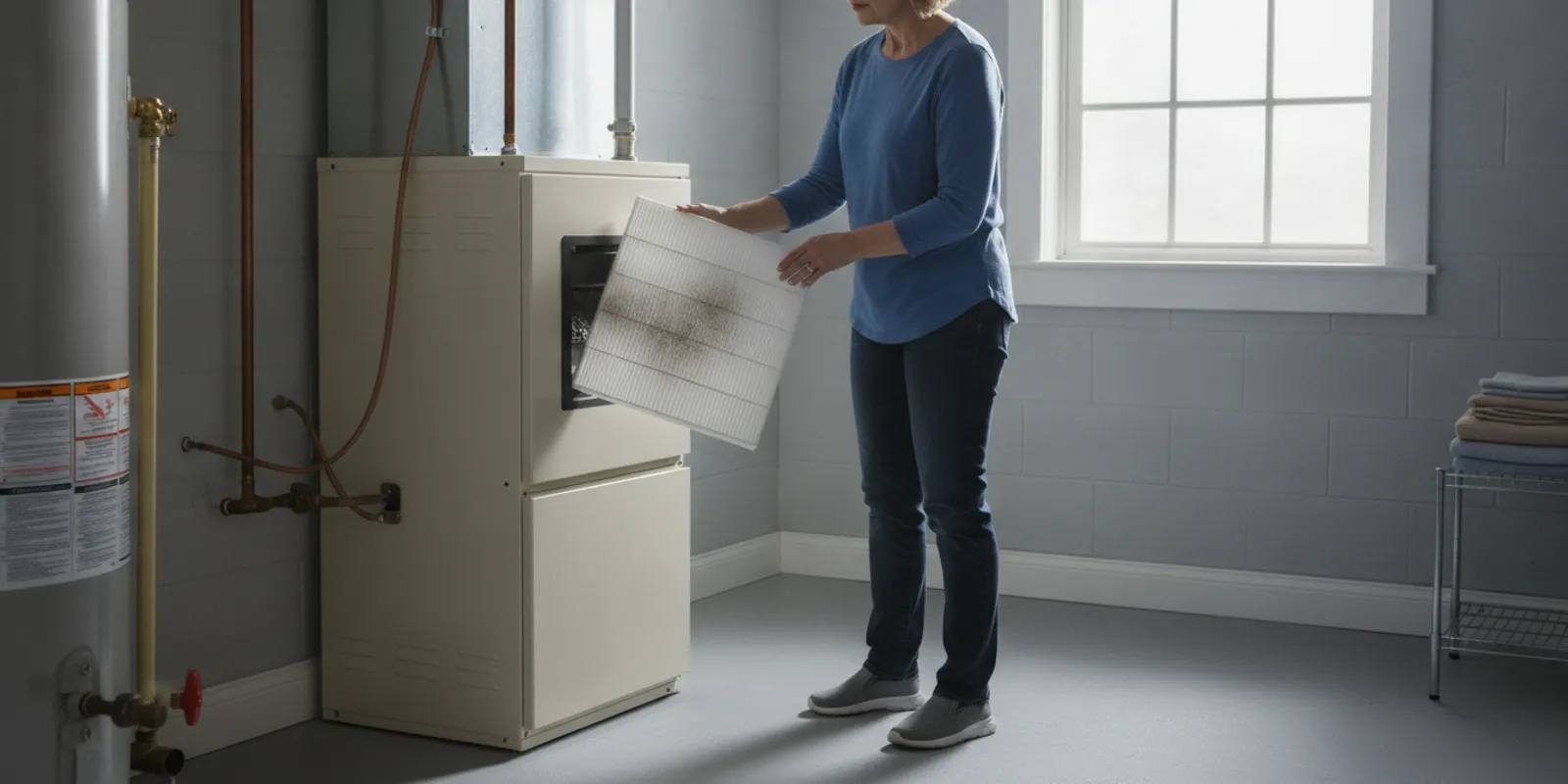
Next, inspect the air filter if it is designed for homeowner access. A heavily loaded filter can restrict airflow and contribute to poor operation. If it is dirty, replace it with the correct size and type for your system. Do not run the furnace without a filter. Also check whether supply registers and return grilles are blocked by rugs, furniture, or stored items. Open registers that someone may have closed, but do not dismantle ductwork.
- Listen for whether the system starts, runs briefly, or stays silent.
- Notice whether air comes from the vents and whether it feels warm after the system has had time to operate.
- Look for a thermostat message or a visible status indicator without removing equipment covers.
- Check whether the problem affects the whole home or just a few rooms.
- Write down when the issue began and whether anything changed shortly beforehand.
These checks may reveal a setting or airflow issue, but they do not diagnose the furnace. Avoid repeated resets, bypassing safety controls, or attempting internal repairs. If the equipment does not resume normal operation after basic checks, arrange a professional inspection. Our furnace repair guidance offers additional context on common service situations.
Which furnace symptoms need prompt attention?
Some signs call for a service visit rather than more homeowner troubleshooting. A furnace that repeatedly starts and stops, blows cool air despite correct settings, or makes a new persistent mechanical sound may need inspection. The same applies when airflow drops sharply, the system will not stay on, or a thermostat displays an unfamiliar warning. These symptoms can have more than one cause, so avoid deciding that a particular component has failed based on one clue.
Odors and alarms require a different response. If you smell gas, leave the home and contact the appropriate emergency utility or local emergency service from a safe location. Do not operate switches, use a flame, or remain inside to investigate. If a carbon monoxide alarm sounds, follow the alarm manufacturer’s emergency instructions and leave the building. Do not re-enter until authorities say it is safe. The U.S. Consumer Product Safety Commission provides consumer safety information, including guidance on household hazards.
A strong, persistent burning smell, visible smoke, or signs of overheating also warrant immediate caution. If you can safely switch the system off without approaching smoke or another hazard, do so; otherwise leave and seek help. Do not continue running equipment that appears unsafe. For less urgent changes, record when they occur and whether they happen at startup, during operation, or while the system shuts down.
How can you tell whether the issue is the furnace or the thermostat?
A blank thermostat, incorrect mode, or low setpoint can make a working furnace seem unresponsive. Check the display and settings first. If the display is blank, replacing thermostat batteries may help when the model uses them. Look for a schedule or hold setting that conflicts with the temperature you expect. If the thermostat is set to a mode other than Heat, select the intended mode and allow the system time to respond.
If the thermostat appears normal but the furnace does not respond, the cause could involve the equipment, its power supply, or another control. Do not remove covers or inspect electrical components. Instead, observe what happens after a heat call: does the blower start, does the furnace run briefly, or does nothing happen? Note the order and duration of events. A qualified technician can test the system to distinguish among possible causes.
For example, if the display is blank and the thermostat uses replaceable batteries, changing them is a limited, low-risk check. If the screen returns but the furnace still does not operate normally, that observation does not prove the thermostat was the only problem. If the display is active and the system starts but quickly stops, that pattern is useful information to share, not a reason to keep restarting it.
What can sounds and airflow tell you?
A new rattle, scraping sound, or repeated clicking can point to a developing issue, but sound alone rarely identifies a specific failed part. Describe the sound in ordinary terms and note when it happens: at startup, while the blower runs, or as the system shuts down. Also note whether it is brief, persistent, or getting louder. Avoid reaching into the equipment or trying to tighten parts while it is running.
Weak airflow may relate to a clogged filter, blocked return, closed registers, or an equipment concern. Check accessible registers and replace a dirty filter, then see whether airflow changes. If some rooms remain cold, note which rooms and whether the issue is new. A room-by-room pattern is useful because it can help the technician understand whether the concern is isolated or widespread. For more on unusual sounds, read our article about why an HVAC system may be noisy.
Do not use a single symptom as a diagnosis. Weak airflow plus an unchanged filter may still have several explanations; a noisy startup does not identify which component needs attention. A good next step is to document the symptom and schedule service if it persists or worsens.
What information should you gather before requesting service?
A short, clear description can make the first conversation more useful. You do not need to know the technical name of a part. Gather what you can observe safely:
- The furnace type, if known, and approximate age if you have the information.
- Whether there is no heat, intermittent heat, cool air, or uneven heating.
- When the trouble started and whether it is getting worse.
- Any thermostat messages, odors, sounds, alarms, or visible indicators.
- Whether you recently changed the filter or noticed a change in airflow.
- Whether the system runs continuously, cycles repeatedly, or does not start.
- Which rooms feel different, if the issue is not throughout the home.
Keep the description factual. Instead of saying “the blower motor is bad,” say “the furnace starts, I hear a brief rattle, and the airflow stops after a few minutes.” That helps the service team understand what you observed without turning a symptom into a guess. If the issue is intermittent, note the time of day or conditions when it appears. Do not wait to collect details if there is a safety emergency.
In Winston-Salem and nearby Triad communities, our heating service page is the appropriate starting point for furnace help. You can also review our residential heating and cooling information to learn more about home heating support. For a broader picture of our company and service options, visit the QRC home page.
When is repair different from planning a replacement?
A symptom by itself does not mean a furnace needs replacement. The system’s condition, inspection findings, age, comfort performance, and household needs all matter. Ask the technician to explain what was tested, what is not working as intended, and what options are available. If a repair is proposed, ask what it addresses and whether any related concerns should be monitored.
If you are weighing a larger decision, compare the overall condition and your home’s heating needs rather than focusing on one symptom. A replacement assessment should consider the equipment and the home, including ductwork and how rooms are used. We develop options after an in-home engineering and lifestyle assessment, rather than relying on a generic price range. Financing information is available through our financing page.
It can help to separate immediate comfort needs from longer-term planning. If the furnace can be repaired safely, ask what the repair will address and what uncertainties remain. If replacement is being considered, ask how the recommended system fits the home’s heating load and distribution. Compare the explanation, proposed scope, and household priorities—not just the label attached to a symptom.
| Situation | Useful next step | What to have ready |
|---|---|---|
| Thermostat setting or dirty filter appears to be the issue | Correct the setting or replace the filter, then observe operation | Filter size and any change in heating |
| Furnace runs poorly, cycles repeatedly, or has a new noise | Arrange a professional inspection | Timing, duration, sound, and thermostat message |
| Gas odor, smoke, or a carbon monoxide alarm | Leave and follow emergency instructions; call from a safe location | Share the observed condition once safe |
| Recurring problem or major repair decision | Discuss findings and compare suitable options | System history, comfort concerns, and household priorities |
How can you reduce avoidable furnace trouble?
Keep the area around the furnace clear and follow the equipment manufacturer’s guidance for filter replacement. Check the filter regularly because the right interval depends on the filter and household conditions. Keep supply and return openings unobstructed, and pay attention to changes in heating performance before cold weather places greater demand on the system.
Make a simple home record with the filter size, the date you changed it, and any recurring symptoms. This can help distinguish a one-time observation from a pattern. If you replace the filter, make sure it fits as intended and is installed in the correct direction when the filter has an airflow arrow. If you are unsure which filter is appropriate, check the equipment documentation or ask a professional rather than forcing a different size into place.
Seasonal maintenance can identify concerns that are not obvious during ordinary operation, but it cannot promise that equipment will never need repair. Maintenance is also not a reason to ignore a new warning sign. If comfort changes between visits, note the symptoms and contact a professional rather than waiting for a complete loss of heat.
What should you avoid doing while troubleshooting?
Keep troubleshooting limited to visible, homeowner-level checks. Do not remove furnace doors or panels to look for a flame, wiring, or moving parts. Do not touch gas piping, electrical connections, or internal switches. These actions can expose you to hazards and may interfere with safety controls. If you are unsure whether a check is safe, skip it and describe the concern when you call.
Avoid changing several things at once. If you move the thermostat, replace the filter, open registers, and restart the furnace in quick succession, it may be harder to tell what changed. Make one simple correction at a time and observe the result. If there is no improvement, stop rather than repeating the same action or trying an improvised fix.
Do not use a household object to hold a switch, block a vent, or keep an access panel open. Do not assume that a furnace is safe because it starts again after a shutdown; an intermittent problem can return. If you notice a gas odor, smoke, or an alarm, do not continue the checklist. Leave and follow emergency instructions. These boundaries help you share useful observations without taking on a repair that needs training and proper testing.
What does a useful service visit look like?
Before the visit, make a clear path to the furnace and ensure the technician can reach the thermostat and any affected rooms. Share your observations, including when the problem began and what you already checked. Tell the technician about alarms or odors immediately. Do not attempt to recreate a dangerous condition for demonstration.
During the discussion, ask what the technician found and how the findings relate to the symptom you reported. A useful explanation should connect the observation, the test or inspection, and the recommended next step. If more than one option is presented, ask what each option addresses and what trade-offs matter for your home. Keep copies of service notes and any recommendations so you can compare them with future changes.
For instance, if the initial complaint is intermittent heat, the service conversation should clarify whether the system stopped during testing and what checks were performed. If it could not be reproduced, your written timeline and notes about conditions may still help guide follow-up. This is why careful observations are useful, even though they are not a substitute for diagnosis.
Frequently Asked Questions
Should I reset my furnace if it stops working?
A restart may not address the cause, and repeated resets can conceal an ongoing problem. Check basic thermostat settings and the filter first. If the furnace continues to stop or will not start, arrange an inspection rather than repeatedly cycling power.
Can a dirty filter make a furnace stop heating?
A clogged filter can restrict airflow and affect system operation. Replace it with the correct filter if it is visibly dirty, then observe whether airflow improves. If heating remains poor, the filter was not necessarily the only issue.
Why does the furnace run but blow cool air?
Several conditions can cause cool air during a heat call, including a setting issue or an equipment concern. Verify that the thermostat is set to Heat and above room temperature. If the system keeps blowing cool air, arrange service instead of opening the furnace.
When should I call for furnace help?
Contact a heating professional when basic checks do not restore heat, the system repeatedly shuts down, airflow changes significantly, or you hear a new persistent sound. Treat gas odors, smoke, or an active carbon monoxide alarm as safety concerns and follow emergency instructions.
What should I do if only one room is cold?
Check that the room’s supply register is open and not blocked, and make a note of which rooms are affected. If the problem persists after basic airflow checks, share the room pattern during a service call; do not assume the furnace itself is the only possible cause.
Call (336) 281-5144 to arrange furnace service
Ready to Discuss Furnace Service?
We can help you take the next step when your furnace is not heating as expected. Call us at (336) 281-5144 and tell us what you have noticed.