


 Many of our home’s amenities use electricity, from lighting to hot water to the TV. When an electrical system isn’t working as it should, it disrupts your daily life. However, when your system puts your household in danger, it’s time to seek electrical emergency services. Read on to learn how to recognize common electrical emergencies, when to call an electrician, and how to prevent future electrical issues.
8 Signs You're Dealing With an Electrical Emergency
Electrical emergencies have the potential to cause severe injury and damage to your home. It’s important for you and your household to know how to recognize the signs and what to do in case of an electrical emergency. The following are common signs you’re experiencing an electrical repair emergency. 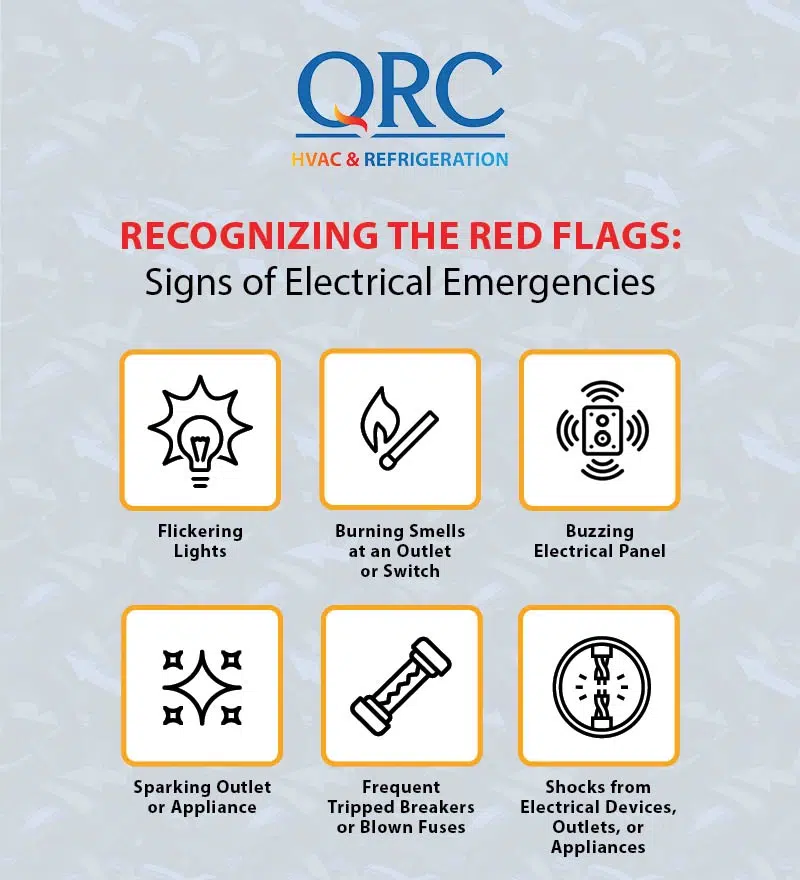
Flickering lights
Flickering lights can mean something as minor as a loose bulb — or as dangerous as faulty wiring that can arc, spark, and start a fire inside your walls. Turn the light off, gently tighten the bulb, and turn the light back on. If that doesn’t work or there’s more than one light flickering, you may have faulty wiring or an outlet compatibility issue. Faulty wiring has the potential to arch, shock, smoke, or start a fire in the wall. If your dimmer switch is incompatible with your light bulb, the unstable power may cause the bulb to flicker and the switch to heat to dangerous temperatures.
Burning smells at an outlet or switch
A burning smell from an outlet or switch means damaged wiring or a failed component — and it won't fix itself. Shut off that circuit immediately and call an electrician.
Identifying Specific Odors
When it comes to electrical issues, your nose can be a powerful first alert. A distinct burning smell coming from an outlet or switch is a major red flag. This often points to damaged wiring or a faulty component inside, creating a serious risk of arcing, electrical shock, or even a fire. Another specific scent to watch out for is a strange 'fishy' odor near your outlets or electrical panel. This unusual smell can indicate that wires are melting or that you have overloaded circuits. These are not smells you should ever ignore or try to air out. If you detect either of these odors, the safest course of action is to immediately shut off the power to that area at your circuit breaker and call a qualified electrician to diagnose and fix the problem.
Buzzing electrical panel
A buzzing circuit box means a breaker is overheating — melting components inside your panel. This is never normal. Don't wait to have it inspected. It smells because the excess heat is melting components within the breaker or attached wiring.
Sparking outlet or appliance
If you see sparks coming from an outlet or appliance, shut off the power at the breaker panel and call an electrician. Don’t use the circuit until you’ve had the system inspected and repaired.
Normal Sparks vs. Dangerous Arcing
It can be startling to see a spark when you plug something in, but it’s not always a sign of trouble. A small, quick spark is often just the result of electricity jumping from the outlet to the plug's prongs as the circuit is completed. This is especially common if the appliance you're plugging in is already switched on. These minor sparks are typically harmless and just a normal part of how electricity works. However, it's important to know the difference between this common occurrence and a more serious electrical problem that requires immediate attention from a qualified professional.
A dangerous spark, known as an arc fault, is a different story. If you notice large, frequent sparks, or a bright, sustained flash of light coming from an outlet, that’s a major red flag. Arcing happens when electricity jumps through the air from one conductor to another, creating intense heat that can melt wires and ignite surrounding materials like wood or insulation. This is a serious fire hazard and indicates a significant issue, such as old or damaged wiring, a loose connection, or a faulty outlet that needs to be addressed right away.
Frequent tripped breakers or blown fuses
A breaker that trips once is doing its job. A breaker that keeps tripping is telling you there's a persistent fault — a short circuit or dangerous overload — that won't go away on its own. To contain the energy, the system shuts off power at the source.
Shocks from electrical devices, outlets, or appliances
Electrical shocks are a sure sign you need emergency repairs. Turn off the power to the circuit, and don’t turn it back on until you’ve had it inspected and repaired by a licensed electrician.
Hot or Discolored Outlets and Switches
An outlet or switch that feels warm or hot to the touch is a serious warning sign you shouldn't ignore. If you also notice black or brown marks around the plug slots, or hear a faint buzzing sound, it’s a clear indicator of a dangerous electrical problem. This heat is often caused by damaged wiring or a faulty component inside the receptacle, creating a significant risk of an electrical fire. If you discover a hot or discolored outlet, immediately stop using it and unplug any connected devices. The next step is to contact a professional electrician to safely diagnose and repair the underlying issue before it can cause further damage.
Partial Power Loss in Your Home
If the power goes out in one part of your house but stays on in another, it’s known as a partial power loss. While it’s easy to assume this is an issue with the local power company, it almost always points to a problem within your home's electrical system. This situation is often caused by faulty wiring or a malfunctioning circuit breaker that needs immediate attention. It’s crucial to address this promptly, as it can lead to more widespread electrical failures or create a safety hazard. Your home's electrical system powers everything, including your HVAC unit, so ensuring its stability is key to your comfort and safety. Call an electrician to investigate the cause rather than waiting for the utility company.
Common Electrical Emergencies and Their Risks
The signs of electrical emergencies usually indicate one or more root causes.
The Dangers of Ignoring Electrical Issues
It’s easy to put off a minor repair, especially when it seems like a small inconvenience. A flickering light or a breaker that trips once in a while might not feel urgent. However, these small warning signs can point to much larger, more dangerous problems lurking behind your walls. Ignoring them doesn't just risk the comfort of your home or the efficiency of your business; it can have devastating consequences for your property and, most importantly, your safety.
Fire and Injury Statistics
The statistics on electrical fires are sobering. According to the National Fire Protection Association (NFPA), electrical failures or malfunctions were responsible for an estimated 46,700 home fires each year between 2015 and 2019. These incidents resulted in hundreds of deaths, over a thousand injuries, and about $1.5 billion in property damage annually. These aren't just abstract numbers; they represent real families and homes impacted by preventable disasters. A faulty wire, an overloaded circuit, or a malfunctioning appliance can quickly escalate into a life-threatening situation, making it critical to address any electrical red flags as soon as you spot them.
Insurance and Liability Risks
Beyond the immediate physical dangers, ignoring known electrical problems exposes you to serious financial risks. If an electrical issue you were aware of causes a fire, your insurance provider could potentially deny your claim, arguing that the damage resulted from negligence. This could leave you responsible for the full cost of repairs and rebuilding. For business owners, the liability extends even further, potentially including damages to neighboring properties or injuries to employees and customers. Proactively maintaining your property's systems, including scheduling regular check-ups through a service maintenance program, is a key part of responsible ownership that protects both your safety and your financial well-being.
Overloaded outlets
Outlets and circuits can only safely provide a finite amount of power. Plugging in many devices, even through a power bar, can overload your outlet. This may lead to overheating electrical components, shock, or fire. High-draw appliances like fans, hair dryers, microwaves, and air conditioners should have a dedicated outlet.
Inadequate/outdated breaker panel
As we add more convenience to our lives, it’s easy to forget these items draw power. What was once an ample supply can quickly become too much amp draw for your system. To limit the potential for damage or injury, have your system upgraded as soon as possible.
Damaged/faulty wiring
Your electrical system can easily sustain damage through everyday wear, rodents, and faulty manufacturing. Damaged wiring leads to shock, sparks, overheating, arching, and fire.
Exposed or Chewed Wires
Wires with damaged insulation, whether from age, pests, or accidental nicks, are a serious safety risk. If you spot wires that are exposed, frayed, or look like a pet has been using them as a chew toy, it's a clear sign of danger. This kind of damage can easily lead to electrical shocks, sparks, and overheating within your walls, creating a significant fire hazard. It's especially important to check the wiring around major appliances, like your HVAC system, where a fault could go unnoticed. Don't wait to address this; damaged wiring requires immediate attention from a professional to keep your home and family safe.
Power outage
If you’re the only house on the block with a power outage, you’re experiencing an electrical emergency.
Electrical fire
Electrical fire is very dangerous. Fires can quickly travel throughout the home and cause a lot of damage.
What to Do in an Electrical Emergency
Knowing how to react during an electrical emergency can make all the difference in keeping your family and your home safe. When faced with sparking outlets, a buzzing panel, or a sudden outage, it’s easy to feel overwhelmed. The key is to stay calm and follow a clear set of steps to manage the situation safely. Your priority should always be personal safety first, followed by protecting your property from further damage. This means knowing who to call, how to handle immediate hazards, and what to do to safeguard your valuable appliances, including your HVAC system. By understanding these crucial actions, you can confidently respond to an electrical issue without putting yourself or others at risk.
Step 1: Call for Help (911 vs. Electrician)
Your first move in an electrical emergency depends entirely on the situation's severity. If you see fire, smell smoke, or if someone has been shocked or injured, do not hesitate—call 911 immediately. Emergency services are equipped to handle immediate threats to life and safety. For other urgent electrical problems that don't involve fire or injury, a licensed electrician is your go-to professional. This includes issues like a constantly tripping breaker, a partial power outage in your home, or loud buzzing from your electrical panel. Making the right call first ensures you get the appropriate help as quickly as possible, preventing a dangerous situation from getting worse.
How to Safely Help Someone Experiencing a Shock
Witnessing someone receive an electrical shock is terrifying, but your quick and correct actions are critical. The most important rule is to never touch the person directly while they are still in contact with the electrical source, as the current can pass through you. Your priority is to safely separate them from the electricity. Look for a non-conductive object nearby, such as a dry wooden broom handle, a plastic pole, or a thick, dry piece of clothing. Use this object to push or pull the person away from the electrical source. Once they are clear, call 911 immediately for medical assistance, even if they seem okay.
What to Do During a Power Outage
If your home suddenly loses power, especially if your neighbors still have theirs, it could signal an issue with your electrical system. Before calling for help, take a moment to protect your major appliances. Unplug sensitive electronics and turn off larger systems, like your air conditioner or furnace, at the thermostat. This simple step helps prevent damage from a potential power surge when electricity is restored. If you check your breaker panel and find that a circuit has tripped, you can try resetting it once. However, if it trips again immediately, leave it off and call a professional electrician to diagnose the underlying fault.
Protecting Your HVAC and Major Appliances
Power surges are one of the biggest risks to your home’s expensive equipment following an outage. The sudden jolt of electricity returning can easily fry the sensitive circuit boards in modern HVAC systems, refrigerators, and other appliances, leading to costly repairs. While point-of-use surge protectors are great for computers and TVs, they don’t protect hardwired equipment. Investing in a whole-home surge protector, installed at your main electrical panel, is the best way to shield your entire home. It’s also a good idea to keep up with regular HVAC maintenance, as a well-maintained system is better equipped to handle electrical fluctuations.
Handling Burnt or Damaged Outlets Safely
An outlet that is burnt, discolored, or hot to the touch is a clear sign of a dangerous electrical fault and a significant fire risk. Do not use it or plug anything into it. If an appliance is already plugged in, go to your breaker panel and shut off power to that circuit before attempting to unplug it. Never try to fix the outlet yourself, as the problem is likely rooted in faulty wiring within the wall. This situation requires professional attention, so call a qualified electrician to safely replace the outlet and inspect the wiring to ensure the problem is fully resolved.
When to Call a 24-Hour Electrician Instead of Waiting Until Morning
Some homeowners resist calling an after-hours electrician because they’re considering DIY repairs or don’t want to inconvenience anyone. While basic electrical tasks are simple if you have experience, emergency problems require a licensed electrician. Emergency electrical service isn’t an inconvenience to us. QRC provides after-hours emergency repair because we’re committed to providing top-quality customer service. When you call an emergency electrician, ensure you have the following information ready:
- The nature of the issue
- How long it’s been going on
- The affected areas
- A description of any upgrades or recent changes to your electrical system or amp load
- Date of your last electrical system safety inspection
Don’t approach any electrical appliance or system if it’s near water, or if you’ll have to stand in water. If it’s safe to do so, turn off the power to the circuit for the affected area. If the issue affects the whole house, turn off the main power. During an emergency electrical repair service, the electrician inspects and assesses the system to determine the root cause and presents options that consider your needs and budget. If your issue requires an upgrade, we can help with the necessary permits and even improve the overall efficiency of your system.
Preventing Electrical Emergencies: Tips for Homeowners
While unforeseen things happen, you can help prevent electrical emergencies by following these tips:
- Don’t overload your circuits
- Perform regular inspections
- Keep pests like mice and rodents out of your home
- Update old wiring and fixtures
Finally, the best way to prevent electrical emergencies is to schedule regular safety inspections and maintenance with a licensed electrician. QRC offers a Comfort Club Membership — for a low monthly fee, you can enjoy peace of mind knowing your home’s systems are taken care of with annual inspections and discounts on parts and services.
Prepare an Emergency Kit
Being ready for the unexpected is always a smart move. When it comes to electrical issues, having an emergency kit can make a stressful situation much more manageable, especially during a power outage. Your kit should be stored in an easily accessible place where everyone in the household can find it. Make sure to include essentials like a flashlight with extra batteries, a complete first aid kit, and a fire extinguisher rated for electrical fires (Class C). It’s also wise to have a battery-powered or hand-crank radio to stay updated on local news and a list of important phone numbers, including your emergency electrician.
Proactive Maintenance and Upgrades
The most effective way to deal with an electrical emergency is to prevent it from happening in the first place. This is where proactive maintenance becomes so important. Just like your car or your HVAC system, your home’s electrical system needs regular check-ups to stay in safe, working order. You should get your electrical system inspected every year by a qualified professional. An expert can spot worn-out wiring, overloaded circuits, or an outdated panel before they turn into serious hazards. At QRC, our service maintenance programs include thorough inspections to ensure your home’s systems are running safely and efficiently, giving you valuable peace of mind.
Replace Old Appliances and Panels
If you live in an older home, your electrical panel might not be equipped to handle the demands of modern life. Decades ago, homes didn't need to power multiple computers, smart TVs, and high-efficiency appliances all at once. An outdated panel can lead to frequently tripped breakers and create a serious fire risk. The same goes for old appliances with frayed cords or faulty wiring. To limit the potential for damage or injury, have your system upgraded as soon as possible. A professional can assess your home's needs and install a modern panel that can safely manage your electrical load.
Install Surge Protectors
Power surges can happen in a flash, caused by everything from lightning strikes to issues with the utility grid. These sudden spikes in voltage can fry the sensitive circuits in your expensive electronics. To protect your devices, be sure to use surge protectors for sensitive electronics like computers, televisions, and entertainment systems—not just basic power strips. For even greater protection, you can have a whole-home surge protector installed directly at your electrical panel. This device helps shield all your appliances, including major systems like your air conditioner, from damaging power surges.
Beyond Your Walls: Outdoor Electrical Hazards
Electrical safety doesn’t stop at your doorstep. The same care you take with indoor wiring and outlets should extend to your entire property. Outdoor electrical hazards, from overhead power lines to damaged extension cords, can pose a serious risk of shock or electrocution. Whether you’re doing yard work, hosting a barbecue, or just enjoying a sunny afternoon, being aware of your surroundings is the first step in keeping everyone safe. Understanding these potential dangers helps you prepare for and prevent accidents before they happen, ensuring your outdoor spaces remain a source of enjoyment, not a cause for concern.
Understanding Overhead Power Lines
Those wires running along the street and to your home are easy to ignore, but they carry extremely high-voltage electricity. It’s critical to remember that these lines are often not insulated. You don’t even have to touch a power line to be in danger; electricity can arc, or jump, from the line to a nearby conductive object, like a metal ladder or a tree branch. As a rule, always assume any overhead line is energized and dangerous. The Electrical Safety Foundation International (ESFI) recommends staying at least 10 feet away from overhead power lines at all times. This simple habit of looking up and maintaining a safe distance can prevent a life-threatening accident.
Safety for Outdoor Activities
Many fun outdoor activities can quickly become dangerous if they take place too close to power lines. Before flying a kite, a drone, or a model airplane, always scan the area to make sure you’re in a wide-open space, far from any overhead wires. The same goes for setting up recreational equipment like trampolines, swing sets, or swimming pools. Choose a location that is well clear of any power lines, and remember to account for the full height and reach of the equipment. Always look up and be aware of your surroundings before you start any project or activity in your yard.
Kites, Ladders, and Fishing Poles
Long, conductive objects require extra caution. When using a ladder for tasks like cleaning gutters or painting, always carry it horizontally and be mindful of where you place it. Never set up a ladder where it could fall into a power line. If you’re an angler, be careful with long fishing poles, especially those made of carbon fiber, as they can easily conduct electricity. For kite flyers, if your kite ever gets tangled in a power line, the safest thing to do is let it go. Never attempt to retrieve it yourself—it’s simply not worth the risk.
Landscaping and Trees Near Power Lines
Trees and landscaping can also create electrical hazards. Never climb a tree that has power lines running through or near its branches. If you notice tree limbs growing too close to power lines on your property, do not attempt to trim them yourself. This is a job for trained professionals. Contact your local utility company, as they are responsible for managing vegetation around their lines. When planting new trees, plan ahead. Call 811 before you dig to locate any underground utility lines, and choose a planting spot where the tree, even at full maturity, won’t interfere with overhead power lines.
24/7 Emergency Electrician in Winston-Salem, NC — Call QRC
Life happens, and electrical emergencies are fairly common. Whether you’ve just moved into a new home, experienced recent changes, or simply have an old system, QRC can help with emergency services in Winston-Salem, NC, and the surrounding area. Not sure if we service homes in your area? Contact us today! One of our friendly team members is standing by to answer your questions.
Frequently Asked Questions
I sometimes see a small spark when I plug something in. Is that dangerous? A tiny, brief spark when you first plug in an appliance is usually harmless. It's often just the electricity completing its circuit. However, you should be concerned if you see large, bright, or sustained sparks. This is called arcing, and it's a serious fire hazard that indicates a problem like a faulty outlet or loose wiring. If you notice these dangerous sparks, stop using the outlet and call an electrician.
My circuit breaker trips every now and then. Is that really an emergency? Think of a circuit breaker as a safety guard. When it trips, it's doing its job by shutting down power to prevent overheating from a short circuit or an overload. While a single trip might just mean you ran too many appliances at once, frequent trips are a clear warning sign. It tells you there's a persistent fault in your system that needs to be diagnosed by a professional before it can cause a fire.
What's the very first thing I should do if I smell a burning or fishy odor from an outlet? If you detect a burning or strange fishy smell from an outlet or switch, your first step is to go directly to your electrical panel and shut off the power to that specific circuit. Do not touch the outlet or unplug anything from it before the power is off. Once the circuit is off and the immediate danger is contained, call a licensed electrician to find and fix the source of the problem.
Why is a partial power outage in my house an emergency if the rest of the neighborhood is fine? A neighborhood-wide outage is the utility company's responsibility, but when only a section of your home loses power, the problem is almost always inside your house. This situation often points to a major issue with your breaker panel or main wiring. Ignoring it can lead to a complete electrical failure or create a significant fire risk, so it requires immediate attention from an electrician.
How can I tell if my electrical panel is too old and needs to be replaced? There are a few telltale signs that your panel is outdated. If you have an old fuse box instead of a modern panel with circuit breakers, it's definitely time for an upgrade. Other red flags include frequently tripped breakers, lights that dim when you turn on a large appliance, or a panel that feels warm to the touch. If you suspect your panel can't keep up with your home's electrical demands, a professional inspection is the best way to know for sure.
Key Takeaways
- Learn to spot the red flags: Pay attention to critical warning signs like flickering lights, buzzing sounds from your panel, or outlets that are warm to the touch. These symptoms often point to hidden dangers that require professional attention.
- Prioritize safety in an emergency: Your first response is crucial; if you see fire, smell smoke, or someone has been shocked, call 911 immediately. For other urgent issues like a frequently tripping breaker, your first call should be to a licensed electrician.
- Stay ahead of problems with proactive care: The best way to handle an electrical emergency is to avoid one in the first place. Scheduling regular safety inspections, not overloading your circuits, and upgrading an old electrical panel are key steps to keeping your home safe.
Related Articles
Contact
QRC HVAC & Refrigeration
Service Area
Our residential HVAC service area includes: Winston-Salem, Greensboro, Kernersville, Advance, High Point, Mocksville, Pfafftown, Jamestown, Oak Ridge, Summerfield, Lexington, King, Walkertown, Colfax, Lewisville, Clemmons, East Bend, Welcome, Bermuda Run, Thomasville, Yadkinville, Walnut Cove
Commercial
Service Area
We install HVAC and Refrigeration across North and South Carolina. We repair Commercial HVAC and Refrigeration units in North Carolina
License # L.33852