If you notice something coming out of the furnace, the first step is to identify what it is and whether it is coming from a vent, a drain, the cabinet, or the exhaust pipe. A little air movement and a brief startup sound are expected; smoke, a strong fuel-like odor, repeated water around the unit, or a carbon monoxide alarm are not. Here is how to sort out common signs, take sensible safety steps, and decide when to call for help.
Talk with QRC about a heating concern — (336) 281-5144
What might be coming out of the furnace?
“Coming out” can mean several different things. Warm air at a supply register is the normal result of a heating cycle. A small amount of clear water at a condensing furnace’s drain can also be part of ordinary operation. On the other hand, smoke, a persistent burning smell, unusual exhaust, or water spreading across the floor calls for a closer look.
Start by observing from a safe distance. Note where the material appears, its color and odor, whether it happens only at startup, and whether the furnace is running normally. Do not open a sealed burner compartment, touch hot venting, or dismantle the equipment to investigate. A photo taken from a safe spot can help you describe the issue when you seek service.
Keep the distinctions clear:
- Air at a room register: usually normal airflow, unless it is unusually weak, cold when heat is called for, dusty beyond a brief startup puff, or accompanied by a concerning odor.
- Water near the furnace: may be condensate from a high-efficiency unit, but a leak, blockage, or overflow needs attention.
- Smoke, soot, or strong odor: do not treat these as routine. Stop using the equipment if there is smoke or a persistent burning smell and get qualified help.
- Outdoor vapor: a brief plume from a high-efficiency furnace vent in cold weather may be water vapor. Smoke or a strong exhaust odor is different.
When should you leave the area or shut the furnace off?
Safety comes before figuring out the exact cause. If a carbon monoxide alarm sounds, everyone should leave the home and call emergency services from outside. Do not re-enter until the responding professionals say it is safe. Carbon monoxide has no dependable smell, so the absence of an odor does not rule it out. Maintain working carbon monoxide alarms according to their instructions and applicable local requirements.
If you smell gas or another fuel-like odor, do not operate switches, light a flame, or try to locate the source. Leave the building and contact the gas utility or emergency services from a safe location. Follow their instructions. If you see active smoke or flame, get out and call emergency services; do not attempt to troubleshoot or put yourself near the furnace.
For a persistent burning odor without visible smoke, turn the system off at the thermostat if you can do so safely, and arrange a professional assessment. A mild dusty smell during the first heating cycle after a long idle period can happen as settled dust warms, but it should fade quickly. If it persists, becomes stronger, or returns repeatedly, stop assuming it is dust.
Never remove access panels or reach into a furnace to investigate. Avoid repeatedly resetting a system that shuts itself down. A safety control may be responding to a fault, and repeated attempts to run it can make diagnosis harder or worsen a problem. If you are unsure whether the condition is dangerous, leave the area and call the appropriate emergency service.
Why is water coming from the furnace?
Some high-efficiency gas furnaces produce condensate as they extract heat from exhaust. That water should travel through a drain line to an approved drain or pump. A small amount of water at the intended drain outlet can be part of normal operation; water collecting under the cabinet, dripping from a pipe joint, or spreading over the floor is not something to ignore.
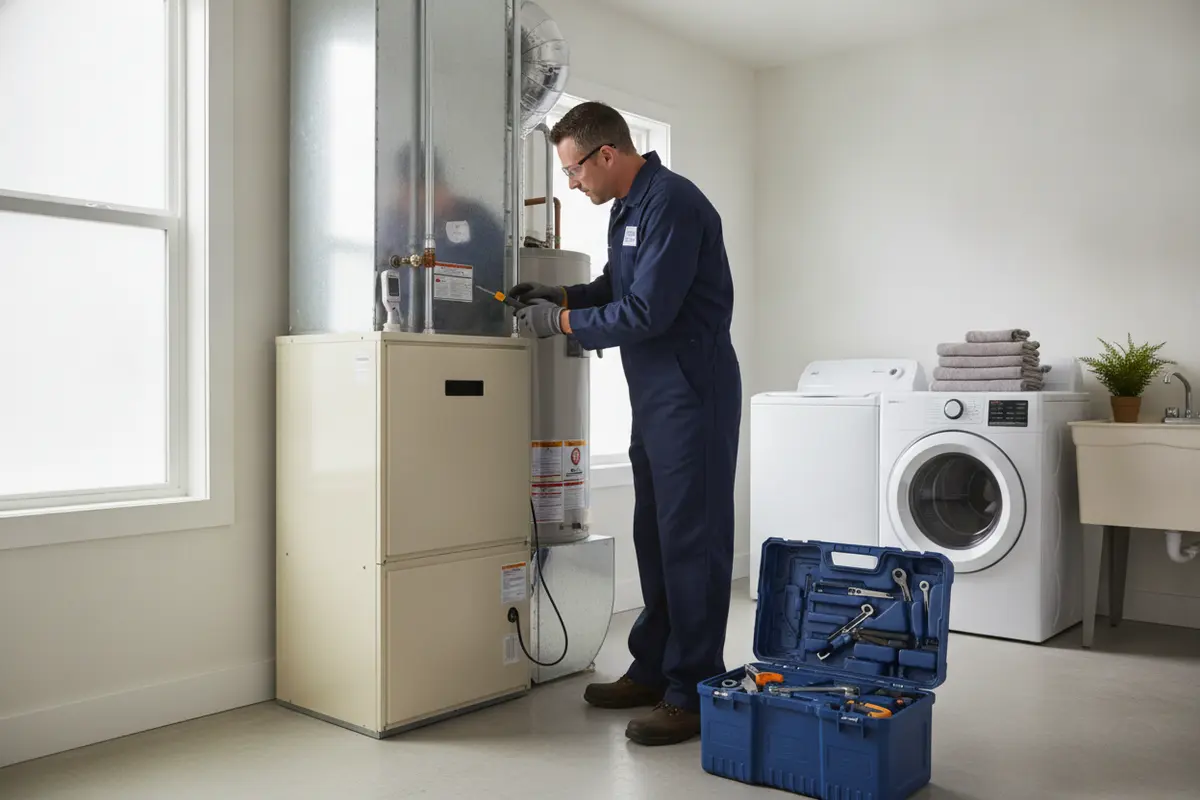
The location of a puddle can be a useful clue, but it does not establish the cause. Water may show up only while the furnace is running, after a long cycle, or after a pump stops. Note whether the water is directly below the furnace, near a drain tube, or coming from a nearby appliance or pipe. Do not assume the furnace caused every wet spot in the utility room. Keep the area clear and share your observations with the service professional.
Possible trouble spots include a clogged condensate line, a disconnected or cracked drain hose, a drain pan that is not carrying water away, or a condensate pump that is not moving water. A nearby cooling coil may also share drainage components, depending on the equipment setup. The homeowner can observe and report the location, but should not pull apart drain connections or reach into the furnace cabinet.
If there is water around the unit, keep people away from wet areas and protect nearby belongings only if it is safe to do so. Turn the furnace off at the thermostat if water is close to furnace components or the unit appears to be malfunctioning. Do not touch wet wiring or equipment. If water is coming from a household plumbing source, address that source as well. Take a picture, note whether the furnace is running, and arrange service. A drain that appears to clear on its own can still be intermittently blocked.
When you call, share whether the unit is a high-efficiency model, where water appears, whether it is clear or discolored, and if you hear a pump running. Those details can help narrow the inspection, although they do not replace an on-site diagnosis.
What does smoke or a burning smell mean?
Smoke, visible soot, or a strong and lasting burning smell is a stop-and-check situation, not a routine maintenance reminder. Turn the system off if safe, leave if there is visible smoke or any immediate danger, and call emergency responders when needed. Do not run the furnace again just to see whether the symptom repeats.
A brief dusty odor at the beginning of the season is different from a sharp plastic or fuel-like odor. Dust may have settled on warm components while the system was idle, and a light smell should clear promptly. A persistent or recurring smell can point to an overheated part, debris in the system, a venting concern, or another issue a technician must identify. Do not try to diagnose by sniffing close to the unit.
If you see black marks or soot around the furnace or vent, do not wipe them away and continue operating the equipment. Photograph the area from a safe distance, turn the system off if appropriate, and explain what you found when you arrange an inspection. Soot or a change in vent appearance can be important evidence for a technician.
Why is dust or debris blowing from the registers?
A little dust can be stirred up when a furnace starts after sitting idle. A visible cloud, repeated particles, a musty odor, or debris coming from several registers suggests the system and its air pathways deserve attention. It does not by itself prove that the furnace is failing.
Check the simple items that do not require opening the equipment. Make sure the return-air grilles are not blocked by rugs or furniture. Look at the filter according to its instructions and replace it if it is dirty or due, using the correct size and type specified for your system. A filter that does not fit can let particles bypass it; a filter that is too restrictive for the system can interfere with airflow. If you are not sure which filter is appropriate, ask for guidance rather than guessing.
Notice whether the dust appears at one register or throughout the home. One affected register may point to a local issue, while several registers suggest a broader airflow or duct concern. Do not put a hand or tool into the duct, and do not use a household vacuum inside the furnace. If the problem continues after checking the filter and keeping grilles clear, schedule an inspection. You can also review our practical HVAC equipment maintenance guide for basic upkeep ideas.
Is air or vapor coming from the furnace vent normal?
Warm air blowing from supply registers is the expected job of a furnace. The amount and temperature can vary during a cycle, and a heat pump or other system may operate differently. If airflow becomes weak, one room stays cold, or the system repeatedly starts and stops, note the pattern and seek an assessment rather than assuming the furnace is simply “blowing less.”
Some high-efficiency gas furnaces send exhaust through a dedicated vent. In cold weather, moisture in the exhaust can form a visible white plume outdoors. That plume may look like vapor and dissipate in the air. It should not be confused with smoke, soot, a strong persistent odor, or a vent that is damaged, blocked, or visibly separated. Do not cover or alter an exhaust opening. Keep snow, leaves, and stored items away from vents while maintaining a safe distance, and call a professional if you see damage or suspect a blockage.
For context when comparing systems, the U.S. Energy Information Administration has discussed how gas furnace efficiency affects residential energy use. Its information is general background, not a way to diagnose a specific furnace or judge its venting: EIA’s overview of gas furnace efficiency.
What sounds or performance changes should you report?
A normal furnace may make a soft click as a cycle starts, followed by steady airflow. New or repeated banging, scraping, rattling, squealing, or a loud rumble is worth reporting, especially if it arrives with smoke, water, soot, or a change in heating. Do not remove panels to find the source. Write down when the sound happens: at startup, while the burners run, when the blower starts, or as the system shuts down.
Other useful observations include whether the thermostat is calling for heat, whether the furnace completes a full cycle, if one or multiple rooms feel different, and whether the filter was recently changed. If the system stops repeatedly, do not keep cycling the thermostat or resetting a switch. A technician can use the sequence and symptoms to guide an inspection. Our furnace repair guide and explanation of emergency heat offer additional context for different heating situations.
What can you safely check before requesting service?
When there is no immediate safety warning, these observations can make the service conversation more useful:
- Identify the source. Is the material coming from a room register, the furnace cabinet, a drain line, or an outdoor vent?
- Describe what you see. Note color, amount, odor, and whether it is continuous or brief. Do not get close to smoke, fumes, hot surfaces, or a suspected leak.
- Record timing. Write down whether it occurs at startup, during a heating cycle, or after shutdown, and how often it repeats.
- Check safe, accessible basics. Observe the thermostat setting and whether return grilles are blocked. Inspect the air filter without opening the furnace cabinet; change it only if you know the correct replacement.
- Take a safe photo. A picture of a puddle, exterior plume, or visible discoloration may be useful. Do not delay leaving or calling for emergency help to take one.
- Share system details. If known, give the furnace type, approximate age, recent service history, and any warning light or code visible without removing a panel.
Do not bypass a safety switch, open burner assemblies, adjust gas components, or attempt to clear a blocked flue yourself. If the system needs a repair or replacement discussion, the right next step depends on an in-person assessment of the equipment and the home’s heating needs. For broader information, see QRC’s Winston-Salem heating and cooling information, our heat pump troubleshooting overview, and the repair-versus-replacement decision guide for general comparison principles. The last guide concerns cooling equipment, so use it for decision-making questions rather than furnace-specific diagnosis.
Does the type of heating system change what you see?
Yes. People sometimes call the whole heating setup “the furnace,” even when their home uses a heat pump or another arrangement. That distinction can matter when describing what appears to be coming out. A gas furnace may have a condensate drain and an exhaust vent; a heat pump has outdoor equipment and a different operating cycle. The system name on a thermostat or service record can help, but do not approach or open equipment to identify it.
Also distinguish the air outlet inside from the exhaust outlet outdoors. Warm air from a room register is part of normal heating. A visible outdoor plume may be water vapor under certain conditions, while water pooling at the indoor unit, smoke, soot, or a strong odor deserves a separate response. If you do not know which opening you are looking at, describe its location instead of guessing. A technician can confirm the equipment type and explain whether the observed behavior fits its design.
For a multi-system home, record which unit is running and which part of the house is affected. If symptoms only occur with one thermostat or one system, say so. This is more useful than labeling every piece of heating equipment as a furnace and can prevent confusion while the cause is being assessed.
How can you prepare for a furnace service visit?
Once immediate hazards are ruled out, a little preparation can make the inspection more focused. Keep a short written timeline instead of relying on memory: when the symptom first appeared, how often it happens, and whether it changes when the furnace starts or stops. Include any thermostat setting changes, recent filter changes, unusual noises, or water that appears and then dries. If another person in the home noticed a different detail, add that too.
Make the furnace and its surrounding area accessible without moving heavy equipment or touching hot, wet, or damaged components. Keep children and pets away from the work area. If there is a puddle, do not place belongings on wet flooring or try to clean around a potentially unsafe unit. Take a picture from a safe distance if it does not delay a needed call or put anyone at risk.
Have equipment information available if you can read it without removing a panel: a model number, approximate age, and any maintenance paperwork. Do not guess if the label is difficult to reach. Mention if the home has more than one heating system or if only certain rooms are affected. In a business setting, also note whether the issue affects a particular zone or operating area and whether it is disrupting normal activity. These details help establish the scope, but the technician still needs to inspect the equipment before identifying the cause.
Ask what findings were confirmed, what needs attention now, and whether any follow-up is recommended. If a repair or replacement is discussed, request an explanation of the options and how they relate to the condition observed. A clear record of the symptom and the inspection findings helps you compare the immediate concern with future maintenance needs, without assuming that every visible sign means the same repair.
How do common furnace signs compare?
| What you notice | Could be ordinary? | What to do |
|---|---|---|
| Warm air at room registers | Yes, if airflow and heat are steady | Keep vents clear; note any new weak airflow or uneven heat |
| Brief outdoor white vapor in cold weather | Sometimes, with a high-efficiency furnace | Observe from a safe distance; report smoke, soot, odor, or vent damage |
| Small amount of water at the intended condensate drain | May be expected during operation | Watch for pooling, overflow, repeated dripping, or a pump problem |
| Water under the furnace or near components | No, not something to dismiss | Keep clear of wet equipment; turn it off if safe and request service |
| Dusty smell briefly at first seasonal startup | Can happen, but should clear quickly | Monitor; stop operation and get help if persistent or strong |
| Smoke, soot, a strong fuel odor, or a carbon monoxide alarm | No | Leave if danger is suspected; contact emergency services or the gas utility as appropriate |
Frequently Asked Questions
Is water coming out of a high-efficiency furnace normal?
Condensate production can be normal for a high-efficiency furnace when water drains through the intended line. A puddle under the cabinet, an overflowing drain, or water near components is different and should be checked. Do not take the cabinet apart to find the cause.
Should I run the furnace if I see smoke?
No. Turn it off only if you can do so safely, leave the building if there is visible smoke or immediate danger, and call emergency services when needed. Do not restart the equipment until it has been assessed.
Why do I see a white cloud outside near the furnace vent?
In cold weather, moisture in the exhaust from some high-efficiency furnaces can appear as a white vapor plume. Smoke, soot, a strong continuing odor, or a damaged or obstructed vent is not the same thing; keep clear and request qualified help if you notice those signs.
Can a dirty furnace filter cause dust to come from the vents?
A dirty, poorly fitted, or unsuitable filter can contribute to airflow or dust concerns, but it may not be the only cause. Check the filter instructions and correct size, keep return grilles clear, and seek service if debris continues or airflow changes.
Arrange a QRC heating assessment — (336) 281-5144
Ready to Discuss a Furnace Concern?
If you need help assessing a heating issue, contact QRC HVAC & Refrigeration about service options. Our team can use the symptoms you have observed to help determine an appropriate next step.
When you describe what is coming out of the furnace, include its location, appearance, timing, and any changes in heat or sound so the concern can be evaluated more clearly.