


In Thomasville, one room can feel warm while another stays cool, especially in two-story homes, rooms with strong sun exposure, or spaces that are rarely used. A single thermostat cannot always account for those different comfort needs.
Should homeowners in Thomasville opt for zoned HVAC control? Many should consider it if their home has multiple levels, uneven temperatures, or changing room use. Zoning can direct heating and cooling where it is needed, but a professional assessment should confirm that the ductwork, equipment, and layout can support it.
For some Davidson County homeowners, zoning may improve comfort and reduce wasted conditioning. For others, duct repairs, equipment maintenance, or a simpler control upgrade may be the better first move. Understanding how the system divides and manages comfort makes that decision much clearer.
Schedule a whole-home comfort assessment with QRC to find out whether zoned HVAC control fits your Thomasville home, or call (336) 281-5144 to talk with a local technician.
What Is Zoned HVAC Control and How Does It Work?
Zoned HVAC control divides a home into separate comfort areas instead of treating every room as one temperature zone. For a Thomasville homeowner, that may mean one zone for the downstairs living areas. Another for upstairs bedrooms, and a third for a bonus room or less frequently used space. Each zone can have its own temperature setting, so the system responds to how the home is actually used.
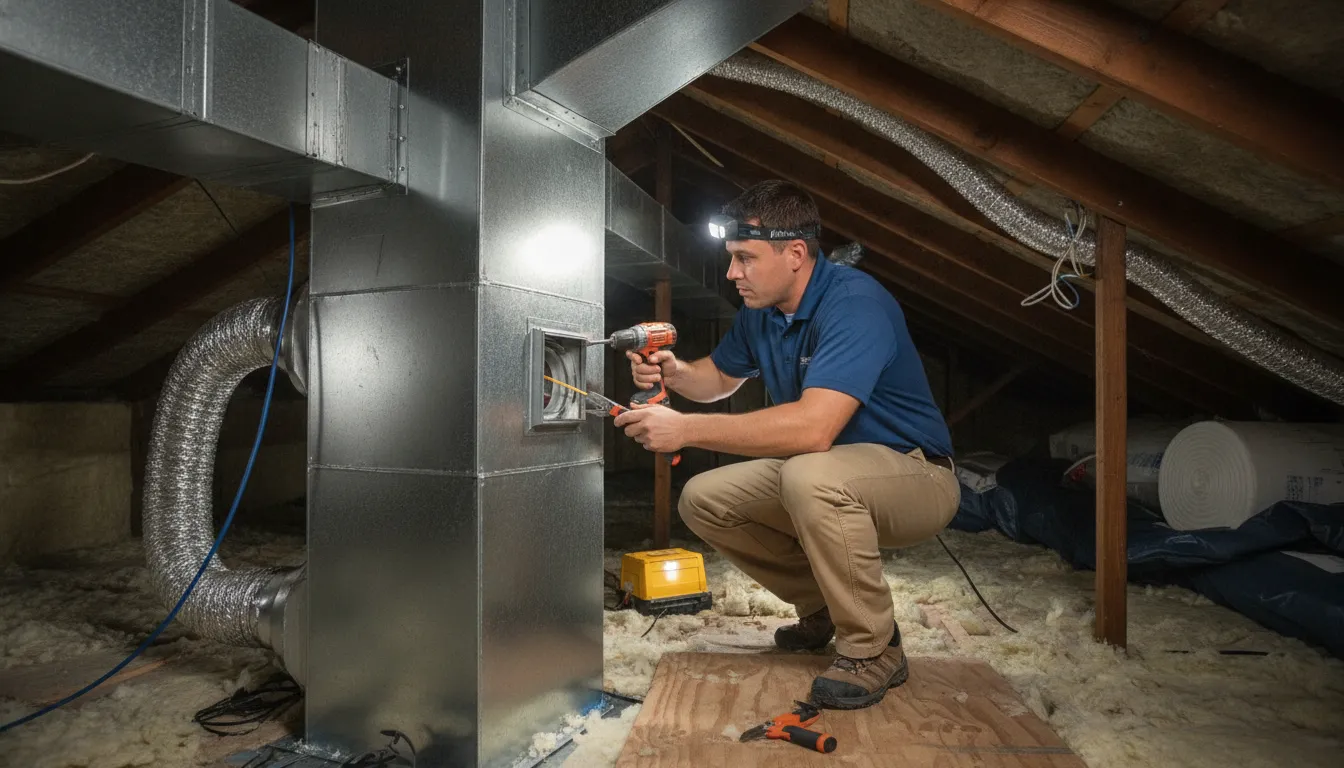
Three main components make this possible. Motorized dampers are installed inside the ductwork. A central zone controller coordinates the dampers and communicates with the heating and cooling equipment. Smart-zone thermostats, placed in the separate areas, measure local temperature and tell the controller when that zone needs conditioned air. A typical system uses a combination of these components rather than relying on one thermostat in a central hallway.
How the dampers direct conditioned air
When a zone becomes warmer or cooler than its setpoint, its thermostat sends a call for heating or cooling. The zone controller then opens the damper serving that area and adjusts other dampers as needed. Conditioned air is routed toward the zone calling for it, while dampers serving satisfied or unoccupied zones can close or reduce airflow. The controller also coordinates the equipment and duct pressure so the system can operate safely.
For example, an upstairs bedroom may heat up faster than a shaded downstairs room during a summer afternoon. With a single-zone system, the downstairs thermostat may shut the system off before the bedroom feels comfortable. Zoning gives the upstairs thermostat a direct role in the decision, helping address the difference without forcing the entire home to use the same setting.
What smart-zone thermostats add
Smart-zone thermostats can provide more than separate temperature readings. Depending on the equipment and controls selected, they may support schedules, remote adjustments, and automatic changes based on occupancy or time of day. These features can improve convenience while helping avoid unnecessary heating or cooling in rooms that are not being used. Zoning can therefore reduce wasted energy, but the actual result depends on the home’s design, ductwork, equipment capacity, and how the controls are programmed.
The best setup is not identical for every house. A Thomasville home with multiple floors, strong sun exposure in certain rooms. Or different schedules among family members may have a stronger case for zoning than a small, open single-level layout. The system type also matters, so homeowners comparing zoned HVAC control options should have the existing equipment and ductwork evaluated before choosing components. A professional assessment helps confirm that the dampers, controller, thermostats, and HVAC system will work together as a balanced system.
Why Thomasville Homes Often Have Uneven Indoor Temperatures
Thomasville homes have several characteristics that can make one thermostat a poor judge of whole-house comfort. During a hot, humid North Carolina summer, outdoor heat does not affect every room in the same way. A south-facing bedroom may absorb strong afternoon sun and feel warm, while a shaded hallway or first-floor room remains comfortable. If the thermostat is in that cooler area, the air conditioner may shut off before the warmer room catches up.
Home layout also matters. In a two-story colonial, warm air naturally rises toward the upper floor, where bedrooms can become noticeably warmer than the main living areas. Split-level homes create a similar challenge because each level may have different exposure, airflow, and daily use. A single-zone system can cool or heat the house. But it cannot independently respond to conditions on separate floors unless the ductwork and controls are designed for that purpose.
Ranch homes can experience uneven temperatures for a different reason. A long, spread-out floor plan may require air to travel through extended duct runs before reaching a distant bedroom or addition. If those runs pass through unconditioned areas, have airflow restrictions, or were not balanced properly, the farthest rooms may receive less conditioned air. This is also why a comfort complaint should not automatically lead to a zoning upgrade. Duct leakage, blocked registers, dirty components, or an aging system may need attention first. Maintaining efficient HVAC performance in Thomasville can help reveal whether the issue is system health rather than control strategy.
Occupancy patterns add another layer. A closed-off guest room may sit unused most of the week, while a home office, nursery, or kitchen receives steady activity. Rooms with different schedules and heat loads do not need identical conditioning at every hour. Yet a single thermostat averages the temperature around one location and sends the same basic instruction to the entire home. That can leave some rooms overcooled while others remain uncomfortable.

These patterns are useful clues when considering zoned HVAC control. Motorized dampers and separate zone thermostats can direct conditioned air where it is needed. But the right design depends on the home’s layout, ductwork, equipment capacity, and comfort priorities. A professional evaluation can determine whether zoning addresses the root cause or whether repairs and airflow balancing are the better first move.
Should Thomasville Homeowners Opt for Zoned HVAC Control?
Yes, zoned HVAC control is a strong option for many Thomasville homes, especially when the house has two or more floors. Rooms with noticeably different temperatures, or spaces that are used on different schedules. It is not an automatic upgrade for every property. A small, single-level home with an open layout and consistent comfort may receive little practical benefit from adding separate zones.
The right decision depends on how your home is laid out and how your household uses it. Zoned systems can direct heating and cooling where it is needed instead of conditioning every area to the same setting. That may improve comfort in upstairs bedrooms, reduce waste in rarely used rooms, and give family members more control when their temperature preferences differ.
Signs zoning may be worth considering
- Different floors feel different: Upstairs rooms become too warm in summer or too cool in winter while the main level feels comfortable.
- Room use changes throughout the day: Bedrooms, guest rooms, home offices, and living areas are occupied at different times.
- Sun exposure creates hot spots: Rooms with strong afternoon sun need more cooling than shaded parts of the home.
- Temperature complaints continue: Routine thermostat adjustments do not resolve persistent comfort differences.
These conditions are common reasons larger or multi-story homes benefit more from zoning than compact, open-plan homes. A zone system can also help avoid running the HVAC system unnecessarily for unoccupied areas, which may reduce wasted heating and cooling. The potential benefit is greatest when the zones match real differences in layout, exposure, and daily use, rather than being added simply because the controls are available.
When a simpler approach may be better
If your Thomasville home is a small ranch with an open main living area, air may already circulate effectively between rooms. In that situation, correcting duct problems, improving insulation, addressing airflow restrictions, or maintaining the existing equipment may be a more sensible first step. Zoning will not compensate for an undersized system, damaged ductwork, or other unresolved installation issues.
Before choosing equipment, ask a qualified HVAC contractor to assess the layout, ductwork, existing system capacity, and your comfort priorities. The U.S. Department of Energy emphasizes that HVAC design and installation affect efficiency and household comfort: review its residential HVAC installation guidance for additional context. A professional assessment can show whether zoning is feasible, how many zones make sense, and whether another repair or upgrade should come first.
For help evaluating your home’s comfort needs, explore QRC’s residential heating and cooling services. The goal is not to install the most complicated control system. It is to choose a configuration that fits your Thomasville home, your routines, and the way you want each room to feel.
Which Homes Benefit Most from HVAC Zoning in the Triad
HVAC zoning is most useful when one thermostat cannot represent the comfort needs of the whole house. That is common in Triad homes with multiple floors, rooms that receive very different amounts of sunlight, or spaces that sit empty for much of the day. In those situations, separate temperature control can improve comfort without conditioning every room as though it were occupied.
The strongest candidates are usually larger or more divided homes. A contractor still needs to review the ductwork, equipment capacity, and layout before recommending zoning. The U.S. Department of Energy notes that installation and system design affect residential efficiency and comfort. So zoning should be planned as part of the HVAC system rather than treated as a thermostat-only upgrade. See the DOE residential HVAC installation guidance for additional context.
| Home scenario | Potential zoning benefit | Is it worth considering? |
|---|---|---|
| Two-story colonial or split-level | Separate zones can address temperature differences between floors and reduce the need to condition every level equally. | High benefit, especially when the upstairs is consistently warmer or cooler than the main level. |
| Single-level ranch with long duct runs | Zones may help balance distant rooms, although duct condition and airflow must be checked first. | Moderate benefit. Worth an assessment when certain rooms remain uncomfortable. |
| Open-plan small home | A shared area may already respond well to one thermostat, leaving fewer meaningful temperature differences to control. | Low benefit and often not worth the added complexity unless a specific comfort problem exists. |
| Rooms with opposite sun exposure | Independent control can respond to rooms that heat up or cool down at different rates during the day. | High benefit when solar gain creates a recurring comfort imbalance. |
| Rooms used at different times of day | Scheduling can reduce conditioning in unoccupied areas while maintaining comfort where people are active. | High benefit for homes with offices, guest rooms, bonus rooms, or changing household schedules. |
| End-of-life equipment needing replacement | A replacement project is an opportunity to coordinate equipment capacity, duct design, and zoning from the start. | Moderate benefit. Combine the zoning review with replacement planning instead of adding it as an afterthought. |
In practical terms, zoning earns its strongest consideration when comfort problems follow a predictable pattern. It can reduce the system’s tendency to overwork in unoccupied rooms and may help limit wear over time. Those benefits are not a substitute for proper sizing, airflow, or maintenance. A Thomasville homeowner should compare the home’s layout and daily use with the cost and complexity of the proposed controls before deciding.
When Is HVAC Zoning Not Worth the Cost?
Zoned HVAC control can solve real comfort problems, but it is not automatically the right upgrade for every Thomasville home. If your house is small, single-level, and open through the main living areas. Air may already circulate freely enough that separate zones would add complexity without delivering a meaningful comfort improvement. In that situation, a well-maintained single-zone system may serve the home effectively.
An open floor plan is a particularly important exception. Without many walls or closed-off rooms separating the living space, there may be little practical difference between one area and another. Adding dampers and controls will not create a useful temperature boundary where the layout does not naturally have one. Before approving a zoning installation, consider whether the complaint is truly a room-to-room imbalance or simply a thermostat location, airflow, or insulation issue.
Repair the ductwork before adding controls
Zoning equipment cannot compensate for ductwork that leaks, restricts airflow, or was undersized for the home. Leaks can waste conditioned air before it reaches the rooms, while poor sizing can leave some supplies weak and others noisy or over-supplied. If those conditions are present, duct remediation should come first. Otherwise, new dampers may make an existing airflow problem harder to diagnose and could leave the homeowner paying for a control system without solving the underlying cause.
A professional comfort assessment should also check insulation, filter condition, registers, and return-air pathways. A room that overheats because of inadequate insulation or intense sun exposure may need a building-envelope solution rather than another thermostat. Likewise, a dirty filter or neglected coil can reduce system performance across the whole house. In many cases, preventative HVAC maintenance is the more sensible first step.
Consider equipment age and simpler solutions
Very old equipment that is nearing the end of its useful service life may not be the best platform for a zoning retrofit. If a replacement is likely soon, homeowners may be better served by reviewing the next system’s capacity. Duct design, and zoning compatibility before investing in dampers for equipment they will soon remove. A contractor can help compare the timing and likely value of both choices.
Finally, some temperature complaints respond to simple thermostat scheduling, balanced airflow adjustments, seasonal maintenance, or targeted insulation work. Thomasville homeowners should ask what problem zoning will solve, what lower-cost remedies were considered, and whether the proposed system is properly matched to the equipment and ductwork. Honest planning may lead to zoning, a repair, or no major upgrade at all.
How to Start Planning a Zoned HVAC System in Thomasville
A zoned system should be planned around the way your Thomasville home actually operates, not added as a collection of disconnected controls. A two-story home, rooms with strong afternoon sun, and spaces that sit empty during the day may have very different comfort needs. The right design begins with the house, the ductwork, and the equipment already serving it.
Use the following process to determine whether zoning is practical and which components will support reliable comfort. A qualified contractor should evaluate the complete system before recommending an installation. The U.S. Department of Energy’s residential air conditioning installation workshop emphasizes the importance of proper design and professional installation for system performance.
- Start with a whole-home comfort assessment. Document which rooms run hot or cold, when the problem occurs, and whether it changes between summer and winter. The assessment should consider room size, sun exposure, insulation, occupancy patterns, and how often doors remain closed. Note whether an upstairs area, guest room, home office, or addition follows a different schedule from the rest of the house. This information helps a contractor determine whether separate zones would solve a real comfort problem or simply add complexity.
- Check ductwork condition and sizing. Leaky, crushed, poorly connected, or undersized ducts should be addressed before zoning is installed. Dampers cannot correct air loss or inadequate airflow, and restricting an already weak duct system can create pressure and comfort problems. Ask for the duct layout and airflow needs to be reviewed rather than assuming the existing system can support new zones without modification.
- Review equipment capacity and age. The contractor should confirm that the heating and cooling equipment is correctly sized for the home and compatible with the proposed zoning strategy. Older equipment near the end of its service life may be a poor foundation for a new control system. In that situation, comparing a complete replacement with a zoning retrofit can prevent you from investing in controls that will soon need to be replaced with the equipment.
- Choose compatible zoning components. A typical setup uses motorized zone dampers, a zone controller, and a smart-zone thermostat or thermostats. These parts work together to direct conditioned air and manage different temperature settings by area. Look for controls that support scheduling and remote adjustments, but prioritize compatibility, airflow management, and straightforward operation over unnecessary features.
- Get a detailed quote and qualified installation. Request a written proposal that identifies the zones, dampers, controls, duct changes, equipment requirements, commissioning steps, and warranty coverage. A properly installed system can prevent the equipment from overworking rooms that do not need conditioning, which may reduce wasted energy and help extend service life. For help planning heating technician in Thomasville service, ask QRC to assess your home’s comfort patterns and existing HVAC system before work begins.
This process gives you a practical basis for deciding whether zoned HVAC control fits your home, your schedule, and your long-term equipment plans.
Book a whole-home consultation with QRC and get a clear recommendation on whether zoning is worth the cost for your Thomasville home, or call (336) 281-5144 to discuss your options.
Frequently Asked Questions
Is a zoned HVAC system right for my home in Thomasville?
It may be a strong fit if your home has multiple floors, rooms with different schedules, or noticeable temperature differences caused by sun exposure. A smaller, open-concept home may have less to gain. A professional assessment can confirm whether zoning addresses the actual comfort problem.
Does HVAC zoning help save energy?
Zoning can reduce wasted heating and cooling by limiting conditioning in rooms that are unoccupied or rarely used. The potential benefit depends on your ductwork, equipment, thermostat settings, and household routines, so savings should be described as a possibility rather than a guaranteed percentage.
Can I add zoning to an existing HVAC system?
Many existing systems can be retrofitted with motorized duct dampers, a zone controller, and compatible thermostats. Before installation, a technician should check the equipment capacity, ductwork condition, and airflow requirements to ensure the system can operate safely and effectively.
Do I need zoning for an open floor plan home?
Not necessarily. Air can circulate more freely through an open main living area, which may reduce the need for separate zones. Zoning could still help if bedrooms, additions, upper floors, or sun-exposed rooms remain noticeably warmer or cooler than the rest of the home.
Will HVAC zoning fix uneven temperatures in my home?
It can help correct imbalances between floors or rooms by giving each area more independent temperature control. However, zoning will not automatically fix leaking ducts, poor insulation, blocked registers, or incorrectly sized equipment. Those issues should be evaluated first.
Ready to Explore Zoned HVAC Control?
A home assessment can help you determine whether separate temperature control fits your Thomasville home’s layout, comfort needs, and daily routines. QRC can talk through the available options and help you choose a practical next step.
Schedule a whole-home consultation with QRC, or call (336) 281-5144 to discuss whether zoned HVAC control is right for your home.