


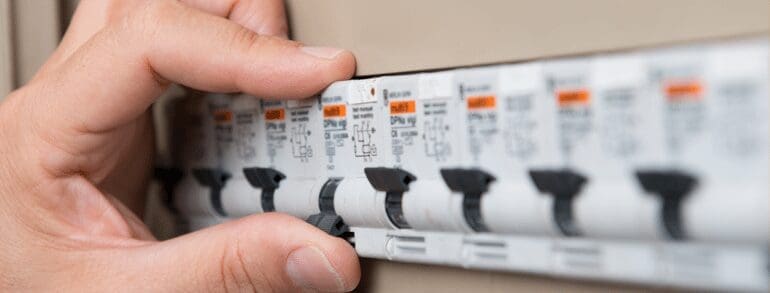
Think of a tripped breaker as a symptom, not the disease. Your air conditioner shutting down is the obvious sign, but the root cause is hiding somewhere within your HVAC or electrical system. The fact that your AC breaker keeps tripping could point to anything from grimy outdoor coils struggling to release heat to a failing compressor drawing way too much power. It could even be a sign of loose wiring or a faulty breaker. Simply resetting the power without diagnosing the underlying issue is like taking a cough drop for pneumonia. This article will act as your diagnostic guide, helping you identify the potential causes so you can find the right cure.
Why does my Air Conditioner Keep Tripping The Circuit Breaker?
Have you noticed that something is tripping your breaker recently? You may have already narrowed it down to your air conditioner, but you may not know why that’s happening. Usually, your air conditioner will trip the breaker when it’s pulling in more amps that your breaker is capable of handling. For instance, let’s pretend you have a 20-amp breaker. That means it’s only capable of handling 20 amps. So if you’re air conditioner pulls in 30 amps, then it’s going to cause your breaker to trip. You breaker trips to ensure that overcurrents don’t occur and cause a fire or other damage to your electronics. Since your breaker trips to PROTECT you, you should not just keep resetting it and ignore the problem that your breaker is trying to tell you about! To find the cause of the problem, you should check the following:
- Is my air conditioner’s air filter dirty?
- Are there any issues with the circuit breaker?
- Is my air conditioner’s outdoor unit dirty?
- Has the compressor had trouble starting?
- Has the motor shorted?
- Is my compressor grounded?
If you can say yes to any of these questions, those are all culprits for tripping a breaker. If you have a dirty air filter, it causes the blower to work harder and require more electricity to work effectively. Change your air filter and you should no longer have a problem with your breaker tripping. If your outdoor air conditioning unit is dirty, it may not be able to properly disperse heat which also causes your air conditioning system to work harder until the breaker trips. It’s important to hire a certified technician to clean your outdoor unit. Our technicians at QRC are certified and will use the proper equipment and chemicals to clean your unit. Attempting a DIY cleaning could unknowingly damage equipment in your air conditioning unit. It’s best to leave it to the pros! If you’re having issues with the circuit breaker, your problem may not be with your air conditioning system. Sometimes the breaker itself can be the problem. In that case, replace your breaker! If you think your air conditioner’s motor has shorted, call QRC today so we can come fix that for you! In case you don’t know, a short is when electricity ignores its normal path and takes a shortcut. The shortcut, of course, allows more electrical current through the wires – more than they can handle – which can cause a fire. But your breaker has your back and trips before a fire can start. If you compressor is grounded, essentially means that the electrical wiring in your compressor is broken and hit the side of your compressor, causing a direct short to the ground. The direct short can ignite oil and cause a burnout. If this is the case, you should let QRC replace your compressor and clean your refrigerant lines immediately.
Common Reasons Your AC Trips the Breaker
When your air conditioner repeatedly trips the circuit breaker, it’s doing more than just causing an inconvenience—it’s sending a distress signal. The breaker’s job is to cut power when it detects an electrical overload, protecting your home from potential fire hazards and your HVAC system from catastrophic damage. While it might be tempting to just flip the switch back on and hope for the best, ignoring the root cause is a bad idea. The problem could be as simple as a clogged filter forcing the system to work too hard, or it could point to a more serious issue like a failing compressor or faulty wiring. Understanding the most common culprits can help you identify what’s going on and decide whether it’s a quick fix or time to call in a professional.
Dirty Air Filter
One of the most frequent and easily fixable reasons for a tripped breaker is a dirty air filter. Think of the filter as your HVAC system’s lungs; when it gets clogged with dust, pet dander, and other debris, the system can’t “breathe” properly. This blockage restricts airflow, forcing the blower motor to work much harder to pull air through and circulate it in your home. This extra effort causes the unit to draw significantly more electricity than usual. If the power draw exceeds the amperage limit of the circuit breaker, the breaker will trip to prevent the motor from overheating. Checking your air filter once a month and replacing it when it’s dirty is a simple maintenance step that can prevent this issue and keep your system running efficiently.
Dirty Outdoor Coils
Your air conditioner’s outdoor unit, the condenser, has a critical job: to release the heat collected from inside your house. It does this using a series of coils and a large fan. Over time, these coils can become caked with dirt, grass clippings, leaves, and cottonwood fluff. This layer of grime acts like an insulating blanket, trapping heat and preventing the unit from cooling the refrigerant effectively. As a result, the system has to run longer and harder to cool your home, causing the compressor to overheat and draw excessive current. This power surge is often enough to trip the breaker. While you can gently rinse the unit with a garden hose, a thorough, deep cleaning should be handled by a professional to avoid damaging the delicate coil fins.
Faulty AC Components
If basic cleaning doesn’t solve the problem, the issue might lie with a specific component inside your air conditioner. Like any complex machine, an AC unit has several electrical parts that can wear out or fail over time. Components like capacitors, fan motors, and refrigerant levels are all critical for proper operation. When one of these parts starts to go bad, it can create a chain reaction that puts immense strain on the entire system, leading to an electrical overload and a tripped breaker. Pinpointing the exact faulty component requires diagnostic expertise, as the symptoms can often overlap.
Bad Capacitor
The capacitor is a small but mighty part of your AC system. It acts like a short-term battery, providing the high-energy jolt needed to start the compressor and fan motors. When a capacitor begins to fail, it can no longer deliver that necessary burst of power. The motors will then struggle to start, drawing a huge amount of current directly from the circuit in an attempt to get going. This amperage spike is almost always enough to trip the breaker. A failing capacitor is a common issue, especially in older units, and is a relatively straightforward fix for a qualified technician.
Broken Condenser Fan
The fan in your outdoor unit is essential for dissipating heat. It pulls air across the condenser coils to help cool the hot refrigerant that has absorbed heat from your home. If the fan motor breaks or the blades are damaged, this heat exchange process comes to a halt. The heat gets trapped, causing pressure and temperature inside the unit to rise rapidly. The compressor will continue to run, working against this extreme pressure until it overheats and draws an excessive amount of power, tripping the breaker as a safety measure. You can often spot this problem by visually checking if the fan is spinning when the AC is on.
Low Refrigerant
Your air conditioner relies on a precise amount of refrigerant to transfer heat effectively. If the level is low, it almost always means there’s a leak somewhere in the system. When there isn’t enough refrigerant, the compressor has to work much harder and run longer to achieve the temperature set on your thermostat. This constant, strenuous operation can cause the compressor to overheat and pull too much electricity, leading to a tripped breaker. Simply adding more refrigerant isn’t a solution; a professional from a company like QRC HVAC needs to locate and repair the leak first to ensure a lasting fix.
Compressor Issues
The compressor is the heart of your air conditioning system, responsible for circulating refrigerant between the indoor and outdoor units. It’s also the component that uses the most electricity. If the compressor is aging and struggling to start, or if it develops an electrical short, it will draw a massive amount of current and trip the breaker immediately. A shorted compressor occurs when the electrical wiring inside breaks down and touches the metal casing, creating a direct path to the ground. This is a serious and often expensive problem that requires professional diagnosis to determine if the compressor can be saved or needs to be replaced.
Electrical Problems to Investigate
Sometimes, the air conditioner itself is working perfectly fine, but the problem lies within your home’s electrical system. The breaker, the wiring, or the connections that supply power to your AC unit can all be sources of trouble. These issues are often more dangerous than a mechanical problem within the AC because they carry a significant risk of an electrical fire. If you suspect an electrical issue, it’s crucial to stop trying to reset the breaker and call for professional help immediately. An experienced technician can safely inspect your system’s electrical connections and determine if the fault is with the unit or the house wiring.
Loose Wiring
Over years of operation, the constant vibration from your air conditioner can cause electrical connections to become loose. This can happen at the unit itself, at the disconnect box, or even inside the circuit breaker panel. A loose wire creates a poor connection, which generates resistance and extreme heat. This heat can melt the wire’s insulation and lead to a short circuit, which will instantly trip the breaker. Loose wiring is a major fire hazard, and the breaker is doing its job by shutting down a dangerous situation. Only a qualified technician should ever inspect, diagnose, and tighten electrical connections.
Signs of a Bad Breaker
Circuit breakers are not immune to failure. They can weaken over time due to age or simply be defective. A weak breaker may trip even when your air conditioner is drawing a normal amount of power, a frustrating issue known as “nuisance tripping.” If you notice that the breaker trips randomly, or if the switch feels hot to the touch after it has tripped, the breaker itself is likely the problem. You might also see scorch marks or signs of melting on the breaker or the panel. In this case, the breaker needs to be replaced by a licensed electrician to ensure your home’s electrical system is safe.
What to Check Before You Call for Service
Before you pick up the phone to schedule a service call, there are a few simple troubleshooting steps you can take. These checks can sometimes resolve the issue or, at the very least, give you more information to share with the technician. Performing these basic diagnostics can help you determine if the problem is a simple oversight or a more complex issue that requires professional attention. Taking a few minutes to investigate can potentially save you time and the cost of a service visit if the solution is something you can handle yourself.
How to Locate the Breaker
First, you need to find your home’s main electrical panel. This is typically a gray metal box located in a garage, basement, utility closet, or sometimes on an exterior wall. Open the panel door, and you’ll see rows of switches—these are your circuit breakers. Your air conditioner’s breaker should be labeled “AC,” “HVAC,” “Condenser,” or “Air Handler.” It is usually a “double-pole” breaker, which means it’s twice as wide as a standard breaker and has two switches that are connected and move together. This is what you’ll need to reset.
Perform a Hard Reset
If you find the breaker in the “tripped” position (usually halfway between ON and OFF), you can try to perform a hard reset. First, go to your thermostat and turn the system completely OFF. Next, go to the breaker panel and push the AC breaker switch firmly to the full OFF position, then flip it back to the ON position. Now, wait for a full 30 minutes before turning your thermostat back to COOL. This waiting period is crucial, as it allows the internal pressure within the AC unit to equalize, preventing the compressor from trying to start under a heavy load and immediately tripping the breaker again.
A Simple Test: Is It the AC or the Wiring?
If the breaker trips again after a reset, you can perform one more test to help isolate the problem. Turn the AC system off at the thermostat. Then, locate the outdoor disconnect box—a smaller metal box near your condenser unit—and turn the power off there as well. With the AC unit completely disconnected from power, go back and reset the breaker one more time. If the breaker *still* trips, the problem is not your air conditioner. It’s almost certainly an issue with the circuit breaker itself or the wiring between the panel and the unit, which requires an electrician.
Critical Safety Warnings
Working with your home’s electrical system can be extremely dangerous if you don’t have the proper knowledge and training. A tripped breaker is a sign that something is wrong, and attempting improper fixes can lead to severe electrical shock, equipment damage, or even a house fire. Your safety should always be the top priority. While some troubleshooting is fine for homeowners, certain tasks should be left exclusively to trained professionals who understand the risks and have the right tools to do the job safely and correctly.
Never Use a Higher-Rated Breaker
If your breaker keeps tripping, you might be tempted to replace it with one that has a higher amperage rating—for example, swapping a 30-amp breaker for a 40-amp one. Do not do this. This is incredibly dangerous. The breaker, wiring, and appliance are all designed to work together as a system. The breaker’s rating is specifically chosen to protect the gauge of the wire it’s connected to. Installing a larger breaker allows more current to flow through the wires than they can safely handle, which can cause them to overheat and start a fire inside your walls.
The Danger of Handling Capacitors
As mentioned earlier, a bad capacitor is a common culprit for a tripping breaker. However, you should never attempt to test or replace a capacitor yourself. These components are designed to store a high-voltage electrical charge, and they can remain energized long after the power has been shut off. Accidentally touching the terminals of a charged capacitor can result in a powerful and dangerous electric shock. This is a job that must be left to a professional technician who knows how to safely discharge the capacitor before handling it.
Professional Solutions from QRC
When you’ve done your basic checks and the problem persists, it’s time to call in the experts. A professional HVAC technician has the diagnostic tools and experience to accurately identify the root cause of the tripping breaker, ensuring the right repair is made. At QRC, our certified technicians are equipped to handle everything from complex electrical issues to major component failures. We can provide safe, effective solutions that not only fix the immediate problem but also help improve the reliability and longevity of your system. For an initial diagnosis, you can even use our convenient Virtual Tele-Tech appointments.
Installing a Hard Start Kit
If our technician finds that you have an older compressor that is struggling to start, replacing the entire unit isn’t always the only option. In many cases, we can install a hard start kit. This device is essentially a more powerful capacitor that gives the compressor an extra electrical boost right at startup, helping it overcome initial resistance and get running smoothly without drawing excessive current. A hard start kit is an affordable solution that can effectively resolve startup-related breaker trips and potentially add years to the life of your existing air conditioner, saving you from a premature and costly replacement.
If you can’t pinpoint the source of your breaker problem, call QRC at 336.788.5407 today. We can come out to you and check your air conditioning system for any problems.
Frequently Asked Questions
Is it okay to just keep resetting the breaker if it trips? Think of a tripped breaker as a warning light in your car. Resetting it once is fine, but if it keeps happening, you’re ignoring a sign that something is wrong. The breaker is a safety device designed to prevent electrical overloads that could damage your expensive AC unit or even cause a fire. Continuously forcing it back on without addressing the root cause is risky and can lead to a much bigger, more expensive problem.
I followed the reset instructions, but the breaker tripped again immediately. What now? If the breaker trips again right after you reset it, that’s a clear signal to stop and call a professional. This often points to a more serious issue, like a short circuit in the compressor or a major electrical fault. At this point, further attempts to reset it are unsafe. A qualified technician needs to diagnose the problem to prevent damage to your system and ensure your home is safe.
How can I tell if the problem is with the air conditioner or my home’s wiring? There’s a simple test you can perform to get a better idea. First, turn the AC system off at the thermostat. Then, find the outdoor disconnect box near your condenser unit and shut off the power there. With the AC unit completely disconnected, go back and reset the breaker. If it stays on, the issue is likely within the AC unit itself. If it trips again even with the AC disconnected, the problem is almost certainly in your home’s wiring or the breaker panel, and you should call an electrician.
Can I save money by cleaning the outdoor coils myself? While you can gently rinse off loose debris like grass clippings and leaves from the outside of your condenser unit with a garden hose, a deep cleaning is a job for a professional. The metal fins on the coils are extremely delicate and can be easily bent or damaged, which would restrict airflow and make the problem worse. Technicians also use specialized cleaning solutions and have the expertise to work safely around the unit’s electrical components.
How often should I really change my air filter to prevent problems? A good rule of thumb is to check your filter every month and replace it at least every three months. However, your schedule might need to be more frequent. If you have pets that shed, live in a dusty area, or have family members with allergies, you should plan on changing it every 30 to 60 days. A clean filter is one of the easiest and most effective ways to keep your system running smoothly and prevent the strain that leads to a tripped breaker.
Key Takeaways
- Check for Airflow Blockages First: A tripped breaker is often caused by a dirty air filter or grimy outdoor coils. These simple issues force your system to work harder and draw excess power, so checking and cleaning them is the best first step.
- A Persistent Trip Signals a Deeper Problem: If the breaker continues to trip after a reset and basic cleaning, the cause is likely a failing internal part like a capacitor, fan motor, or the compressor itself. This is your cue to call a professional for an accurate diagnosis.
- Prioritize Electrical Safety Above All: The issue might be faulty wiring or a bad breaker, not your AC unit. Never install a higher-rated breaker to solve the problem—this is a major fire hazard. Electrical issues require a qualified technician to ensure a safe and correct repair.