A heat pump system heats and cools a home by moving heat between indoors and outdoors. In cooling mode, it carries heat out of the home; in heating mode, it draws heat from outdoor air and moves it inside. Knowing the basic cycle, the parts involved, and the signs of a real problem can help you decide what to check and when to ask for service.
Talk with us about your heat pump — (336) 281-5144
What is a heat pump system?
A heat pump is an HVAC system that transfers heat rather than creating heat through combustion. In warm weather, it works much like an air conditioner: the indoor coil absorbs heat from household air, and the outdoor unit releases that heat outside. In heating mode, a control changes the refrigerant flow so the equipment can collect heat outdoors and release it indoors.
The term “system” includes more than the outdoor cabinet. A typical ducted setup has an outdoor unit, an indoor air handler or a compatible furnace combination, refrigerant lines, a thermostat, an air filter, and ducts that carry conditioned air to rooms. Ductless equipment instead uses one or more indoor heads to serve selected spaces. The arrangement varies with the home and the equipment installed.
Many homeowners in Winston-Salem and nearby Triad communities have a heat pump because one system can provide both heating and cooling. Some systems also have auxiliary or backup heat. That additional heat is part of the particular system’s design; it is not a sign that every heat pump needs the same setup. For a broader look at QRC’s heating and cooling services, start with our service overview.
How does a heat pump move heat?
Refrigerant circulates through indoor and outdoor coils. As it changes pressure and state in different parts of the cycle, it absorbs heat at one coil and releases it at another. A compressor moves the refrigerant through the circuit, while a reversing valve changes the direction of flow between heating and cooling operation. Fans move air across the coils so heat can pass between the refrigerant and the surrounding air.
During cooling, warm indoor air crosses the indoor coil. The refrigerant takes in heat, and the system carries that heat to the outdoor coil. The outdoor fan helps release it outside. During heating, the reversing valve redirects the cycle. The outdoor coil gathers heat from outdoor air, and the indoor coil releases it into the home. Even when the air outside feels cold to a person, the system can transfer heat from it; how well it can do that depends on the equipment and the conditions.
A heat pump can also remove moisture during cooling as indoor air passes over a cool coil. That process is part of normal air conditioning operation, not a separate dehumidifier function. If rooms feel clammy, the system runs but does not cool, or water appears where it should not, note the conditions and arrange an evaluation rather than trying to adjust internal parts yourself.
The U.S. Department of Energy is a useful starting point for general home energy information, including heating and cooling topics. For an overview, see the Department of Energy.
What parts make up the system?
- Outdoor unit: Houses the outdoor coil, fan, compressor, and controls. It exchanges heat with the air around the home.
- Indoor air handler or furnace combination: Moves household air across the indoor coil and into the distribution system. Some configurations use a furnace with a heat pump.
- Refrigerant lines: Connect indoor and outdoor equipment and carry refrigerant through the cycle. These are not homeowner service points.
- Thermostat and controls: Call for heating or cooling and coordinate operating modes. Settings, schedules, and equipment configuration influence what the system does.
- Filter and return-air path: Help keep dust from entering the equipment and allow air to return for conditioning. A dirty filter or blocked return can restrict airflow.
- Ductwork or ductless heads: Deliver conditioned air through the home. Leaks, restrictions, poor balancing, or room layout can contribute to uneven comfort.
- Auxiliary heat, if present: Adds heat when the controls call for it. How and when it operates depends on the equipment and system settings.
Understanding which pieces you have makes it easier to describe what you notice. If you are unsure whether your home has a heat pump, look for equipment labels if they are easy to see or ask a technician to identify the system during a visit. Do not remove access panels to search for model information.
What can affect comfort in a Winston-Salem home?
Comfort depends on the whole home as well as the equipment. System capacity, installation, airflow, insulation, air leakage, windows, room layout, thermostat location, and outdoor conditions can all matter. A system can be in working order and still leave a room uncomfortable if a supply register is blocked, a return path is restricted, or the home loses heat unevenly.
Start by looking for simple patterns. Is one room consistently warmer or cooler, or does the whole home feel different? Does the issue happen only during especially cold or hot weather? Is it tied to a closed door, a changed thermostat schedule, or a recent renovation? These details help separate a room-specific airflow concern from a system-wide change. They do not establish the cause, but they make a service conversation more useful.
Filter condition is one practical observation. Follow the filter and equipment instructions for checking or replacement, since size, filter type, household dust, pets, and system use vary. Do not assume every filter has the same replacement interval. Keep supply registers and return grilles clear of rugs, furniture, curtains, and storage. Do not close many registers to force more air into another room; that can change system airflow in ways the equipment was not designed to handle.
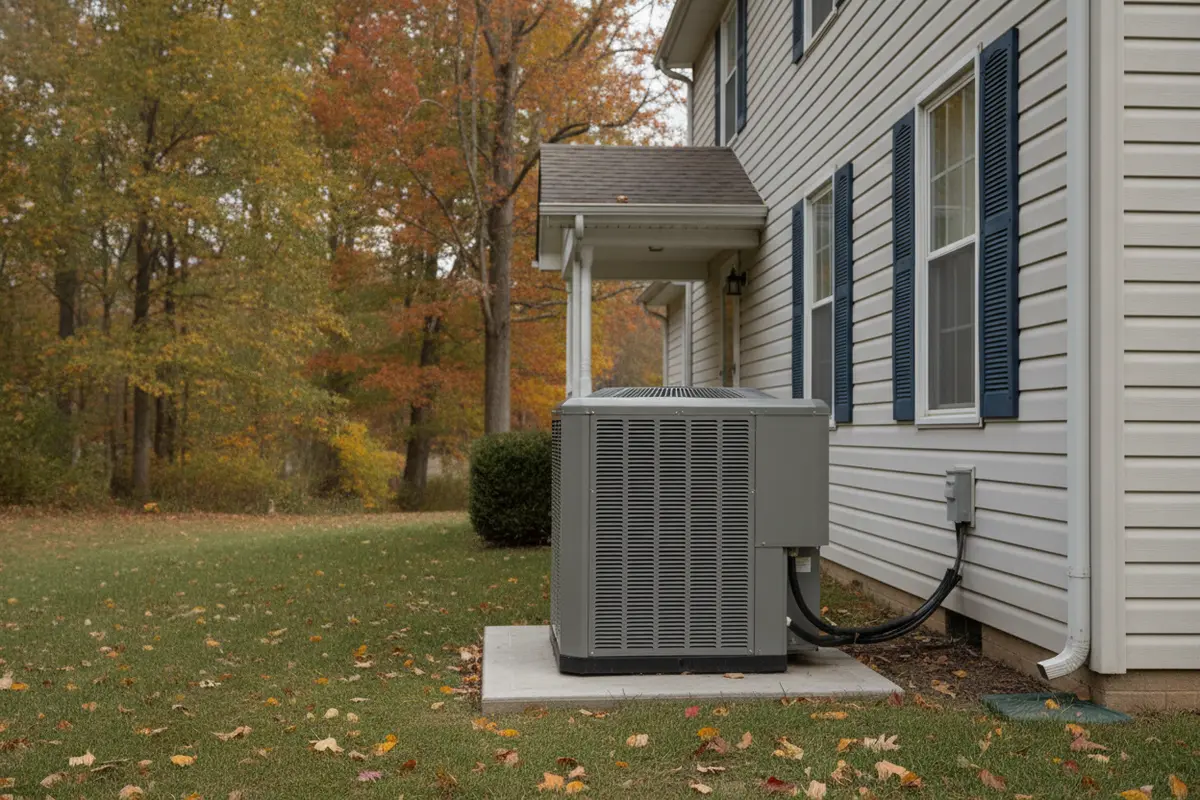
Outdoor conditions also affect operation. In cool, damp weather, frost may collect on the outdoor coil. A heat pump can run a defrost cycle to clear frost, and the outdoor unit may change sound or briefly behave differently during that process. A light coating that clears is not the same as persistent heavy ice. Do not chip ice, pour hot water on the equipment, or reach through the grille. If ice remains, blocks the fan, or repeatedly returns, contact a qualified service professional.
Which homeowner checks are safe?
Keep your checks visual and simple. You do not need to diagnose refrigerant, open equipment, or test internal components. A short record of what the system is doing can help a technician understand the complaint and avoid guesswork.
- Confirm the thermostat mode. Make sure it is set to heating or cooling as intended. Check the displayed setpoint and schedule, and note any warning or status message.
- Inspect the filter according to its instructions. If it is visibly dirty or due for attention, use the correct replacement type and size. If you do not know the right filter, check the equipment documentation or ask for guidance.
- Clear airflow paths. Move objects away from supply registers and return grilles. Make sure furniture or drapes are not covering them.
- Look around the outdoor unit. Remove loose leaves and debris from the area without opening the cabinet or pushing anything through the grille. Leave appropriate space around the unit and avoid disturbing the coil.
- Observe, do not dismantle. Note whether the outdoor fan runs, whether the indoor blower starts, whether the unit cycles frequently, and whether there is a new sound or visible water. Do not touch moving parts or wiring.
- Write down the timeline. Record when the symptom started, the outdoor conditions, the rooms affected, thermostat settings, and anything that changed beforehand.
Stop if a check would require opening the cabinet, touching wiring, handling refrigerant lines, or working around moving parts. If there is smoke, a burning odor, or another immediate safety concern, turn the system off only if it is safe to do so and seek qualified help. For a concern that involves cold-weather heating operation, our guide to when to use emergency heat explains why that setting should not be treated as a routine troubleshooting button.
What do common operating signs mean?
Some heat pump behavior can seem unfamiliar if you are used to a furnace. Warm air from a heat pump may not feel as hot at the register as furnace air, even when the system is heating the home. The more useful question is whether the indoor temperature is moving toward the setpoint and whether the pattern is normal for that system. If the home does not warm, or the air feels persistently cool while the temperature falls, arrange service.
A brief pause or change in sound can occur when a system changes operating mode or defrosts. A new grinding, banging, or repeated loud sound is different; note when it happens and whether it comes from indoors or outdoors. Do not try to quiet the equipment by reaching into it or removing a cover.
Frequent cycling, long run times, or auxiliary heat showing on the thermostat are clues, not diagnoses. Weather, thermostat settings, system size, airflow, controls, and equipment condition can all contribute. For example, if a system runs longer during a cold spell but maintains the indoor setpoint, that observation alone does not prove a fault. If it runs for long periods and the home keeps getting colder, record the temperatures and call for an evaluation.
If the system will not switch between heating and cooling, the thermostat mode and schedule are safe first checks. Repeatedly changing settings to force a response may make the pattern harder to understand. If the controls appear correct and the issue continues, leave the equipment alone and arrange service. Our heat pump service guide offers more context about repair concerns.
How can you describe a heat pump issue clearly?
A short, consistent observation record can help turn a vague comfort complaint into useful information. Write down the thermostat setting and the temperature shown, then note whether the system is heating or cooling and which rooms feel different. If the thermostat displays a status message, copy its wording rather than interpreting it. Do not change several settings at once just to see what happens; that can make it harder to tell which condition was present when the problem began.
Think through the timeline. Did the change begin after a weather shift, a filter replacement, a power interruption, a renovation, or a change to the thermostat schedule? Is the issue present all day or only in the morning, evening, or a particular room? If the system is cycling, note roughly how often it starts and stops instead of trying to measure internal operating details. A few clear observations are more useful than a long list of guesses about failed parts.
For example, “the upstairs bedroom is cooler than the rest of the house in heating mode, especially overnight; the thermostat is set to 68, and the filter was checked this week” gives a technician a starting point. By contrast, “the heat pump is broken” does not show whether the issue is limited to airflow, controls, or the whole system. You do not have to solve the problem before calling. Your role is to share what you observed safely and let a qualified person inspect the equipment.
When should you arrange professional service?
Arrange an evaluation if the heat pump repeatedly fails to reach the thermostat setting, stops heating or cooling, cycles on and off unusually often, develops a persistent new noise, or has heavy outdoor ice that does not clear. Water in an unexpected place, an unusual odor, or a sudden change in how the system operates also deserves attention. A change in energy use may be a reason to investigate, but it does not identify a specific component problem by itself.
When you call, share what the system is doing rather than naming a part you suspect has failed. Explain whether the whole home or one room is affected, when the issue began, what the thermostat displays, and whether the outdoor unit is running. Mention a recent filter change, unusual weather, or any recent work in the home. If you can safely see a model label without opening equipment, provide that information; it is not necessary to search for one.
During an assessment, ask what the technician checked and how the findings relate to the symptom. A useful explanation should distinguish observations from conclusions. For example, “the return grille is blocked” is a directly observed condition; whether that caused all the symptoms may need further testing. If repair is recommended, ask what the repair addresses and whether there are other relevant findings. For more on the maintenance side, see our guide to annual heat pump service.
QRC provides residential heating and cooling service in the Winston-Salem area. Our Winston-Salem service-area information is a place to check local service details. Homeowners considering a repair can also read our guide to evaluating repair versus replacement; the right choice depends on the equipment and the home, not a single rule that fits every case.
Heat pump or furnace: how do they differ?
A heat pump transfers heat from one place to another. A furnace generates heat using its fuel source. Both may distribute heated air through ducts, and some homes pair a heat pump with a furnace as a dual-fuel arrangement. Each setup has different equipment and controls, so it is important to understand what is installed before changing thermostat settings or planning work.
| Question | Heat pump system | Furnace system |
|---|---|---|
| How does it heat? | Moves heat from outdoor air indoors through a refrigerant cycle. | Generates heat from its fuel source. |
| Can it cool? | Many systems reverse operation to provide cooling. | A furnace alone does not cool; cooling equipment may be paired with it. |
| What is important to assess? | Airflow, controls, coils, refrigerant circuit, defrost operation, and system configuration as appropriate. | Airflow, controls, and fuel and combustion components as appropriate. |
| What influences the choice? | Home conditions, equipment match, comfort priorities, and the system design. | Home conditions, available fuel, existing equipment, and comfort priorities. |
This is a general comparison, not a recommendation for a particular property. Existing ducts, insulation, room use, available equipment, and comfort concerns all matter. If you have a furnace and are unsure how its role relates to a heat pump, do not assume the thermostat labels mean the same thing on every system. A technician can explain the controls and what the equipment is intended to do. Our furnace guide for homeowners covers a separate set of furnace-specific observations.
What should you consider before replacing a heat pump?
Do not choose a replacement based only on the old unit’s label or the home’s square footage. A good recommendation accounts for heating and cooling load, duct condition, insulation, air leakage, windows, room layout, and how the household uses different spaces. If the current system has struggled with a specific room or time of day, include that in the discussion. The goal is to match equipment and distribution to the home rather than repeat a past mismatch.
Ask how the contractor determined the equipment size and whether the ducts and return-air paths were considered. Ask what options differ in practical terms, what work is included, and whether any existing comfort concern remains unresolved. A clear proposal should explain the reasoning and scope so you can compare options based on the same home conditions. Avoid relying on a generic price range: replacement pricing depends on an in-home engineering analysis, including load and ductwork calculations, along with a lifestyle analysis. QRC matches options to the home’s needs, priorities, and budget.
Most single-system changeouts can be completed in one day, but timing depends on the job and site conditions. Ask what access or preparation is needed and how the work will affect the home during installation. If financing is part of your planning, ask about available options and review the terms for your situation; do not assume that all plans are alike. Our financing information is available as a starting point.
For additional perspective, our guide to HVAC retrofit versus repair can help you frame questions about the scope of work. It does not replace a site-specific evaluation. The same equipment can perform differently in homes with different layouts and airflow, so explain your comfort priorities before comparing proposals.
How can you plan practical seasonal care?
Seasonal care begins with noticing changes and keeping routine tasks within the homeowner’s safe role. Check the filter based on its instructions, keep registers and returns clear, and make sure leaves or loose debris are not crowding the outdoor unit. Pay attention to changes in room comfort, sound, or operating patterns. These simple observations do not replace professional inspection, but they can help surface a change sooner.
Before the heating season, check that the thermostat responds when you select heat and that the home begins moving toward the setpoint. Be aware of the system’s usual operating sounds and note if a new behavior appears. In colder, damp weather, keep an eye on the outdoor unit from a safe distance. A defrost cycle can be part of normal operation, but persistent ice or a fan that cannot operate is a reason to arrange service rather than attempt a do-it-yourself repair.
Before cooling season, check the thermostat, clear airflow paths, and make sure the filter is in appropriate condition. If one room is consistently different from the rest, write down when it happens and whether the problem varies with outdoor conditions. If your home has more than one system or a zoned setup, track each area separately. “Upstairs is warm while downstairs is comfortable” gives a technician more useful information than “the house is not working.”
Use a maintenance visit to ask what was inspected and whether any observation needs follow-up. Our HVAC equipment maintenance guide provides more general care context. For Triad homeowners, local guidance is also available on our Salem Glen maintenance page. A maintenance visit can identify concerns, but no routine check can guarantee that equipment will never need repair.
Frequently Asked Questions
Can a heat pump work when it is cold outside?
Yes. A heat pump can transfer heat from outdoor air even when it feels cold. Capacity and operation depend on the equipment and conditions. Some homes also have auxiliary or backup heat; the system design determines when it operates.
Why can heat pump air feel cooler than furnace air?
Air from a heat pump may feel less hot at the register than air from a furnace, while still adding heat to the home. Check whether the indoor temperature is approaching the setpoint. If the home is not warming or the pattern persists, arrange an evaluation.
Is frost on the outdoor unit always a problem?
No. Frost can form on the outdoor coil during cold, damp conditions, and a system may run a defrost cycle. Persistent heavy ice, ice that blocks the fan, or repeated icing that does not clear should be checked. Do not chip or melt ice yourself.
How often should I change the filter?
Follow the filter and equipment instructions. The interval depends on the filter design, household conditions, and system use. Check it regularly so you can see whether it needs attention sooner than expected.
How do I know whether repair or replacement makes sense?
There is no single age or repair-cost rule that decides for every home. Consider equipment condition, repair needs, comfort, system performance, and the scope of a properly evaluated replacement. Ask for an explanation of the options based on your home and priorities.
Ask us about heat pump service — (336) 281-5144
Ready to Discuss Your Heat Pump?
Contact QRC to discuss your home’s heating and cooling needs — (336) 281-5144
We can help you talk through a heat pump concern or plan the next step for your Winston-Salem area home.